The New Search Reality
For the last two decades, online visibility largely meant one thing: ranking on the first page of Google. But as we move into 2025 and beyond, discovery is no longer limited to blue links.
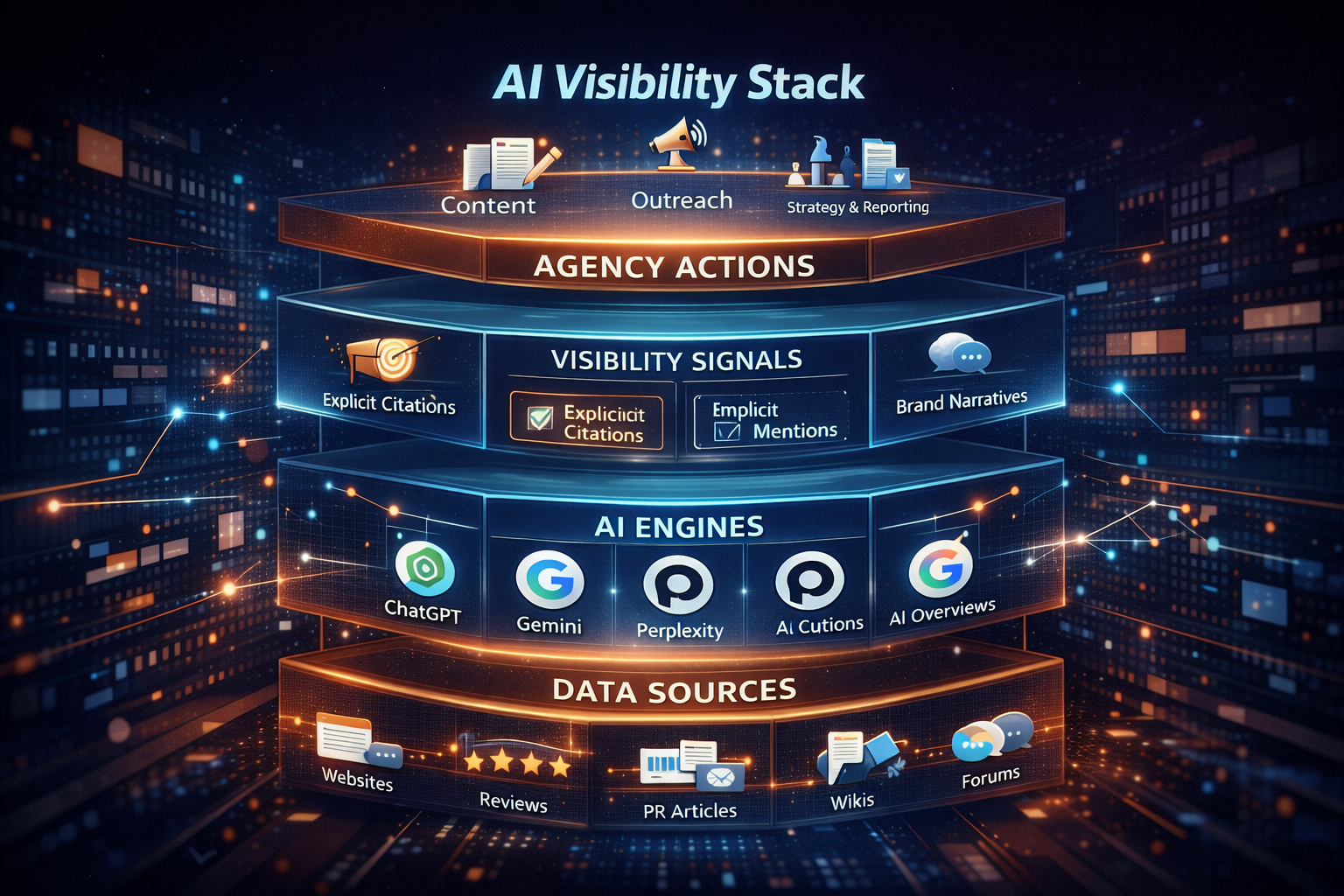
Today, people increasingly ask AI systems like ChatGPT, Perplexity, Gemini, and Google’s AI Overview for recommendations, comparisons, and explanations. These platforms generate answers by synthesizing information from across the web — often without showing a traditional list of search results.
The challenge for brands is clear: while traditional SEO tools track rankings and traffic, they weren’t designed to show how AI systems reference, cite, or learn about a brand inside generated answers.
This is where Wellows positions itself — as an AI Search Visibility platform built specifically to surface how large language models (LLMs) reference brands across AI-driven search experiences.
Beyond Snapshots: Why Historical Visibility Matters
Many early AI visibility tools focus on point-in-time results — showing how a brand appears for a prompt today. While useful, this approach misses an important reality: LLM behavior changes frequently.
AI models update their retrieval patterns, weighting, and citation behavior over time. A single snapshot can’t explain whether visibility changes are temporary fluctuations or longer-term shifts.
Wellows addresses this by offering historical citation tracking, allowing teams to monitor how mentions and citations evolve over weeks or months. This makes it possible to:
Identify long-term visibility trends rather than isolated changes
See which pages or queries lost relevance over time
Evaluate whether GEO and content strategies are improving AI visibility consistently
This historical context turns AI visibility from a momentary check into a measurable pattern.
Explicit and Implicit Mentions: Seeing the Full Picture
One of Wellows’ core strengths is its ability to distinguish between two different types of AI visibility:
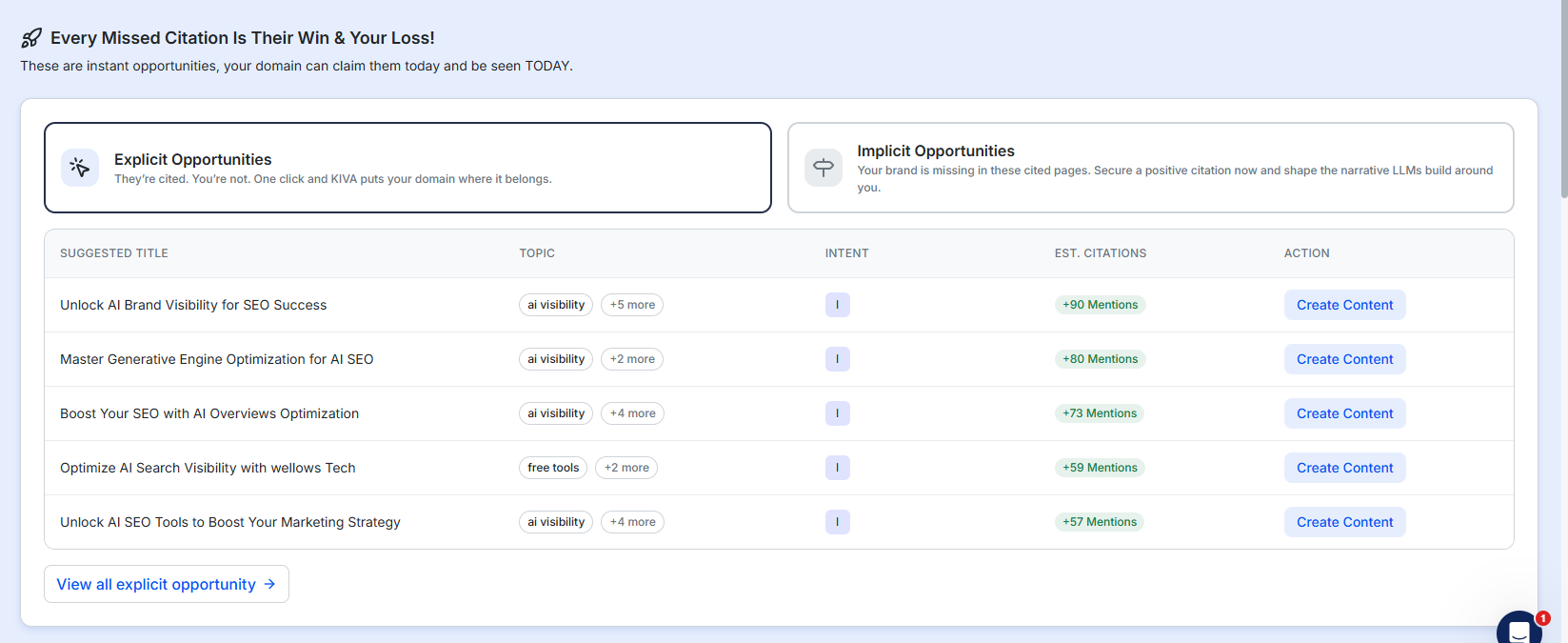
Explicit Citations
These occur when an AI system names a brand directly inside its answer.
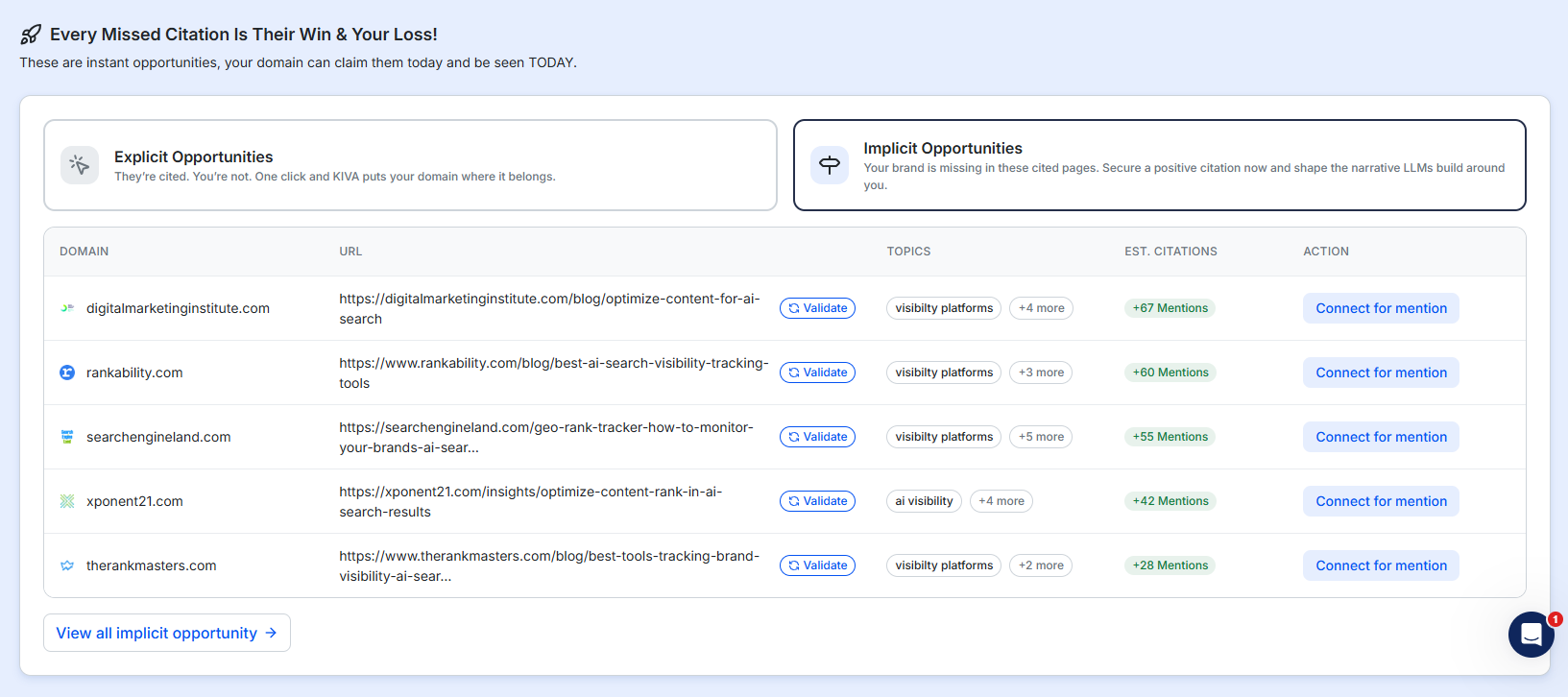
Implicit Mentions
These occur when an AI system cites a third-party page — such as a review, guide, or listicle — where the brand is mentioned within the cited source.
This distinction is critical. Implicit mentions often shape how AI systems understand a category, even when the brand is not directly named in the final response. By surfacing these sources, Wellows helps teams identify which external pages are influencing AI answers and where inclusion gaps exist.
Turning Visibility Data Into Action
Insight alone isn’t enough without a clear path to execution. Wellows connects analysis to action through two supporting workflows:
KIVA AI Writing Assistant
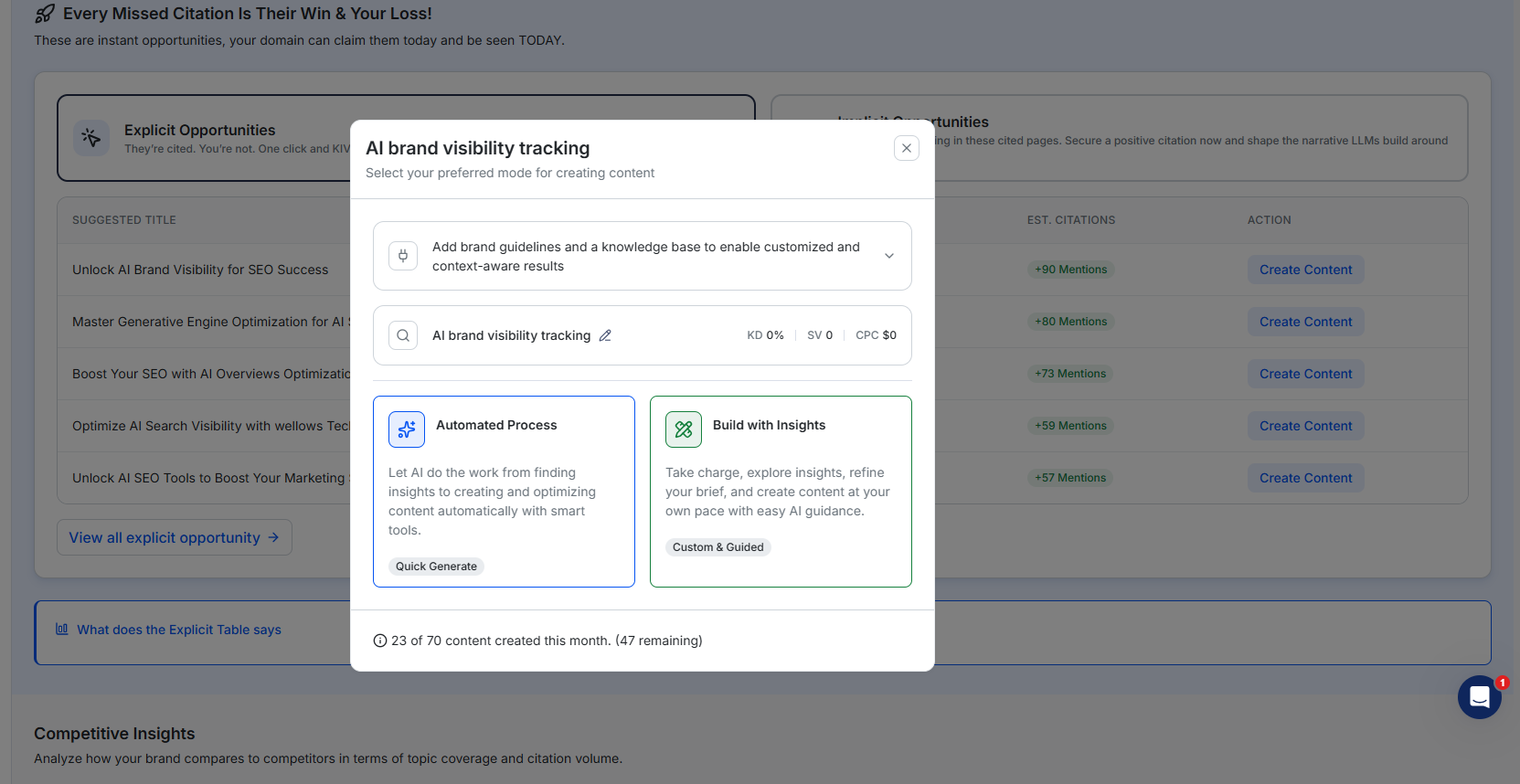
KIVA is designed to help teams create content aligned with how AI systems parse and extract information. Rather than generic copywriting, it focuses on structured, AI-readable content that supports Generative Engine Optimization (GEO).
Outreach Support for Missed Mentions
When implicit mentions are missing, Wellows provides verified publisher contact details, suggested outreach angles, and ready-to-use templates. This supports structured outreach to publishers whose content AI engines already rely on.
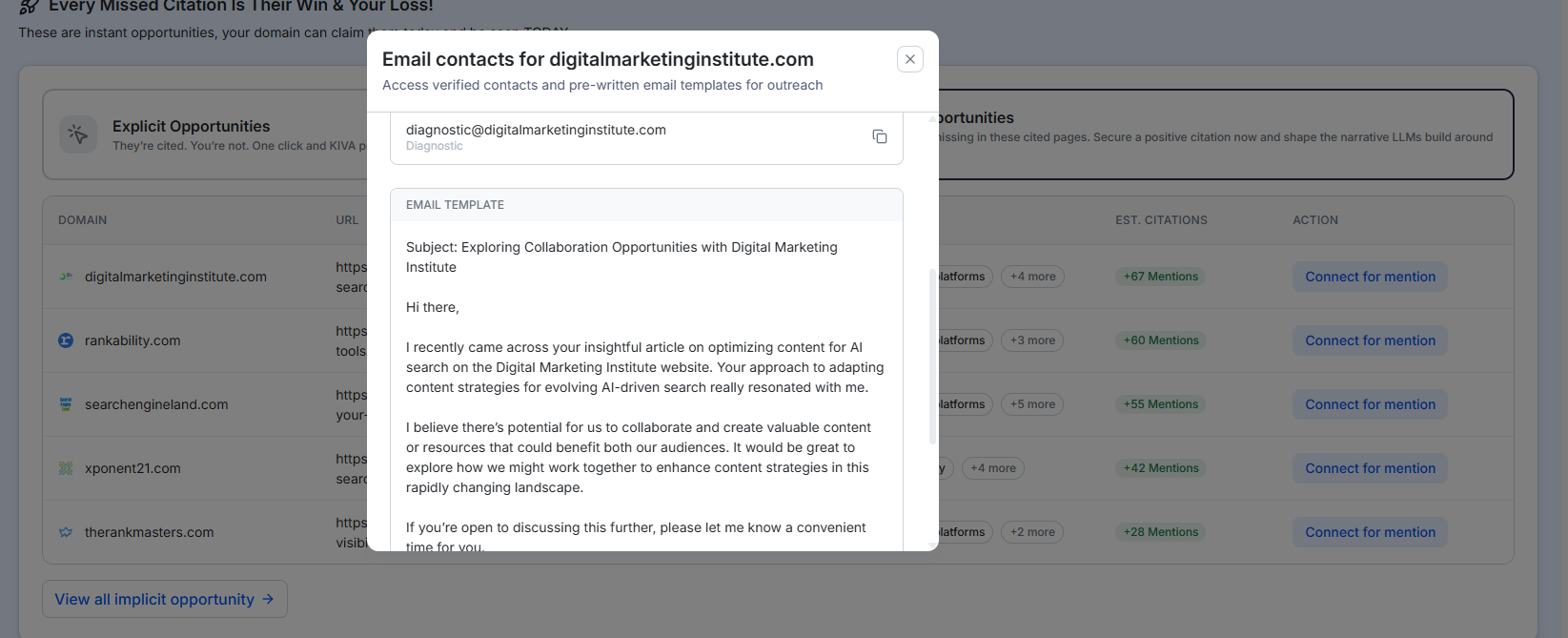
Together, these features help teams move from identifying visibility gaps to actively addressing them.
Final Verdict
Wellows fills a growing gap between traditional SEO analytics and AI-driven discovery. By combining multi-engine visibility tracking, historical analysis, explicit and implicit mention detection, and actionable workflows, it gives marketers a clearer understanding of how AI systems reference their brand over time.
For teams looking to move beyond guesswork and gain clarity into AI search behavior, Wellows offers a practical starting point.
If you want to understand where your brand currently stands inside AI-generated answers — and how that visibility is changing — Wellows provides a 7-day free trial to explore its AI visibility and historical tracking features.
// Sponsored Blog Post