AI News Digest: MIT Study on Job Displacement, Google's AI Comeback, and China's Chip Strategy (November 27, 2025)

AI's rapid evolution, as highlighted in recent developments, is creating both significant opportunities and challenges across industries. By understanding AI's impact on workforce automation, geopolitical competition, and technological advancements, you can proactively prepare for the future of work. Begin exploring AI tools like Hubspot to automate tasks and upskill for a competitive edge in the evolving AI landscape.
Introduction: The Evolving AI Landscape
As families gathered for Thanksgiving feasts in the US during the week of November 27, 2025, the AI world was far from taking a holiday. It was a week buzzing with significant developments, hinting at structural shifts across various sectors. From the potential displacement of jobs through automation to the intensifying geopolitical competition in AI, and from AI-driven healthcare innovations to the transformation of energy infrastructure, the landscape is evolving at breakneck speed. This particular Wednesday, November 27th, stood out as a pivotal day, marked by a confluence of announcements and studies that offer a glimpse into the future shaped by artificial intelligence.
Workforce Automation and the MIT Study
One of the most impactful news items came in the form of a study released by MIT, examining the potential for workforce automation driven by recent advancements in AI. The study suggests that certain routine tasks across industries are increasingly susceptible to automation, raising crucial questions about the future of work and the need for workforce retraining initiatives. This isn't about robots replacing humans wholesale, but rather a shift in the skills required to thrive in an AI-integrated workplace. Tools like Hubspot, a leading CRM platform increasingly incorporating AI, are automating sales and marketing tasks, freeing up human employees for more strategic activities.
Geopolitical Competition: US vs. China
Geopolitical tensions continue to fuel the AI race, particularly between the US and China. This week saw new developments in China's strategy to bolster its domestic chip production, aiming to reduce reliance on foreign technologies. This move directly impacts the global AI supply chain, as advanced chips are essential for training and deploying complex AI models. Understanding the trends in AI News and technological advancements can provide businesses and policymakers alike with a competitive advantage in this evolving global landscape. Kimi K2, a powerful open-source LLM developed in China, is challenging industry leaders.
Healthcare and Energy: AI's Transformative Touch
Beyond the workforce and geopolitical spheres, AI is making significant strides in healthcare and energy. New AI-powered diagnostic tools promise faster and more accurate disease detection, potentially revolutionizing patient care. Similarly, AI is being deployed to optimize energy grids, improve renewable energy forecasting, and enhance energy efficiency, contributing to a more sustainable future. Imagine using a tool like DeepMind AlphaFold, which has revolutionized protein structure prediction, to accelerate drug discovery and personalized medicine.
November 27, 2025, serves as a snapshot of an AI revolution in full swing. The developments across these diverse sectors underscore the pervasive and transformative nature of AI, highlighting both the immense opportunities and the potential challenges that lie ahead. As AI continues to reshape our world, staying informed and adaptable will be crucial for navigating this evolving landscape. Now, let's delve deeper into Google's resurgence in the AI arena.
MIT Study: AI's Impact on the U.S. Workforce – $1.2 Trillion at Stake
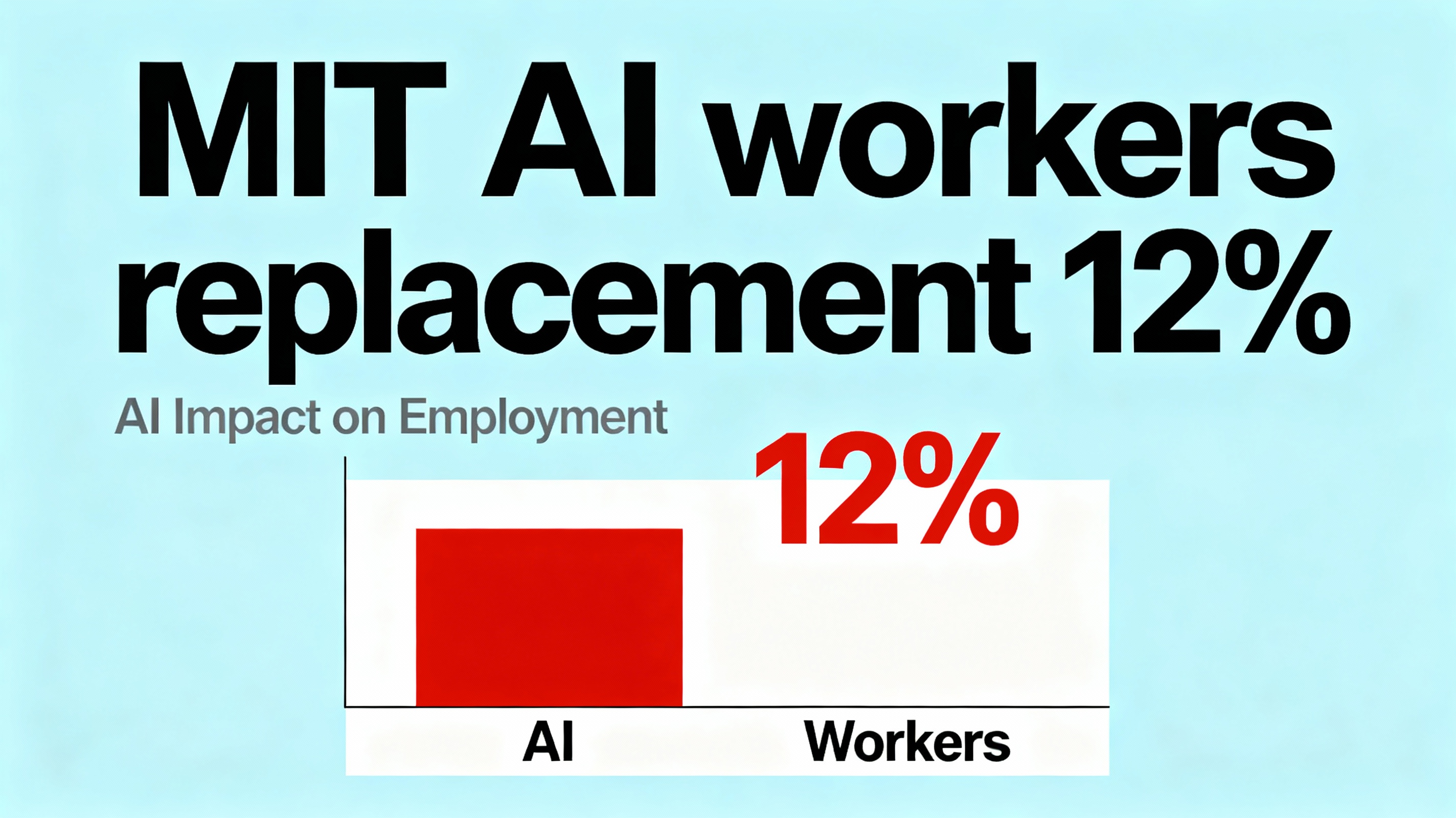
The future of work is a hot topic, especially as AI continues its relentless march into every corner of our economy, and a recent MIT study has quantified just how much of the U.S. workforce could be impacted, estimating a staggering $1.2 trillion in wages at stake.
Project Iceberg: Mapping AI's Reach
MIT's 'Project Iceberg,' a collaboration with Oak Ridge National Laboratory, isn't just another think-piece; it's a deep dive into the potential for AI-driven job displacement. By creating a digital twin of the U.S. labor market, simulating the roles of 151 million workers, the study reveals that AI could technically replace 11.7% of the workforce. This isn't just theoretical; it's about economic feasibility. The study pinpoints which jobs AI can realistically take over, considering factors like cost, technology maturity, and actual business needs. It's the difference between what's possible and what's probable.
Sectors in the Crosshairs
Which sectors are facing the highest exposure? The report highlights several, including:
- Finance: AI is increasingly capable of automating tasks like fraud detection, risk assessment, and customer service, potentially impacting roles from analysts to loan officers.
- Healthcare Administration: Tasks like scheduling, billing, and data entry are ripe for AI automation, potentially streamlining operations but also displacing workers.
- Human Resources: AI-powered tools are already being used for recruitment, onboarding, and performance management, threatening traditional HR roles.
- Logistics: From route optimization to warehouse management, AI is transforming logistics, potentially impacting jobs in transportation and supply chain management.
- Legal and Accounting: AI can automate tasks like legal research, document review, and tax preparation, putting pressure on paralegals, bookkeepers, and junior accountants.
Notably, AI adoption is currently concentrating in the tech sector, particularly in roles related to coding where AI tools like GitHub Copilot, an AI pair programmer that helps developers write code faster and with less effort, are becoming increasingly prevalent. This alone accounts for approximately $211 billion in wages.
Caveats and Policy Implications
It's crucial to temper these findings with a few caveats. The study highlights capability versus imminent job losses. While AI can perform many tasks, that doesn't automatically translate to mass layoffs. There's also the potential for revenue and employment growth at adopting firms. AI can boost productivity, allowing companies to expand and create new roles, even if some existing ones become obsolete.
However, the study's policy implications are clear. States like Tennessee, North Carolina, and Utah are already using the Iceberg Index for workforce planning, trying to anticipate future skills gaps and ensure their citizens are prepared for the AI-driven economy. This includes investments in retraining infrastructure to equip workers with new skills, regional support for areas hit hardest by automation, and adaptation of the social safety net to provide support for those displaced by AI. The AI News stream is constantly updating with more on this rapidly developing landscape.
The MIT study serves as a stark reminder that the AI revolution isn't just about technological advancement; it's about the future of work and the potential for significant societal disruption, making a proactive and well-informed policy approach essential.
Google's AI Comeback: Gemini 3 and Ironwood TPUs
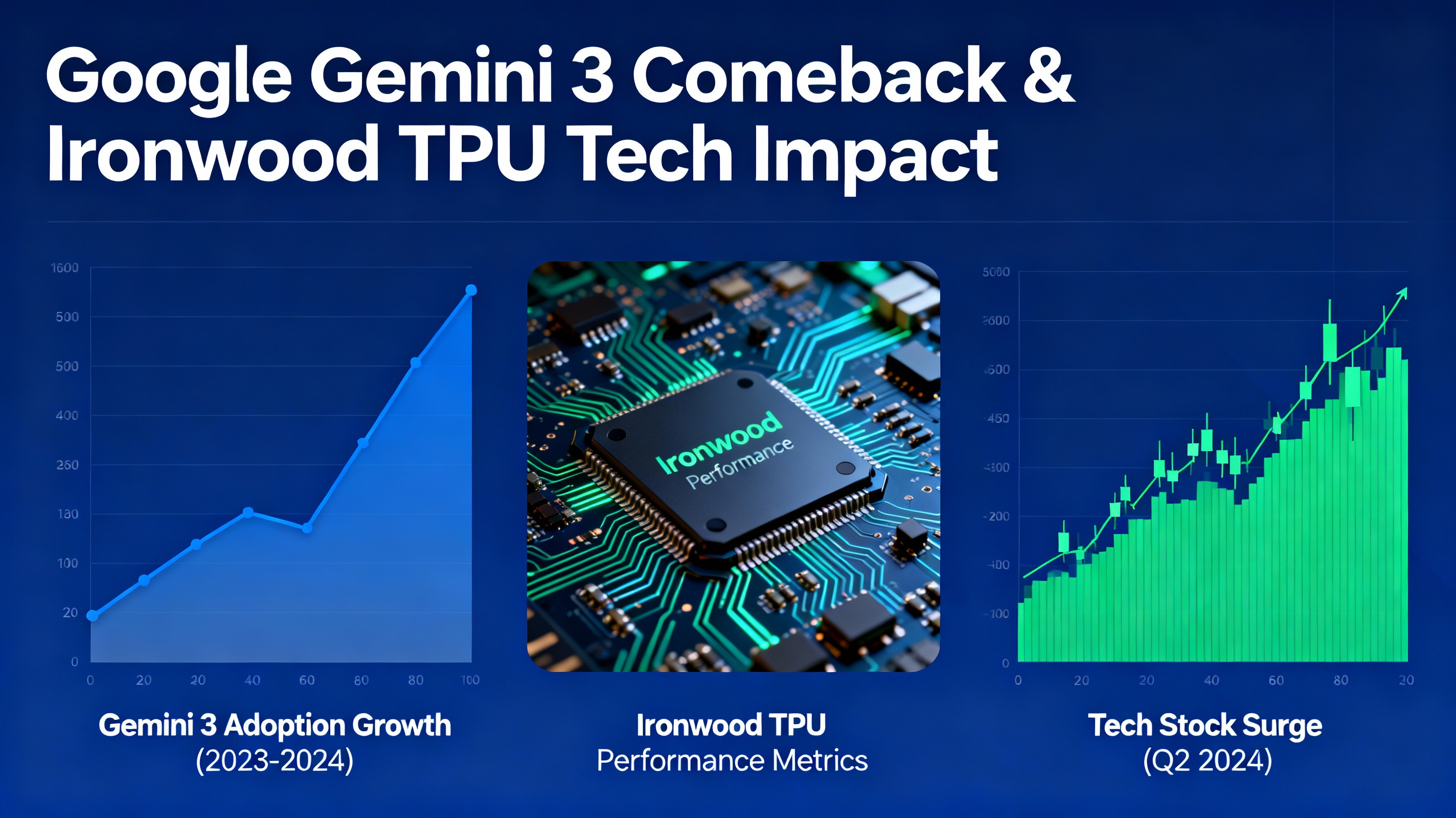
Google is staging a powerful AI comeback, fueled by the impressive performance of its Gemini 3 model and the revolutionary Ironwood AI chips. The resurgence has propelled Google's parent company, Alphabet, to new heights, with its stock surging nearly 70% and its market capitalization surpassing Microsoft's.
The Power of Ironwood TPUs
At the heart of Google's AI advancements lie the Ironwood Tensor Processing Units (TPUs). These chips boast a staggering 30 times greater energy efficiency compared to Google's first-generation TPUs. This leap in efficiency translates to lower operational costs and a reduced environmental footprint, crucial factors in the resource-intensive world of AI. The Ironwood TPUs enable Google to train and deploy increasingly complex AI models like Gemini 3 more sustainably and cost-effectively. They solidify Google's position as a leader in AI hardware innovation, which is paramount to stay competitive in the current AI race.
Gemini 3: A True Contender
Gemini 3 is not just an incremental upgrade; it's a significant leap forward. According to early reviews, the model requires less prompting to achieve desired results and delivers more intelligent and nuanced responses. This ease of use and improved performance is rapidly attracting users, with Gemini 3 surpassing ChatGPT in download velocity, signalling a shift in user preference as people explore the latest innovations. Google’s AI platform, Google AI Studio, is also benefiting from these advancements.
YouTube's Secret Weapon
One of Google's key advantages lies in its ownership of YouTube. This provides Google with an unmatched trove of training data for image and video generation models. The vast dataset allows AI models to learn intricate details about visual content, resulting in more realistic and creative outputs. This advantage is particularly relevant in the burgeoning field of AI-generated video, where models like Sora are making waves.
Financial Triumphs and Competitive Pressures
Google's AI-driven innovations are translating into impressive financial results. The company reported its first $100 billion quarter, fueled by its expanding AI offerings and boasting a $155 billion client backlog. However, the competitive landscape remains fierce. Anthropic's Claude Opus 4.5 and OpenAI's anticipated GPT-5 updates pose ongoing challenges, pushing Google to continuously innovate and improve its AI capabilities. While Google's Gemini app has a strong presence with 650 million monthly active users and its AI Overviews reach 2 billion monthly users, OpenAI's ChatGPT still boasts a substantial user base of 700 million weekly users. This highlights the ongoing battle for AI market share and the importance of staying ahead of the curve. As the AI landscape continues to evolve, Google's commitment to innovation and its strategic advantages position it as a major force to be reckoned with.
Chinese AI Giants Circumvent U.S. Export Controls
As the U.S. tightens its grip on AI chip exports to China, Chinese tech giants are finding resourceful ways to stay in the AI race. Alibaba and ByteDance, for instance, have reportedly been training advanced AI models using data centers located in Southeast Asia to circumvent U.S. export controls, gaining access to powerful Nvidia chips. This practice has accelerated since April 2025, when restrictions on exporting advanced computing hardware to China became even stricter.
Leasing Compute Capacity Offshore
These companies are strategically leasing compute capacity from data centers in Singapore and Malaysia. This allows them to harness the power of Nvidia's H100 and A100 chips, despite the export restrictions. It's a legal loophole, of sorts: these chips are technically accessible because they are housed in foreign-owned facilities, even if the end users are Chinese companies. This approach allows these companies to train large language models (LLMs) like Alibaba's Qwen and ByteDance's Doubao models using Nvidia accelerators.
Deploying Models Domestically
Once the models are trained, their "weights" – the learned parameters that define the model's behavior – are then deployed inside China. This deployment leverages domestically sourced silicon, often from Huawei, ensuring that the AI can run on Chinese infrastructure. However, there's a catch: private Chinese data cannot leave the country, which limits the fine-tuning that can be done on these models once they're deployed. This presents a unique challenge in refining the models for specific local applications.
DeepSeek's Dual Strategy
DeepSeek, another significant player in the Chinese AI landscape, appears to be pursuing a dual strategy. The company is reportedly stockpiling Nvidia components while simultaneously forging closer partnerships with Huawei. This approach provides a hedge against potential supply chain disruptions and ensures access to both international and domestic AI hardware. These strategies show that Southeast Asia is emerging as a strategic fallback region, offering access to computational resources and a means of circumventing U.S. export controls, highlighting the complex dynamics of the global AI race. Staying ahead means constantly tracking AI News and understanding the geopolitical implications.
SAP Launches EU AI Cloud: Europe's Answer to Digital Sovereignty
SAP is making a bold move to champion digital sovereignty with the launch of its EU AI Cloud, designed specifically for European enterprises navigating the complex landscape of data residency and regulatory compliance. Think of it as Europe's answer to the increasing demand for AI solutions that respect local laws and values.
A Unified Approach to Sovereignty
This isn't just another product launch; it's a strategic consolidation of SAP's existing sovereignty initiatives under a single, unified framework. The EU AI Cloud provides a suite of services and deployment options that allow European companies to leverage the power of AI while maintaining complete control over their data. The goal is to make sure that businesses can innovate with AI without compromising on data security or compliance.
Deployment Flexibility
One of the key features is its flexible deployment model. Customers can opt for the SAP Sovereign Cloud, granting them full control over their data and infrastructure. This offers a level of transparency and security that's paramount for organizations dealing with sensitive information. The AI models themselves run on SAP's software abstraction layer within European data centers, ensuring that data never leaves the continent. This is especially critical given the rising concerns over data privacy and international data transfers.
Deployment options are diverse, catering to a wide range of customer needs. Businesses can choose to host their AI solutions in SAP's data centers, with trusted partners, via on-site solutions, or even through the Delos Cloud in Germany – each option designed to ensure data residency and compliance.
Strategic Partnerships
SAP isn't going it alone. The company is teaming up with leading AI players to deliver cutting-edge capabilities. A key partnership with Cohere will bring advanced agentic AI features to the platform through Cohere North. But the collaboration doesn't stop there; SAP is also integrating models from Mistral AI, OpenAI, and other partners, creating a rich ecosystem of AI solutions tailored to the European market. These strategic alliances ensure that the EU AI Cloud remains at the forefront of innovation.
By integrating a diverse range of AI models and offering flexible deployment options, SAP is empowering European enterprises to embrace AI with confidence, knowing their data is secure and compliant.
Meeting Regulatory Demands
This launch is also a direct response to the increasingly stringent European regulatory requirements surrounding data protection and independence. With regulations like GDPR setting a high bar for data privacy, European businesses need AI solutions that are built from the ground up with compliance in mind. SAP's EU AI Cloud aims to meet this need, providing a secure and compliant platform for AI innovation. This proactive approach to regulatory compliance gives businesses a competitive edge, allowing them to focus on innovation rather than regulatory headaches.
In essence, SAP's EU AI Cloud represents a significant step towards enabling European enterprises to harness the power of AI while maintaining digital sovereignty, fostering innovation within a secure and compliant environment.
AI Data Center Boom Extends Coal Plant Lifetimes
Just as AI is reshaping the digital landscape, it's also unexpectedly impacting the energy sector, specifically, the lifespan of coal-fired power plants. The insatiable energy demands of expanding AI data centers are breathing new life into these aging facilities, creating a complex dilemma between technological advancement and environmental responsibility.
The Unforeseen Revival of Coal
Driven by the exponentially increasing need for computing power to fuel AI models, the Trump administration has been actively encouraging utilities to prolong the operation of coal plants. This push is further amplified by the current U.S. Energy Secretary, who anticipates postponing the closure of several dozen coal plants across the nation. The rationale is simple: AI data centers require a massive and reliable energy supply, and coal, despite its environmental consequences, offers a readily available solution. Projections indicate a need for an additional 100 gigawatts of firm capacity over the next five years to meet the growing demands of the AI industry. As a result, coal generation has surged roughly 20% this year, a stark contrast to the previous trend of declining coal usage.
Environmental Implications and Renewable Energy Setbacks
This resurgence of coal power comes at a significant environmental cost. Coal already accounts for more than half of the U.S. power sector's carbon emissions. The reliance on coal is compounded by frozen approvals for some wind projects and restricted new solar development, further tilting the energy landscape towards fossil fuels. Studies suggest that data centers could emit a staggering 2.5 billion tons of greenhouse gases by 2030 and could consume up to 17% of the nation's electricity by the end of the decade, raising serious concerns about the long-term sustainability of AI-driven growth. It is important to review our AI News section for updates on the ever changing landscape of AI's global implications.
A Path Towards Sustainable AI
However, there's a growing recognition of the need for cleaner energy solutions. One potential alternative is the conversion of existing coal sites into AI data center hubs powered by renewable sources. The Homer City coal plant conversion stands as an example of how these facilities can be repurposed to support AI innovation while minimizing environmental impact. This model presents a promising pathway for balancing the energy-intensive needs of AI with the urgent imperative of reducing carbon emissions. Such conversions could be further enabled through the use of workflow automation tools such as n8n, a platform designed to streamline and optimize complex processes, ensuring efficient management of the power grid and integration of renewable energy sources. Exploring this balance is crucial for the future of AI and our environment.
U.S. AI Startup Funding Surge: $100M+ Rounds Dominate 2025
While global AI funding saw its ups and downs in 2025, one trend remained clear: U.S.-based AI startups were raking in massive funding rounds. It was a year of mega-deals, with investors pouring capital into a diverse range of AI applications.
The Rise of the Mega-Rounds
In 2025, a staggering 49 U.S.-based AI startups secured funding rounds of $100 million or more. These aren't just small seed rounds; we're talking about serious capital injections designed to fuel rapid growth and market dominance. Several companies stood out with especially large hauls:
- Anysphere: Leading the pack with a massive $2.3 billion round, signaling huge confidence in its AI infrastructure platform.
- Lila Sciences: Raised $350 million in Series A funding, highlighting investor enthusiasm for AI in scientific research.
- OpenEvidence: Secured $200 million, indicating growing interest in AI-powered legal tech solutions.
- Sierra: Another substantial $350 million round, reflecting the ongoing demand for AI-driven coding tools and platforms like GitHub Copilot.
Sector Diversity Fuels Investment
What’s particularly interesting is the breadth of sectors attracting these mega-rounds. We're not just seeing investment in the usual suspects like large language models (LLMs). Instead, the funding is spread across areas such as:
- Healthcare: AI is revolutionizing diagnostics, drug discovery, and patient care.
- Legal Tech: AI tools like OpenEvidence are streamlining legal processes and improving efficiency.
- Coding Tools: Platforms are using AI to assist developers, automate tasks, and accelerate software development.
- AI Infrastructure: Companies like Anysphere are building the underlying platforms and services needed to power AI applications.
- Scientific Research: Lila Sciences' funding underscores the growing role of AI in accelerating scientific breakthroughs.
This diversification signals a maturing AI landscape, where investors are recognizing the potential of AI to transform various industries.
Concerns and Sustainability
However, the surge in mega-rounds also raises questions. Are valuations becoming inflated? Can these startups sustain their growth trajectories and deliver on the high expectations set by investors? Some analysts worry that the market may be overheating, reminiscent of past tech bubbles. Still, the underlying trend is clear: AI is no longer just an experimental technology. It's now seen as a deployment-focused business opportunity, and investors are eager to get in on the action. Staying informed about the latest developments through resources like AI News is crucial for navigating this rapidly evolving landscape.
Edge AI Breakthrough: Cochlear Implants with Machine Learning
Imagine a world where hearing aids don't just amplify sound, but intelligently adapt to your unique auditory needs – that's the promise of the latest breakthrough in edge AI. Cochlear implants are now being enhanced with integrated edge AI and machine learning, marking a significant leap from the traditional, fixed algorithmic approaches to hearing restoration.
Personalized Soundscapes
For years, cochlear implants have relied on pre-set algorithms to process sound. But everyone's hearing loss is different, and what works for one person might not work for another. The integration of AI changes the game by enabling personalized sound processing. These self-learning systems are designed to optimize auditory signals and suppress background noise in real-time, adapting to the user's environment and specific hearing profile. In initial studies, these AI-driven strategies have shown a remarkable 20% improvement in short-time objective intelligibility (STOI) scores, a key metric for speech understanding.
This transition represents a paradigm shift, moving from one-size-fits-all solutions to truly adaptive and personalized hearing experiences.
AI in Pathology Quality Control: A Booming Market
The benefits of AI aren't limited to just hearing. The broader application of AI in healthcare is experiencing rapid growth. For instance, the AI-powered pathology quality control market is projected to reach a staggering $3.84 billion by 2029. This growth is fueled by advancements in AI's ability to detect anomalies and improve diagnostic accuracy. Tools like RemoveBG, while primarily known for background removal in images, exemplify the underlying AI technology that can be adapted for medical image analysis.
Recent developments in this area include the launch of PathAI's Artifact Detect 1, designed to identify and flag potential issues in pathology samples. Similarly, Molbio Diagnostics' acquisition of OptraSCAN signals a move towards integrated diagnostic solutions, combining advanced scanning technology with AI-driven analysis.
The Future of Adaptive Medical Devices
Edge AI in cochlear implants is more than just a technological upgrade; it's a step towards a future where medical devices are intelligent, adaptive, and personalized. By continually learning and adjusting to the user's needs, these AI-powered implants promise to deliver a richer, more natural hearing experience. As AI continues to permeate various aspects of healthcare, from diagnostics to personalized treatments, we can expect even more revolutionary advancements that improve patient outcomes and quality of life. Stay up-to-date on these and other innovations by visiting our AI News section.
Conclusion: Diverging Paths in AI's Global Evolution
The week's AI news cycle underscores some critical tensions shaping the future of technology and society. We've seen MIT's study highlighting the potential for significant workforce automation due to AI, a stark reminder of the need for proactive adaptation and reskilling initiatives. Simultaneously, Google's renewed push in the AI race, exemplified by advancements with Google Gemini, showcases the relentless competition driving innovation. Gemini aims to be a versatile AI model, excelling in various tasks from text generation to image recognition.
Navigating Global Strategies
China's aggressive pursuit of chip independence, despite facing hurdles, reflects a broader strategic imperative to control key technological components. This ambition is echoed in Europe's quest for technological sovereignty, aiming to establish itself as a leader in AI and related fields, independent of US and Chinese dominance. These geopolitical plays are further complicated by global climate commitments, which demand innovative solutions that AI might help deliver, but also necessitate careful consideration of the energy footprint of AI technologies themselves.
Coordination or Fragmentation?
Looking ahead, these tensions suggest two potential trajectories: either increased global coordination in AI development, or further fragmentation into distinct regional ecosystems. The path we take will be determined by how we navigate differing technological standards, regulatory frameworks, and strategic objectives. Will the world embrace a unified approach to AI, fostering collaboration and shared benefits? Or will geopolitical rivalries and differing values lead to siloed AI landscapes, potentially hindering progress and exacerbating inequalities? Only time will tell which path prevails, but the choices we make today will irrevocably shape the AI-driven world of tomorrow.
🎧 Listen to the Podcast
Hear us discuss this topic in more detail on our latest podcast episode: https://open.spotify.com/episode/3YkG1o7XDnni8x9i0izP1V?si=wa3DJTBcQfWpTg3l6kwwiQ
Recommended AI tools

Salesforce Platform
Productivity & Collaboration
Build, automate, and scale with next-gen AI agents and data on the #1 Agentforce 360 Platform.

Lovable
Code Assistance
Build full-stack apps from plain English

Bolt.new
Code Assistance
Build full-stack apps at the speed of thought—AI-powered, browser-native, instantly deployed.

NVIDIA AI Workbench
Code Assistance
Develop, customize, and scale AI anywhere

Replit
Code Assistance
Build, test & automate apps with AI—autonomously, in your browser

v0
Code Assistance
Generate full web apps from ideas in minutes—no coding required.
Was this article helpful?
Found outdated info or have suggestions? Let us know!