
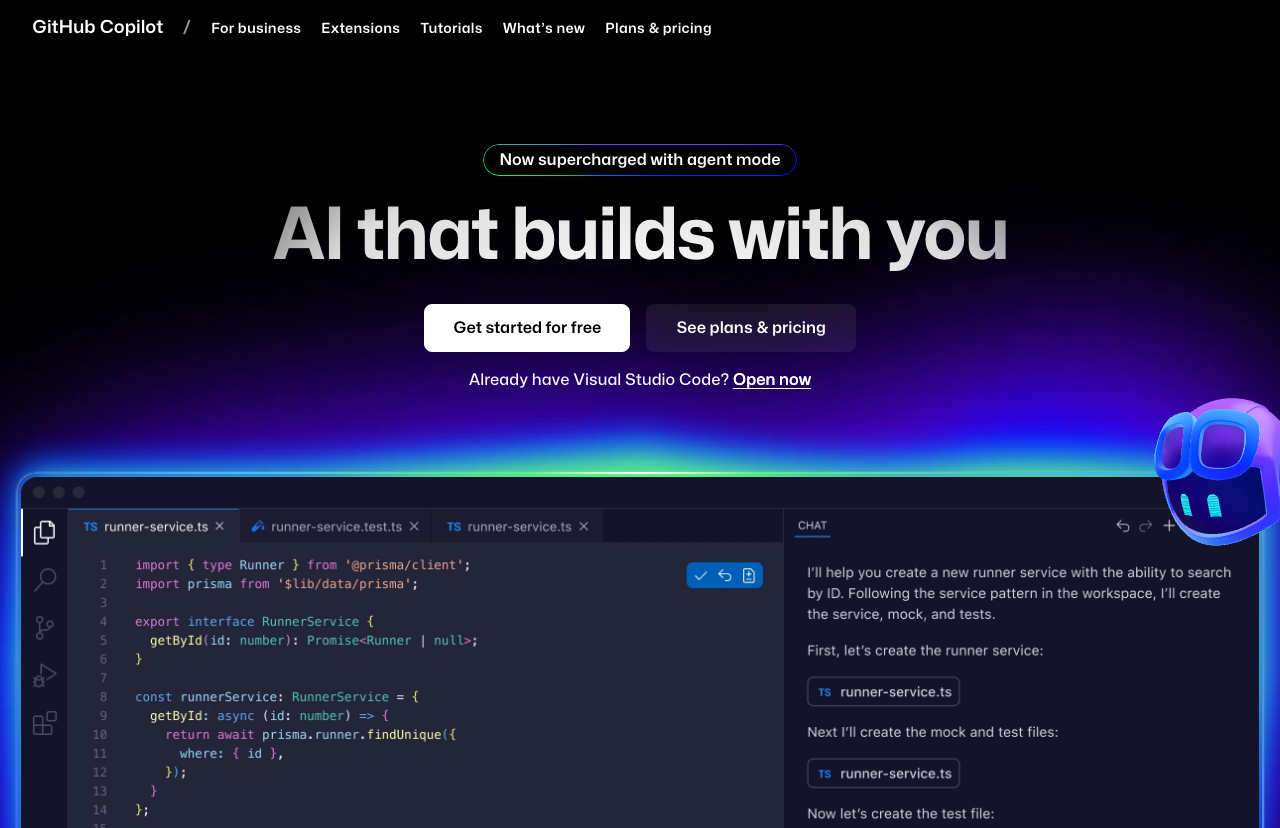


GitHub Copilot: Navigating the AI-Assisted Coding Landscape
GitHub Copilot has rapidly become a prominent fixture in the software development world, fundamentally changing how code is written and maintained. With its AI-powered capabilities, it aims to boost developer productivity and streamline complex tasks. This analysis explores the tool's position in the market, dissects its strengths and weaknesses, and provides actionable insights for potential users.
The Rise of AI-Powered Code Assistants
The emergence of GitHub Copilot reflects several key trends in the software development industry:
- Increasing Complexity:Modern software projects are becoming increasingly complex, demanding more from developers in terms of knowledge, skills, and time. AI assistants help manage this complexity.
- Demand for Efficiency:Businesses are constantly seeking ways to accelerate software development cycles and reduce time-to-market. Tools like Copilot directly address this need.
- Advancements in AI:Recent breakthroughs in machine learning, particularly large language models (LLMs), have made it possible to create AI tools that can understand and generate code with impressive accuracy.
The coding assistance category is rapidly evolving, with GitHub Copilot leading the charge. Its high monthly visits (504,040,936) and global rank (#65) demonstrate significant market traction and user engagement, even with a moderate average rating of 4.0 and a limited number of reviews (5).
Competitive Landscape Analysis
GitHub Copilot faces competition from other AI-powered code editors and assistants. Key competitors include:
- Cursor:With a higher upvote count (781), Cursor emphasizes its understanding of the entire codebase, potentially offering more context-aware suggestions than Copilot in some situations.
- Windsurf (ex Codium):Windsurf positions itself as an agent-powered IDE designed for developer flow, indicating a focus on automating workflows and streamlining the coding process. Its upvote count (473) suggests a strong following.
- Claude:While not solely a code editor, Claude's capabilities in coding, research, and productivity make it a viable alternative, especially for developers who need an AI assistant for a broader range of tasks. It utilizes a freemium, pay-per-use, and enterprise pricing model offering flexibility.
- Lovable:Lovable distinguishes itself by enabling the building of full-stack applications from plain English. This natural language approach could appeal to developers seeking a more intuitive coding experience, especially for rapid prototyping.
- Google AI Studio:Leverages Google's Gemini models and offers a freemium, pay-per-use, and enterprise pricing model.
GitHub Copilot's key advantage lies in its seamless integration with GitHub and popular IDEs, making it a natural choice for developers already embedded in the GitHub ecosystem. However, competitors are vying for market share by offering specialized features and alternative workflows.
Strengths of GitHub Copilot
- Deep GitHub Integration:Tight integration with GitHub repositories enables Copilot to learn from existing codebases and provide highly relevant suggestions. This is a significant advantage for projects hosted on GitHub.
- Broad IDE Support:Copilot's support for multiple IDEs (VS Code, Visual Studio, JetBrains, Xcode, Eclipse, Vim/Neovim) makes it accessible to a wide range of developers, regardless of their preferred coding environment.
- Context-Aware Suggestions:Copilot analyzes the surrounding code and provides suggestions that are contextually relevant, reducing the need for manual coding and debugging.
- Multi-File Editing:The ability to edit multiple files simultaneously allows developers to make changes across entire projects more efficiently.
Limitations of GitHub Copilot
- Dependency on Training Data:Copilot's suggestions are based on the data it was trained on, which may not always reflect the latest best practices or project-specific requirements. This can lead to inaccurate or suboptimal code.
- Potential for Plagiarism:Developers need to be careful about blindly accepting Copilot's suggestions, as there is a risk of inadvertently incorporating copyrighted code into their projects. Code review processes should be updated to consider this.
- Over-Reliance:Depending too much on Copilot can hinder the development of fundamental coding skills, particularly for junior developers. It's crucial to strike a balance between AI assistance and hands-on coding practice.
- Code Quality Concerns:While Copilot can generate code quickly, the quality of the generated code may vary. Developers need to carefully review and test Copilot's suggestions to ensure they meet the project's standards.
- Freemium Limitations:While a free tier is planned for 2025, the limitations of the freemium model may push some users towards enterprise solutions, or towards competitors with a more generous free offering.
Practical Tips and Best Practices
To maximize the benefits of GitHub Copilot and mitigate its limitations, consider the following best practices:
- Use Copilot as a Complement, Not a Replacement:Treat Copilot as a helpful assistant, but always maintain control over the coding process. Don't blindly accept suggestions without careful review and understanding.
- Focus on Code Understanding:Use Copilot to accelerate repetitive tasks, but dedicate time to understanding the underlying code and algorithms. This will help you develop stronger coding skills and catch potential errors.
- Establish Code Review Processes:Implement robust code review processes to ensure that Copilot's suggestions meet the project's quality standards and don't introduce security vulnerabilities or licensing issues.
- Customize Copilot's Settings:Explore Copilot's settings and customize them to match your coding style and preferences. This can improve the accuracy and relevance of its suggestions.
- Leverage Natural Language Coding:Take advantage of Copilot's ability to understand natural language. Use descriptive comments to guide Copilot and generate code that aligns with your intentions.
- Utilize Copilot for Documentation and Testing:Employ Copilot's capabilities to automatically generate documentation and test cases. This can save time and improve the overall quality of your projects.
User Perspectives and Experiences
While specific user testimonials are not available, industry experts and developers generally view GitHub Copilot as a valuable tool for boosting productivity and streamlining coding tasks. However, there are also concerns about its potential impact on code quality and the development of coding skills. Based on general trends, here are common user experiences:
- Increased Productivity:Many users report a significant increase in coding speed and efficiency, particularly for repetitive tasks and boilerplate code.
- Improved Code Quality (Potentially):When used correctly, Copilot can help developers identify and fix errors, leading to improved code quality. However, this requires careful review and testing.
- Enhanced Learning:Some developers find that Copilot helps them learn new programming languages and frameworks by providing examples and suggestions.
- Frustration with Inaccurate Suggestions:Users sometimes encounter inaccurate or irrelevant suggestions, which can be frustrating and time-consuming to correct.
- Concerns about Security:There are concerns about the potential for Copilot to introduce security vulnerabilities into code, especially if developers blindly accept its suggestions.
Future Outlook and Predictions
The future of AI-powered code assistants like GitHub Copilot looks promising. As AI technology continues to evolve, we can expect to see even more sophisticated and intelligent coding tools emerge. Key trends to watch include:
- Enhanced AI Models:Future AI models will likely be trained on larger and more diverse datasets, leading to more accurate and context-aware suggestions.
- Improved Code Understanding:AI tools will become better at understanding the intent behind code, enabling them to generate more relevant and useful suggestions.
- Automated Debugging and Testing:AI will play an increasingly important role in automated debugging and testing, helping developers identify and fix errors more quickly.
- Integration with DevOps Pipelines:AI tools will be integrated with DevOps pipelines, enabling automated code generation, testing, and deployment.
- Customizable AI Agents:The trend towards custom agents will allow developers to tailor AI assistants to their specific needs and workflows. The ability to create custom agents for CI/CD and security workflows is a significant step in this direction.
ROI Considerations
Determining the return on investment (ROI) of GitHub Copilot requires careful consideration of its costs and benefits. Key factors to consider include:
- Developer Productivity:Quantify the increase in developer productivity resulting from Copilot's assistance. This can be measured in terms of reduced coding time, fewer errors, and faster time-to-market.
- Code Quality:Assess the impact of Copilot on code quality. While Copilot can help improve code quality, it can also introduce errors if not used carefully.
- Training Costs:Factor in the cost of training developers on how to use Copilot effectively. This may involve providing documentation, tutorials, and hands-on training.
- [Subscription](/tools/pricing/subscription) Costs:Consider the cost of Copilot subscriptions, especially for enterprise teams. Evaluate whether the benefits of Copilot justify the subscription costs.
- Opportunity Costs:Weigh the opportunity costs of using Copilot versus alternative solutions. There may be other tools or approaches that offer a better ROI for your specific needs.
Conclusion
GitHub Copilot is a powerful tool that has the potential to transform the software development landscape. By understanding its strengths, limitations, and best practices, developers can leverage Copilot to boost productivity, improve code quality, and accelerate software development cycles. As AI technology continues to evolve, we can expect to see even more sophisticated and intelligent coding tools emerge, further blurring the lines between human and machine intelligence in software development.