
The AI landscape is being reshaped by infrastructure investments, multimodal AI, and privacy, requiring businesses to adapt to remain competitive. To succeed, prioritize building a robust data strategy that emphasizes privacy, and consider exploring multimodal models to improve efficiency. Stay informed about these shifts to navigate the evolving AI arms race and unlock new opportunities.
Executive Summary: The AI Landscape in Late 2025
The AI landscape in late 2025 is a battleground where massive infrastructure investments, increasingly sophisticated multimodal AI models emerging from China, and a growing emphasis on privacy are reshaping the competitive dynamics. The stakes are high, and the players are making bold moves to secure their positions in this rapidly evolving field. These developments signify a shift in how we understand AI competition; it's no longer solely about algorithms, but also about the underlying infrastructure, strategic data management, and commitment to user privacy. Let's dive into some of the key events defining this new era.
Infrastructure Investment: Anthropic's $50 Billion Bet
One of the most significant signals of the escalating AI arms race is Anthropic's planned investment in data centers. With a staggering $50 billion earmarked for developing next-generation infrastructure, Anthropic is clearly betting big on the future of AI. This investment isn't just about raw computing power; it's about creating the specialized architecture needed to train and deploy ever-larger and more complex AI models. Think of it as building a state-of-the-art racetrack specifically designed for Formula 1 cars – it gives you a distinct competitive edge. This level of investment underscores the critical role that infrastructure plays in determining who leads the AI revolution. It will be interesting to see whether this investment will give them a competitive advantage against tools like Claude, an AI assistant known for its strong reasoning and coding abilities.
Multimodal AI: Baidu's ERNIE 5.0 Enters the Arena
While much of the AI spotlight has been on Western companies, China is rapidly catching up, and Baidu's ERNIE 5.0 is a prime example. This multimodal AI model demonstrates China's growing capabilities in developing sophisticated AI systems. Multimodal AI, which can process and integrate information from various sources like text, images, and audio, is seen as a crucial step towards more human-like intelligence. ERNIE 5.0's emergence signals a challenge to the dominance of Western AI models and highlights the increasingly global nature of AI development. It also places greater emphasis on the need to understand the different cultural contexts and priorities that shape AI development in different regions. Keep an eye on our AI News section for updates on this and other emerging AI models.
Privacy-First Initiatives: A New Competitive Edge
As AI becomes more deeply integrated into our lives, concerns about data privacy are also growing. Companies are beginning to recognize that a commitment to privacy can be a competitive differentiator. IBM, for instance, has been vocal about the risks of data silos and the importance of secure data management in AI. Similarly, Google's Privacy AI Compute initiative aims to develop AI technologies that protect user privacy while still delivering powerful AI capabilities. This focus on privacy is not just about regulatory compliance; it's about building trust with users and creating a more sustainable future for AI. Tools like GptZero have been developed to detect AI-generated content, enhancing transparency and trust in the digital space. These initiatives are reshaping the competitive landscape, rewarding companies that prioritize ethical data handling and user privacy. In 2025, this aspect is becoming increasingly important.
In conclusion, the AI arms race is no longer solely a technological competition but also an infrastructural, strategic, and ethical one. Companies like Anthropic, Baidu, IBM, and Google are actively shaping this new landscape, setting the stage for a future where AI is not only powerful but also responsible and aligned with human values. As these trends continue to evolve, understanding their implications will be crucial for anyone looking to navigate the complex world of AI.
Anthropic's $50 Billion Bet: Infrastructure and Geopolitical Strategy
Anthropic, one of the leading AI companies, is making a massive $50 billion bet on the future of AI infrastructure right here in the United States. This isn't just about servers and cooling systems; it's a strategic move that intertwines technological advancement with geopolitical considerations. This also ties in with AI News and its effects on the global landscape.
Anthropic's Investment in US Data Centers
Anthropic's partnership with Fluidstack will result in the construction of state-of-the-art data centers, primarily located in Texas and New York. This initiative is projected to generate a substantial number of jobs, boosting local economies and creating a ripple effect of economic activity. Consider this a modern-day equivalent of the industrial revolution, but instead of factories, we're building data fortresses.
What makes this investment particularly intriguing is its alignment with what some are calling President Trump's 'America First' AI doctrine. By anchoring AI research and development within US borders, the nation aims to maintain its competitive edge and ensure that the benefits of AI innovation primarily accrue to its citizens. This concept also plays into the discussion on the future of AI.
Comparing the Scale: Meta, Stargate, and Beyond
To put the magnitude of Anthropic's $50 billion investment into perspective, it's comparable to the colossal sums being poured in by tech giants like Meta. It also echoes the ambitious SoftBank/OpenAI/Oracle Stargate partnership, a project aimed at constructing cutting-edge AI supercomputing infrastructure. These massive investments underscore the recognition that AI's future hinges not only on algorithms but also on the raw computational power needed to train and deploy these models.
TD Cowen's analysis further validates this trend, indicating a significant surge in demand for data center capacity leasing. This suggests that the race for AI dominance isn't just about attracting the best talent or developing the most innovative algorithms; it's equally about securing access to the vast computational resources required to stay ahead.
Geopolitical Implications
Beyond the economic and technological implications, Anthropic's investment reflects a broader geopolitical strategy. Governments worldwide are waking up to the realization that AI is a strategic asset, and the nation that controls AI infrastructure will wield significant influence in the years to come. Efforts to establish AI research hubs within friendly nations are intensifying, signaling a shift towards a more localized and secure AI ecosystem. This focus on securing resources connects with topics related to AI ethics.
Anthropic's massive investment is more than just a financial transaction; it's a statement of intent, a commitment to securing America's place at the forefront of the AI revolution. As the AI arms race intensifies, expect to see more such strategic alliances and infrastructure investments as nations jostle for position in this transformative technology.
Baidu's ERNIE 5.0: A Multimodal AI Breakthrough from China
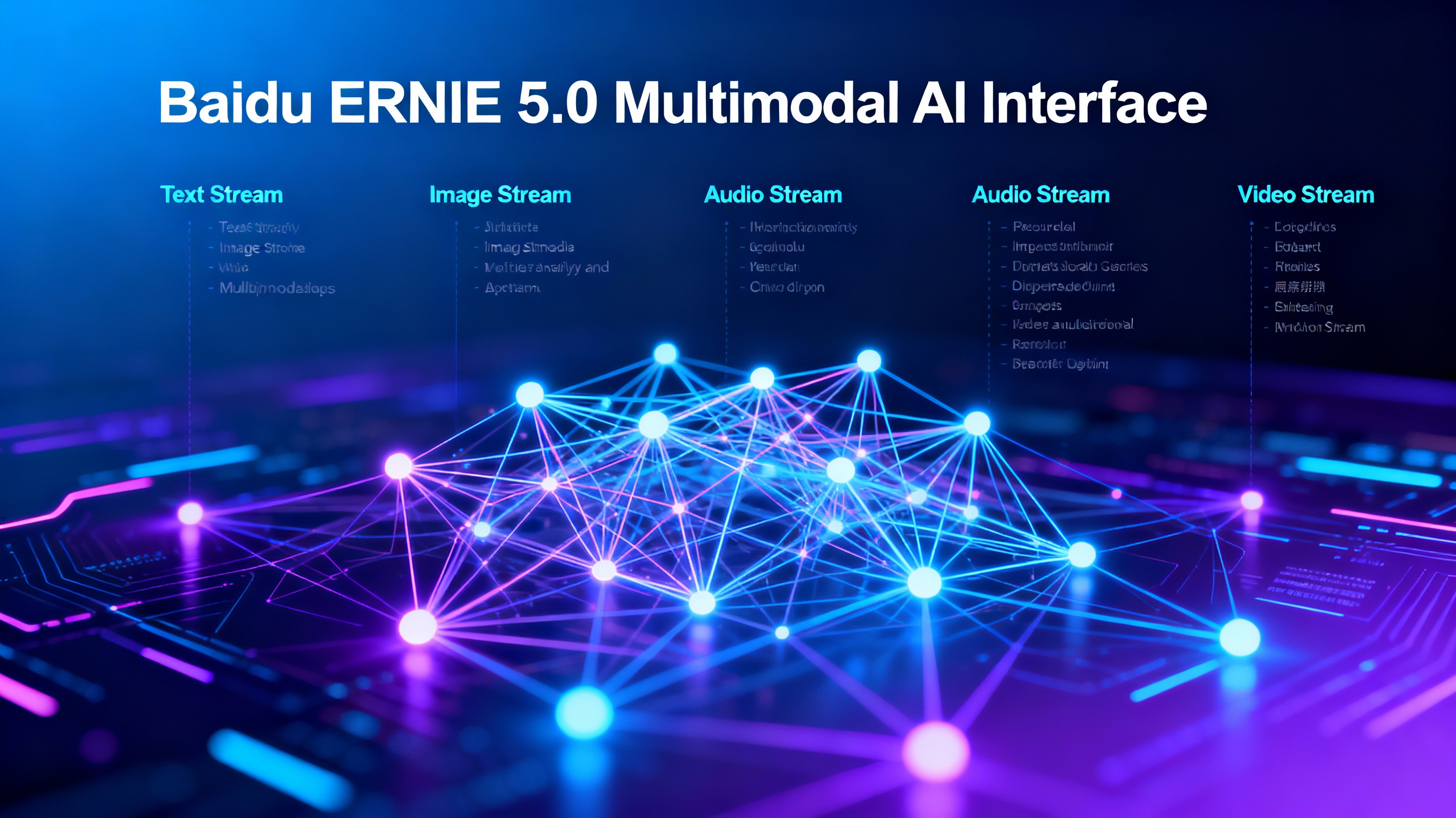
While the Western AI landscape is dominated by names like OpenAI and Google, China is making significant strides with its own powerful AI models, and Baidu is at the forefront. The tech giant recently unveiled ERNIE 5.0, a natively omni-modal foundation model, marking a significant leap in AI capabilities from the East. Think of it as a Swiss Army knife for AI, capable of handling a wide array of tasks with impressive dexterity.
ERNIE 5.0: The Omni-Modal Marvel
What sets ERNIE 5.0 apart is its ability to jointly model text, images, audio, and video. This means it can understand and generate content across multiple modalities, paving the way for more intuitive and versatile AI applications. This is a departure from earlier AI models that typically specialized in just one or two areas. Baidu's move suggests a strategic shift towards natively unified omni-modal modeling, aiming for a more holistic and integrated AI experience. The model is readily accessible to users through ERNIE Bot (Baidu's answer to ChatGPT) and also through Baidu AI Cloud's Qianfan platform, making it available to developers and businesses alike. Think of Qianfan as Baidu’s version of Google Cloud AI. It is a comprehensive platform for building, training, and deploying AI models.
Beyond ERNIE: Digital Humans and More
But Baidu's advancements don't stop there. The company also announced upgrades to its digital human technology and other AI tools, demonstrating a broad commitment to innovation across the AI spectrum. Imagine lifelike virtual assistants capable of engaging in natural conversations and performing complex tasks – that's the direction Baidu is heading. This commitment to diverse AI applications highlights the breadth of Baidu's AI strategy, positioning it as a major player in the global AI landscape.
ERNIE 4.5: A Glimpse of Things to Come
It’s also worth noting that ERNIE 4.5, the predecessor to ERNIE 5.0, already demonstrated impressive capabilities. Benchmarks showed that ERNIE 4.5 outperformed GPT and Gemini on key multimodal reasoning tasks. Specifically, it exhibited superior performance on the MathVista, ChartQA, and VLMs Are Blind benchmarks. These benchmarks test an AI's ability to reason across different types of data, such as visual data in charts and diagrams, and complex mathematical problems. ERNIE 4.5's success in these areas suggests that Baidu is developing AI models that are not only powerful but also capable of sophisticated reasoning.
Challenging the Status Quo
Baidu's efficiency-first approach also challenges the conventional
Moonshot AI's Kimi K2 Thinking: Another Chinese AI Challenger
The AI arms race isn't just a two-horse race between Silicon Valley giants; it's a global competition, and China is emerging as a significant contender. Now, Moonshot AI, backed by tech behemoths Alibaba and Tencent, has thrown its hat into the ring with its unveiling of Kimi K2 Thinking. This development signals a new phase in the AI landscape, with open-source models challenging the dominance of proprietary systems.
Kimi K2 Thinking: A New Paradigm
Kimi K2 Thinking isn't just another AI model; it's an open-source reasoning model designed to push the boundaries of what AI can achieve. In simple terms, this means the underlying code and architecture are available for anyone to inspect, modify, and improve. It's like the difference between a black box appliance and a set of LEGO bricks – one is a closed system, while the other encourages innovation and collaboration. This open-source nature fosters a community-driven approach to AI development, potentially accelerating its progress and ensuring broader accessibility.
Outperforming the Giants
What makes Kimi K2 Thinking particularly noteworthy is its claimed performance. According to Moonshot AI, the model outperforms even the most advanced proprietary models like GPT-5 and Claude Sonnet 4.5 in key areas. These areas include reasoning, which is the ability to draw logical inferences and solve complex problems; coding, indicating proficiency in generating and understanding computer code; and agent capabilities, referring to the model's ability to act autonomously and achieve specific goals. If these claims hold true, Kimi K2 Thinking represents a significant leap forward in AI capabilities and could disrupt the existing hierarchy of AI models. For tasks like coding, you may use a tool such as GitHub Copilot which is an AI pair programmer that offers code suggestions and autocompletions.
A Chinese Challenger Emerges
The emergence of Kimi K2 Thinking underscores China's growing ambition and capabilities in the AI domain. With the backing of major domestic tech players, Moonshot AI is well-positioned to drive innovation and compete on a global scale. This development has significant implications for the AI landscape. It not only fosters competition, driving overall progress, but also raises important questions about the future of AI development: Will open-source models become the dominant paradigm? Can Chinese AI companies truly challenge the dominance of their Western counterparts? Only time will tell, but one thing is clear: Kimi K2 Thinking has added a new, compelling dimension to the AI arms race.
IBM's Warning: Data Silos as the 'Achilles' Heel' of Enterprise AI
The AI arms race isn't just about algorithms and computing power; it's increasingly a battle for data supremacy, and the way organizations manage that data could be their ultimate downfall. In a recent warning, IBM highlighted data silos as the 'Achilles' heel' of enterprise AI, a challenge that could cripple even the most ambitious AI initiatives. This isn't just about messy databases; it's a fundamental impediment to unlocking the true potential of AI in business. Tools like Watsonx Orchestrate, which helps automate AI-powered workflows, are emerging to tackle this problem.
The Fragmentation Fiasco
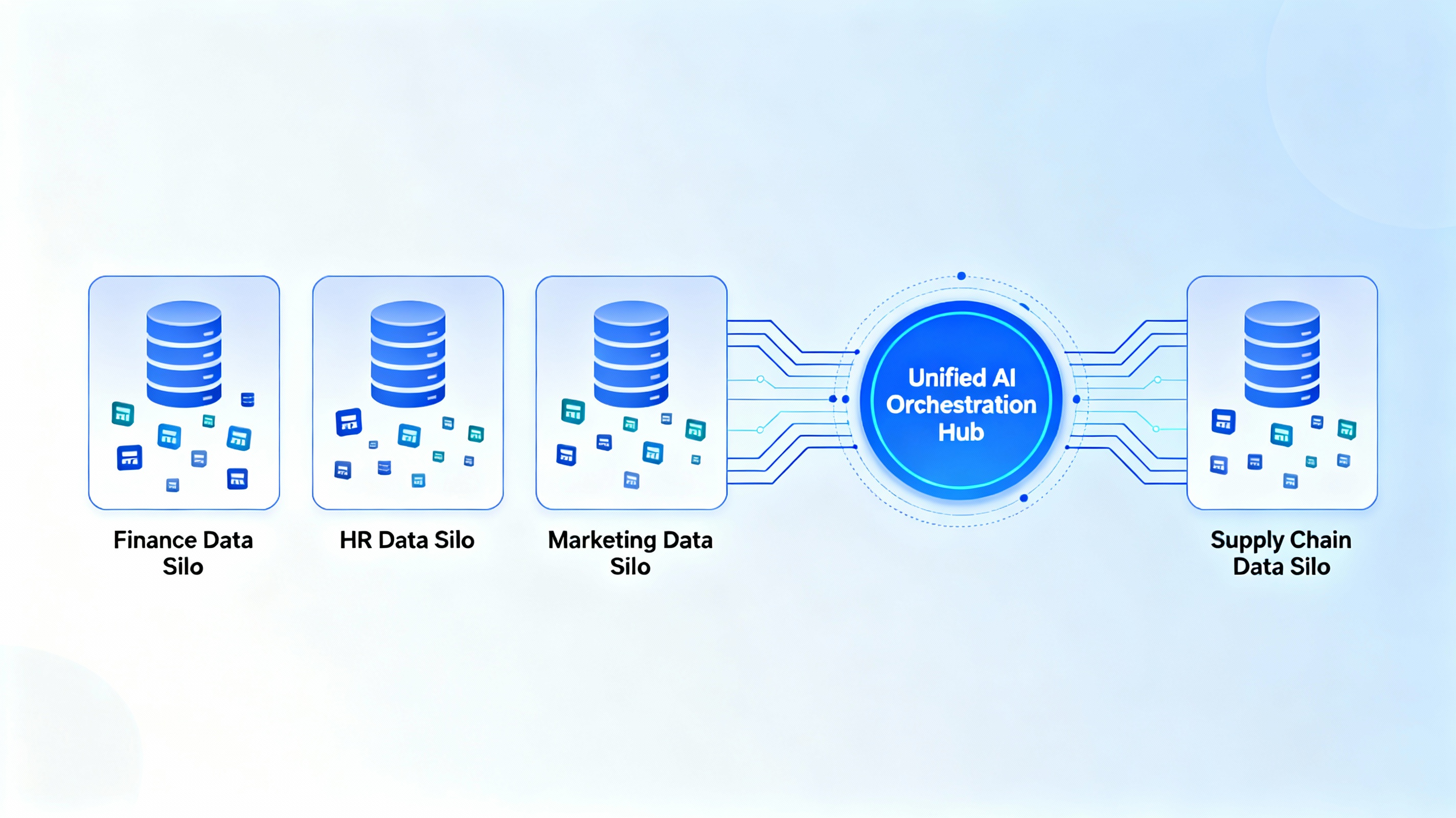
IBM's study paints a clear picture: data fragmentation is rampant across the enterprise. Finance, HR, marketing, and supply chain – each department operates with its own data sets, often incompatible and isolated. This siloed approach means that valuable insights are trapped, and the organization struggles to get a holistic view. Imagine trying to assemble a puzzle when each department only has a handful of pieces. The result is a fragmented, incomplete picture that hinders effective decision-making. Teams are spending an exorbitant amount of time simply aligning data, wrestling with incompatible formats and inconsistent definitions, rather than generating actionable insights. This drastically reduces the ROI of AI investments. A tool like n8n, a workflow automation platform, can help to integrate these disparate data sources.
CDOs in the Crosshairs
Chief Data Officers (CDOs) are acutely aware of the problem. They recognize the importance of driving business outcomes through AI, but they often lack the tools and clear metrics to measure the true value of their data. It's like trying to navigate a ship without a compass or a map. Without clear measures of data value, it's difficult to prioritize investments, track progress, and demonstrate the impact of data initiatives on the bottom line. CDOs need better frameworks for quantifying the value of data and aligning data strategy with business goals. For some, they are using tools like Databricks to overcome this very problem.
A Paradigm Shift: Bringing AI to the Data
The traditional approach of 'centralize data for AI' – often involving massive data lakes – is giving way to a more pragmatic approach: 'bring AI to the data.' This shift recognizes the inherent challenges of moving and consolidating vast amounts of data, particularly when dealing with sensitive or regulated information. Instead of trying to force all data into a single repository, organizations are increasingly exploring data mesh and data lakehouse architectures that allow AI models to access data where it resides. The goal is to minimize data movement, reduce latency, and improve security and governance. This decentralized approach requires new tools and techniques for federated learning, data virtualization, and AI-powered data integration.
IBM's Watsonx Orchestrate Agent Builder: A Potential Solution
To directly address the data silo challenge, IBM has introduced Watsonx Orchestrate Agent Builder. This aims to simplify the creation and deployment of AI-powered agents that can access and integrate data across disparate systems. By providing a low-code/no-code environment for building AI agents, IBM hopes to empower business users to unlock the value of their data without relying on specialized technical skills. Whether this tool will truly bridge the gaps remains to be seen, but the intent is clear: break down data silos and accelerate the adoption of enterprise AI. Overcoming the data silo challenge is not just about technology; it's about fostering a data-driven culture, promoting collaboration between departments, and empowering CDOs with the tools and metrics they need to succeed. As the AI arms race intensifies, the organizations that can effectively manage and leverage their data will be the ones that ultimately prevail.
Google's Privacy AI Compute: Privacy as a Competitive Advantage

In a world increasingly concerned about data security, Google is making a bold move to position privacy as a competitive advantage with its new Private AI Compute. This initiative directly mirrors Apple's pioneering privacy architecture, indicating a growing industry trend towards prioritizing user data protection. The move signals a significant shift in how tech giants are approaching AI development and deployment, recognizing that trust is paramount for widespread adoption.
Secure Processing with Gemini
At the heart of Google's Private AI Compute lies the ambition to process data using its powerful Gemini models—without compromising user privacy. The system is designed to execute AI workloads securely within the cloud, ensuring that sensitive personal data remains shielded from exposure. This means leveraging AI's capabilities for personalized experiences while adhering to stringent privacy controls. Think of it as having a personal AI assistant that understands your needs but can't spill your secrets to anyone, not even Google itself.
The Tech Behind the Privacy
Google's Private AI Compute is built on cutting-edge technology, specifically custom Tensor Processing Units (TPUs) fortified with Titanium Intelligence Enclaves (TIE). These specialized enclaves act as secure containers for data processing, adding an extra layer of protection against unauthorized access. Furthermore, all data transfers are encrypted, rendering them indecipherable to Google engineers or any external entities. It's like sending a top-secret message in an unbreakable code, ensuring that only the intended recipient—in this case, the AI model—can decipher and utilize the information.
Pixel 10 and Beyond
Initially, Private AI Compute will power enhanced AI experiences on the upcoming Pixel 10 devices. This strategic deployment suggests that Google envisions privacy-preserving AI as a key differentiator for its flagship hardware. By integrating this technology directly into its devices, Google aims to offer users a seamless and secure AI experience, setting a new standard for data protection in the mobile space. As AI continues to weave itself into the fabric of our daily lives, Google's commitment to privacy could be a game-changer, fostering greater trust and encouraging broader adoption of AI-powered services.
UK Government Proposes Legal Defense for AI Safety Testing
The AI arms race isn't just about who can build the biggest model; it's also about ensuring these powerful tools are used responsibly, and that starts with rigorous safety testing. Now, the UK government is stepping up its game with a groundbreaking proposal: a legal defense for AI safety testing, designed to encourage thorough evaluation of AI systems. This move could set a new global standard for AI governance, prioritizing safety from the outset.
A Shield for Responsible Testing
At the heart of this proposal is the recognition that testing AI models for potential harms, particularly child sexual abuse imagery (CSAI) vulnerabilities, is crucial. The UK government envisions designated bodies that can probe AI models, like DeepSeek, known for its efficient coding and language models, to uncover and address these hidden risks. This legal defense acts as a shield, protecting these testers from potential legal repercussions that might arise during the testing process. Without such protection, the fear of legal action could stifle crucial safety checks, leaving AI systems vulnerable to exploitation.
A Global First in CSAI Risk Mitigation
What makes this initiative particularly noteworthy is that it represents the first policy framework globally explicitly designed to tackle CSAI risks in AI systems. It’s a proactive step towards ensuring that AI isn't inadvertently contributing to or enabling the spread of harmful content. By focusing on CSAI, the UK government is addressing a clear and present danger, setting a precedent for other nations to follow.
'Safety by Design': A Proactive Regulatory Stance
This regulatory approach underscores the importance of 'safety by design'. It's not enough to simply react to problems as they arise; safety must be an integral part of the AI development lifecycle. This means embedding ethical considerations and rigorous testing protocols from the very beginning, rather than bolting them on as an afterthought. For instance, developers might use Hugging Face, a leading open-source platform for machine learning, to access pre-trained models and datasets while also implementing these safety checks. By prioritizing safety testing 'by design,' the UK government is signaling a commitment to responsible AI innovation, ensuring that the benefits of AI are not overshadowed by its potential harms.
Ultimately, the UK's proposed legal defense for AI safety testing marks a significant step forward in AI governance. It establishes a framework for responsible innovation, demonstrating that safety and progress can go hand in hand. This approach not only protects AI testers but also sets a vital precedent for the global AI community, encouraging proactive measures to mitigate risks and ensure that AI benefits society as a whole.
Generative AI's Real-World Impact: Productivity and Adoption Metrics
The generative AI revolution isn't just hype; it's reshaping how we work and live, and the numbers are beginning to tell the story. A recent Federal Reserve survey paints a clear picture: generative AI is rapidly becoming a mainstream technology, and its impact on productivity is becoming increasingly tangible.
Generative AI Adoption Soars
According to the survey, adoption of generative AI in the U.S. has reached an impressive 54.6% among adults aged 18 to 64. This means that more than half of working-age Americans are already experimenting with or actively using these tools. What's even more interesting is the breakdown between work and personal use:
Work adoption has climbed to 37.4%, indicating a significant integration of AI into professional workflows. Tools like GitHub Copilot, an AI pair programmer that helps developers write code faster and more efficiently, are becoming indispensable in many tech-driven roles.
Nonwork adoption is even higher, surging to 48.7%. This suggests that people are finding creative and practical applications for generative AI in their personal lives, from generating personalized content with tools like Canva Magic Studio to using AI chatbots for information and entertainment, maybe even SpicyChatAI or CrushonAI.
The Productivity Dividend
But adoption rates are just the beginning. The real story lies in the productivity gains that generative AI is unlocking. The survey estimates that generative AI is providing time savings equivalent to 1.6% of all work hours. To put that into perspective, that's like gaining an extra 40 minutes of productive time each day for every full-time employee. This time savings translates to tangible economic benefits. The survey suggests that generative AI may have increased U.S. labor productivity by approximately 1.3%. While this number may seem modest, it represents a significant shift, especially considering the broader economic context.
Industry-Specific Gains
Interestingly, the study reveals a correlation between reported time savings and productivity growth across different industries. Industries that reported higher time savings from generative AI also experienced higher productivity growth rates. This suggests that the impact of AI is not uniform; rather, it's concentrated in sectors where AI tools are best suited to augment existing workflows.
The potential for AI to reshape industries is immense, but its effective implementation requires strategic thinking and a deep understanding of specific industry needs.
These findings underscore the transformative potential of generative AI. As adoption continues to grow and AI models become more sophisticated, we can expect to see even greater gains in productivity and economic output. Keeping up with the latest AI News is crucial to understanding how these trends will develop in the future. This surge in adoption and the corresponding productivity boost clearly illustrate why the AI arms race is intensifying, with companies vying for dominance in this rapidly evolving landscape.
Competitive Ecosystem & Market Dynamics: Sam Altman Responds
The AI arena is a pressure cooker, and everyone's feeling the heat, including OpenAI's CEO, Sam Altman. While many startups try to nibble at the edges of the AI market, some developments cause even the titans to sit up and take notice. One such instance was the emergence of DeepSeek-R1, an LLM that made waves with its impressive performance.
Altman's Take on the Competition
Rather than dismissing the competition, Sam Altman publicly acknowledged DeepSeek-R1's capabilities. But instead of expressing concern, Altman framed the escalating AI competition as "invigorating." It's a sentiment that echoes the classic Silicon Valley ethos: competition breeds innovation. To further demonstrate OpenAI's commitment to staying ahead, Altman announced plans to accelerate the company's model release schedule. This suggests a strategic shift towards more frequent updates and improvements to maintain their competitive edge. It's like saying, "Okay, you've got our attention. Now watch what we can do."
Market Reaction and Volatility
Altman's seemingly calm response is particularly interesting when viewed against the backdrop of market reactions to previous competitive moves. DeepSeek's initial announcement back in September, for example, triggered noticeable volatility, with investors and analysts alike reassessing the landscape. The current AI climate is sensitive; any perceived shift in power dynamics can send ripples through the market. Now, you can explore the Top 100 AI Tools to check out the main players in the market.
The acceleration of OpenAI's model release schedule can be seen as a direct countermeasure, aiming to reassure stakeholders and demonstrate continued leadership in the face of rising competition.
This situation underscores a critical aspect of the AI industry: perception matters. While technological advancements are paramount, managing market sentiment and projecting confidence are equally vital for sustained success. As the AI News cycle continues to churn, it's clear that the battle for AI dominance is as much a PR game as it is a technological race. The tools themselves, like ChatGPT, the groundbreaking conversational AI, are only part of the story.
Conclusion: The Convergence of Three Trends Reshaping AI
As we hurtle further into the age of AI, it's clear that three powerful trends are converging to reshape the landscape: the battle for infrastructure, the quest for multimodal efficiency, and the imperative of robust data strategies with privacy at their core. This convergence isn't just about technological advancement; it's about a fundamental shift in how AI is developed, deployed, and governed.
Infrastructure-as-Differentiation
In the AI arms race, control over computing infrastructure is no longer a supporting element but a primary weapon. Anthropic's pursuit of $50 billion data centers underscores a critical realization: AI's future hinges on dedicated, scalable, and powerful computational resources. It's a shift from relying on cloud providers to building bespoke infrastructure optimized for AI workloads. This gives companies greater control over performance, security, and long-term costs. Just as nations build armies, AI leaders are constructing their digital fortresses, recognizing that computational might translates directly into AI prowess.
Multimodal Efficiency
While Western AI development has often focused on scaling models to enormous sizes, Chinese competitors are making strides through efficiency. Baidu's ERNIE 5.0 exemplifies this approach, demonstrating that performance doesn't always require brute force. By optimizing algorithms, model architectures, and training methodologies, these players are achieving comparable results with fewer resources. This not only democratizes AI development but also offers a more sustainable path forward, reducing the environmental impact and computational costs associated with ever-larger models. Multimodal AI is a focus, allowing for diverse applications.
Data Strategy and Privacy
Beyond infrastructure and efficiency lies the critical realm of data. Proprietary datasets, meticulously curated and governed, are becoming invaluable assets. Companies are increasingly recognizing that the quality and uniqueness of their data directly influence the capabilities of their AI models. Consider tools like Deepmind Alphafold, which used proprietary data to revolutionize protein structure prediction. Simultaneously, privacy-first architectures are no longer optional but essential. As regulatory scrutiny intensifies and user awareness grows, AI systems must be designed with privacy as a core principle. Techniques like federated learning, differential privacy, and homomorphic encryption are gaining traction, enabling AI to learn from data without compromising individual privacy.
The implications of these converging trends are far-reaching. The AI ecosystem is becoming more distributed, with diverse players vying for dominance across different layers of the stack. Geopolitical tensions are further fueling this fragmentation, as nations seek to secure their AI capabilities and protect their data sovereignty. Ultimately, the AI arms race is not just about algorithms and models; it's a multi-faceted competition that spans infrastructure, efficiency, privacy, and data strategy. As the stakes continue to rise, the winners will be those who can master all three dimensions, building AI systems that are not only powerful and efficient but also responsible and trustworthy.
🎧 Listen to the Podcast
Hear us discuss this topic in more detail on our latest podcast episode: https://open.spotify.com/episode/22D9NMVntim7buqJaLSmkh?si=sIh69W28SYWBH0GiveJlgw
Keywords: AI, Artificial Intelligence, Machine Learning, Generative AI, Multimodal AI, AI Infrastructure, Data Centers, ERNIE 5.0, Baidu, Anthropic, Privacy AI, Data Silos, AI Safety, AI Adoption, AI Competition
Hashtags: #AI #ArtificialIntelligence #MachineLearning #Innovation #DeepLearning
For more AI insights and tool reviews, visit our website https://best-ai-tools.org, and follow us on our social media channels!
Website: https://best-ai-tools.org
X (Twitter): https://x.com/bitautor36935
Instagram: https://www.instagram.com/bestaitoolsorg
Telegram: https://t.me/BestAIToolsCommunity
Medium: https://medium.com/@bitautor.de
Spotify: https://creators.spotify.com/pod/profile/bestaitools
Facebook: https://www.facebook.com/profile.php?id=61577063078524
YouTube: https://www.youtube.com/@BitAutor


