Neuro-Symbolic AI: Bridging the Gap Between Deep Learning and Human Reasoning

Understanding Neuro-Symbolic AI: A Hybrid Approach
Neuro-Symbolic AI emerges as a promising direction, tackling the limitations of conventional AI by integrating the strengths of both neural networks and symbolic reasoning. It's a strategic fusion designed to create more robust, explainable, and efficient AI systems.
What is Neuro-Symbolic AI?
Neuro-symbolic AI combines neural networks (deep learning) with symbolic AI, leveraging the pattern recognition of neural nets and the structured knowledge representation of symbolic AI. Tools like ChatGPT show the potential of deep learning, while knowledge graphs highlight symbolic AI's reasoning capabilities. This hybrid approach aims to create AI that "thinks" more like humans.
How Does it Work?
Neuro-symbolic AI systems typically consist of three key components:
- Neural Network Modules: These handle perception and pattern recognition tasks.
- Symbolic Knowledge Base: Stores structured knowledge in a format computers can reason with.
- Inference Engine: Executes logical reasoning using the knowledge base and information extracted by neural networks.
Benefits of Neuro-Symbolic AI
- Enhanced Explainability: Symbolic components make the reasoning process more transparent, unlike the "black box" nature of deep learning.
- Increased Robustness: Neuro-symbolic systems can handle noisy or incomplete data better than purely connectionist models.
- Improved Data Efficiency: Symbolic knowledge reduces the need for vast amounts of training data.
- Reasoning Capabilities: Combining logic and learning allows for more complex reasoning than either approach alone.
Neuro-Symbolic AI vs. Other Approaches
| Feature | Neuro-Symbolic AI | Deep Learning | Symbolic AI |
|---|---|---|---|
| Reasoning | High | Low | High |
| Explainability | High | Low | High |
| Data Efficiency | Medium | Low | High |
| Pattern Recognition | High | High | Low |
While deep learning excels at pattern recognition from massive datasets, it often lacks explainability. Symbolic AI, though interpretable, struggles with complex perceptual tasks. Neuro-symbolic AI seeks to balance these strengths.
Neuro-Symbolic AI offers a robust framework, blending the strengths of neural networks and symbolic reasoning to create more human-like and dependable AI solutions. As AI systems become more integrated into critical applications, this hybrid approach provides a pathway toward AI that's not only powerful but also transparent and reliable. If you're interested in learning more, check out our AI Glossary to understand key artificial intelligence terms.
Bridging the gap between deep learning and human intuition, neuro-symbolic AI is revolutionizing how machines reason.
Key Neuro-Symbolic AI Tools and Frameworks: A Practical Overview
Several powerful tools are available for exploring the world of neuro-symbolic AI, each with its unique strengths. Here’s a comparative look:
- DeepProbLog: DeepProbLog combines neural networks with probabilistic logic programming, using Prolog syntax, for tasks requiring reasoning under uncertainty. It excels in areas like robot navigation and medical diagnosis, where both data-driven learning and symbolic rules are crucial.
- TensorFlow Probability: An extension of TensorFlow, TensorFlow Probability offers probabilistic programming tools, allowing neural networks to handle uncertainty. Strengths include strong integration with TensorFlow's ecosystem and suitability for complex probabilistic models.
- PyTorch with Symbolic Libraries: PyTorch , coupled with libraries like SymPy, bridges neural networks with symbolic computation. This approach is flexible, enabling custom architectures but requires more coding expertise. It shines in applications like program synthesis, where symbolic manipulation is paramount.
Comparative Analysis: Features, Strengths, Weaknesses
| Feature | DeepProbLog | TensorFlow Probability | PyTorch with Symbolic Libraries |
|---|---|---|---|
| Paradigm | Probabilistic Logic Programming | Probabilistic Programming with Deep Learning | Hybrid Neural & Symbolic |
| Ease of Use | Moderate (Prolog syntax) | Moderate (TensorFlow knowledge needed) | High (Requires strong coding skills) |
| Use Cases | Robotics, medical reasoning | Complex probabilistic modeling | Program synthesis, custom models |
| Integration | Limited | Strong TensorFlow integration | Good, but requires setup |
"Choosing the right tool depends heavily on your project's specific needs and your team's expertise. Are you seeking explainable AI with explicit rules, or a powerful probabilistic modelling environment?"
These tools empower both researchers and developers to create more robust and intelligent AI systems. Mastering any of these tools requires dedication, but the potential ROI in terms of enhanced reasoning and problem-solving capabilities is significant.
Neuro-symbolic AI is rapidly changing the landscape of numerous industries by blending deep learning with human-like reasoning.
Real-World Applications: A Deep Dive
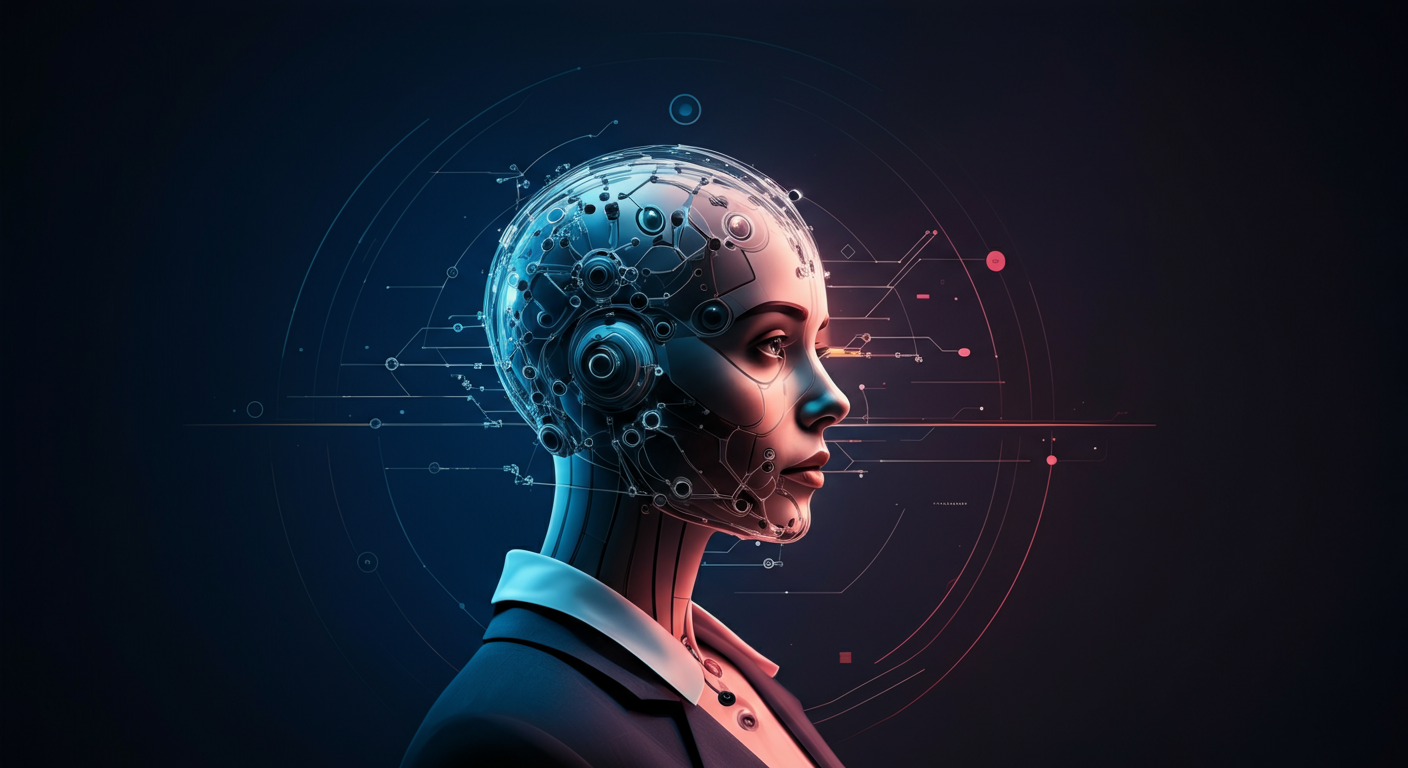
Neuro-symbolic AI, which merges neural networks with symbolic reasoning, is creating unprecedented opportunities. From healthcare to robotics, its impact is being felt across various sectors.
- Healthcare: Imagine AI assisting in medical diagnosis with the precision of an experienced doctor. For instance, neuro-symbolic AI can analyze complex medical images while also reasoning about medical knowledge, potentially leading to more accurate and faster diagnoses. You can find similar AI tools listed at Healthcare Providers.
- Finance: Detecting fraudulent transactions before they occur is crucial in finance. By integrating rule-based systems with anomaly detection, neuro-symbolic AI enhances fraud detection accuracy. Learn more about AI in finance through AI Powered Trading: How Artificial Intelligence is Revolutionizing the Stock Market and Beyond.
- Manufacturing: Automating complex tasks on the factory floor is essential for increasing efficiency. Neuro-symbolic AI enables robots to understand their environment and make decisions based on both learned patterns and pre-defined rules, improving automation in manufacturing.
- Robotics: Neuro-symbolic AI is key to advancing robotic planning. It helps robots to reason about actions and goals and plans more effectively.
ROI & Ethical Implications
Quantifying the ROI involves increased efficiency, reduced errors, and better decision-making. Ethically, ensuring fairness and transparency in AI decision-making is paramount. For more information on ethical AI practices, refer to Ethical AI Roadmap: A Practical Guide for Responsible AI Implementation.Neuro-symbolic AI's ability to combine the strengths of both neural networks and symbolic reasoning promises to revolutionize industries, offering improved accuracy, explainability, and decision-making capabilities. As this field matures, understanding its applications and implications will be crucial for entrepreneurs, developers, and professionals alike. Check out Neuro-Symbolic AI: The Fusion Revolution How AUIs $750M Valuation Signals a Paradigm Shift for additional insights.
Bridging the gap between deep learning and human reasoning, neuro-symbolic AI systems offer a powerful new approach to artificial intelligence.
Building Your Own Neuro-Symbolic AI System: A Step-by-Step Guide

Constructing a Neuro-Symbolic AI system involves carefully integrating neural networks with symbolic reasoning techniques. This allows the AI to both learn from data and reason in a structured, human-understandable way. Here's a step-by-step guide:
- Define the Problem: Start with a well-defined problem that benefits from both data-driven learning and explicit reasoning. For example, visual question answering or robotic task planning.
- Select Appropriate Tools: Choose suitable deep learning frameworks (TensorFlow, PyTorch) and symbolic reasoning tools (Prolog, Answer Set Programming). Consider using code assistance tools to streamline the coding process.
- Design the Architecture:
- Neural Network Component: Responsible for perception and feature extraction.
- Symbolic Component: Handles reasoning, planning, and decision-making, using the outputs from the neural network.
- Data Preprocessing & Feature Engineering: Prepare your data meticulously. Feature engineering is crucial to ensure that the neural network provides meaningful inputs to the symbolic component. For instance, using tools like NumPy for efficient data manipulation.
- Training the Model: Train the neural network component to extract relevant features. This might involve supervised or unsupervised learning techniques.
- Integration & Joint Training: Integrate the neural and symbolic components, possibly training them jointly to optimize overall system performance.
- Hyperparameter Tuning: Fine-tune the hyperparameters of both the neural and symbolic components to achieve optimal performance.
- Evaluation & Refinement: Rigorously evaluate the system's performance using appropriate metrics. Iterate on the design, training, and integration process based on the results.
Tips and Best Practices
- Start Small: Begin with a simplified version of the problem and gradually increase complexity.
- Modular Design: Make your system modular, so individual components can be easily modified or replaced.
- Explainability: Focus on making the reasoning process transparent and explainable. Consider TracerootAI for explainable AI observability
- Leverage Existing Resources: Explore existing libraries and frameworks that support neuro-symbolic AI development.
The Future of Neuro-Symbolic AI: Trends and Predictions
Neuro-Symbolic AI is poised to reshape the AI landscape, merging the strengths of deep learning with the interpretability of symbolic AI. It seeks to give AI systems the ability to reason more like humans.
Emerging Trends
Expect to see increased research focus on:
- Hybrid Architectures: Combining neural networks for perception with symbolic reasoning for decision-making. Think of it as teaching AI to "see" with neural networks and "think" with symbols.
- Knowledge Integration: Seamlessly integrating existing knowledge bases (like ontologies) with learned representations. This allows AI to tap into vast repositories of human-curated knowledge.
- Explainability and Trust: Neuro-Symbolic AI offers enhanced transparency compared to black-box deep learning models. Its symbolic component allows for easier tracing of reasoning paths and provides more insight to end users.
Impact and Applications
Neuro-Symbolic AI could revolutionize sectors demanding explainability and robustness, like healthcare, finance, and autonomous systems.
- Healthcare: Supporting doctors with diagnoses by providing both statistical evidence and logical reasoning behind decisions.
- Finance: Enabling algorithmic trading strategies with built-in risk management through symbolic constraints.
- Robotics: Developing robots that can plan and execute complex tasks by integrating perception with symbolic planning algorithms.
- AGI Advancement: Neuro-Symbolic AI is a promising avenue towards achieving Artificial General Intelligence (AGI), by endowing AI with the ability to reason, plan, and learn in a more human-like manner.
Challenges and Opportunities
Researchers and practitioners face challenges like scaling symbolic reasoning to complex domains and effectively training hybrid models. However, overcoming these hurdles will unlock unparalleled opportunities for creating truly intelligent systems. A key opportunity lies in explainable AI (XAI), making AI decision-making more transparent and trustworthy. Transitioning forward, understanding and navigating the complexities of AI model building and evaluation are critical for leveraging the true power of AI. For example, a robust understanding of benchmarks are important in determining how to use models for specific tasks. Similarly, one must understand and address potential bias in AI to make AI tools reliable and relevant.Overcoming Challenges in Neuro-Symbolic AI: Data, Scalability, and Integration
Neuro-symbolic AI holds immense promise, but its path isn't without bumps. Data limitations, scaling difficulties, and integrating disparate components present significant obstacles. Let's explore these challenges and strategies to overcome them.
Tackling Data Scarcity
One major hurdle is data scarcity, especially for tasks requiring both rich symbolic knowledge and complex neural networks.- Transfer learning: Leverage pre-trained models from related domains to bootstrap learning.
- Data augmentation: Create synthetic data by transforming existing examples. For example, in image recognition, rotate or crop images to increase the dataset size.
- Synthetic data generation: Use generative models to produce entirely new datasets that capture the desired characteristics. This is especially useful when dealing with sensitive information.
Scaling Neuro-Symbolic Systems
Scalability is another critical issue. Traditional symbolic systems struggle with the complexities of real-world data, while neural networks can be computationally expensive.- Distributed computing: Distribute the workload across multiple machines to handle large datasets.
- Parallel processing: Utilize GPUs and TPUs to accelerate neural network computations.
- Model compression: Reduce model size and complexity through techniques like quantization and pruning.
Seamless Integration of Neural and Symbolic Components
Finally, integrating neural and symbolic components is tricky.- Knowledge distillation: Transfer knowledge from a complex neural network to a simpler symbolic model.
- Attention mechanisms: Use attention to focus neural networks on relevant symbolic information.
- Graph neural networks (GNNs): Represent symbolic knowledge as graphs and use GNNs to reason over them.
Neuro-symbolic AI faces significant challenges, but strategic approaches focusing on data augmentation, scalable architectures, and intelligent integration can unlock its full potential, paving the way for AI systems that truly bridge the gap between deep learning and human reasoning.
Neuro-symbolic AI offers a pathway to more transparent and reliable artificial intelligence.
Neuro-Symbolic AI vs. XAI: The Fundamental Difference
Traditional Explainable AI (XAI) often works as a "bolt-on" solution, attempting to decipher the inner workings of complex "black box" models after they've been trained. Neuro-symbolic AI, on the other hand, is designed with inherent explainability from the ground up.
"Neuro-symbolic AI combines the strengths of both neural networks (learning from data) and symbolic AI (reasoning with explicit knowledge)."
This combination allows for more intuitive understanding. For example, you could use ChatGPT combined with neuro-symbolic methods to show not only what it generated, but why it made specific choices based on defined rules.
Transparency by Design vs. Post-Hoc Explanations
- Neuro-symbolic AI: Transparency is baked into the architecture, making the decision-making process more visible.
- XAI: Relies on techniques like feature importance or layer visualization to approximate explanations, which can be unreliable.
Use Cases and Enhanced Interpretability
Consider a medical diagnosis scenario: a neuro-symbolic system could not only predict a disease but also clearly articulate the symptoms, test results, and logical inferences that led to its conclusion. This offers superior explanations compared to a standard deep learning model. Moreover, combining neuro-symbolic AI with XAI techniques like tracerootai can enhance the insights derived from the models.
Ultimately, while XAI attempts to make opaque systems understandable, neuro-symbolic AI strives for clarity from the start, offering a more robust and trustworthy approach to AI.
Keywords
neuro-symbolic AI, hybrid AI, deep learning, symbolic reasoning, AI tools, AI frameworks, explainable AI, AI applications, AI development, AI trends, DeepProbLog, TensorFlow Probability, PyTorch, knowledge representation, AI ethics
Hashtags
#NeuroSymbolicAI #HybridAI #ExplainableAI #DeepLearning #AISolutions
Recommended AI tools

ChatGPT
Conversational AI
AI research, productivity, and conversation—smarter thinking, deeper insights.

Sora
Video Generation
Create stunning, realistic videos & audio from text, images, or video—remix and collaborate with Sora 2, OpenAI’s advanced generative app.

Google Gemini
Conversational AI
Your everyday Google AI assistant for creativity, research, and productivity

Perplexity
Search & Discovery
Clear answers from reliable sources, powered by AI.

Cursor
Code Assistance
The AI code editor that understands your entire codebase

DeepSeek
Conversational AI
Efficient open-weight AI models for advanced reasoning and research
About the Author

Written by
Regina Lee
Regina Lee is a business economics expert and passionate AI enthusiast who bridges the gap between cutting-edge AI technology and practical business applications. With a background in economics and strategic consulting, she analyzes how AI tools transform industries, drive efficiency, and create competitive advantages. At Best AI Tools, Regina delivers in-depth analyses of AI's economic impact, ROI considerations, and strategic implementation insights for business leaders and decision-makers.
More from ReginaWas this article helpful?
Found outdated info or have suggestions? Let us know!