Atoms: Unlocking the Building Blocks of Everything – A Comprehensive Guide
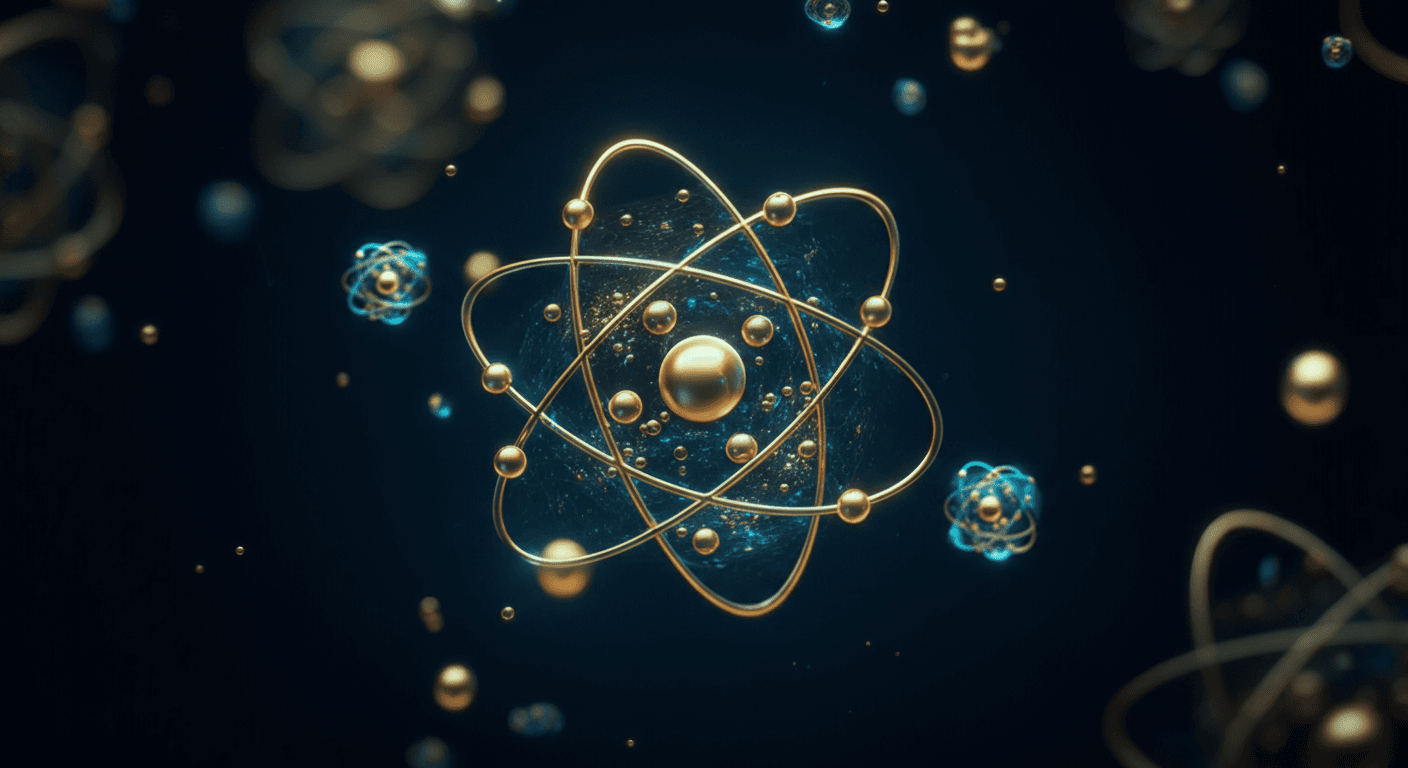
Atoms: Unlocking the Building Blocks of Everything – A Comprehensive Guide
The Atomic Foundation: Defining Atoms and Their Role
What exactly is an atom, and why should we care? Turns out, understanding atoms is crucial for grasping the very essence of reality. Atoms are fundamental building blocks.
Defining the Atom
At its core, an atom is the smallest unit of matter. Atoms still retain the chemical properties of an element. They are composed of:- Protons: Positively charged particles.
- Neutrons: Neutrally charged particles.
- Electrons: Negatively charged particles that orbit the nucleus.
The Historical Development of Atomic Theory
Atomic theory didn't emerge overnight. It evolved over centuries, thanks to pioneering scientists:- Democritus: Ancient Greek philosopher who first proposed the idea of indivisible particles, which he called "atoms."
- John Dalton: Introduced Dalton's Atomic Theory in the early 1800s, suggesting that all matter is composed of atoms.
- J.J. Thomson: Discovered the electron, leading to the "plum pudding" model of the atom.
- Ernest Rutherford: Conducted the gold foil experiment, leading to the discovery of the nucleus.
- Niels Bohr: Proposed the Bohr model, where electrons orbit the nucleus in specific energy levels.
Basic Building Blocks of Matter
Atoms combine to form molecules. Then those molecules create everything around us. This includes:- Elements: Substances made of only one type of atom.
- Compounds: Substances made of two or more different types of atoms chemically bonded.
- Mixtures: Substances physically combined, but not chemically bonded.
Addressing Misconceptions
It's crucial to dispel common myths about atoms.- Atoms are not solid, indestructible balls.
- Atoms are mostly empty space.
- Subatomic particles are constantly in motion.
Atoms are the universe's fundamental building blocks; understanding them is key to understanding everything. But what makes up these tiny particles?
Decoding Atomic Structure
Atoms consist of three primary subatomic particles: protons, neutrons, and electrons. Each plays a unique role in defining an element’s properties. These determine how it interacts with the world.Properties of Subatomic Particles
Here's a quick rundown of each particle's characteristics:| Particle | Charge | Mass (amu) | Location |
|---|---|---|---|
| Proton | +1 | 1 | Nucleus |
| Neutron | 0 | 1 | Nucleus |
| Electron | -1 | ~0 | Orbitals/Shells |
The atomic structure dictates an atom's behavior.
Nucleus and Electron Shells
The nucleus, the atom's core, houses protons and neutrons. Electrons orbit the nucleus in specific energy levels, or shells. > Think of it like planets orbiting a star, but with quantized energy levels.Isotopes Explained
Isotopes are variants of an element with the same number of protons but different numbers of neutrons. For example, Carbon-12 and Carbon-14 are both carbon, yet Carbon-14 is radioactive, used in carbon dating. Understanding isotopes explained is critical in various scientific fields.Ions and Atoms
Atoms can gain or lose electrons to become ions.- Cations: Positively charged ions (lose electrons).
- Anions: Negatively charged ions (gain electrons).
Understanding the anatomy of an atom is more than just memorizing particle names; it’s about appreciating the underlying structure of reality. Want to dive deeper? Explore our Learn section for more science deep dives.
Unlocking the secrets of the universe starts with understanding its building blocks: atoms.
The Organization of the Periodic Table
The periodic table organizes elements by increasing atomic number. Atomic number reflects the number of protons in an atom's nucleus. Elements are further arranged based on their electron configuration, dictating their chemical properties. The number of valence electrons, those in the outermost shell, dictates how an element bonds. For example, elements seek to fulfill the octet rule.Trends in Element Properties
"Trends are your friend."
The periodic table allows us to predict element behavior. Key trends include:
- Electronegativity: Increases across a period, decreases down a group. This describes an atom's ability to attract electrons.
- Ionization Energy: Increases across a period, decreases down a group. This is the energy needed to remove an electron.
- Atomic Radius: Decreases across a period, increases down a group. The size of an atom impacts its reactivity.
Groups and Periods

The periodic table is divided into vertical columns (groups) and horizontal rows (periods). Each group shares similar chemical properties due to having the same number of valence electrons. Examples:
- Alkali Metals: Highly reactive, readily lose one electron.
- Halogens: Very reactive, readily gain one electron.
- Noble Gases: Inert, possess a full outer electron shell, and rarely form bonds.
- The properties of elements of the periodic table can be reliably predicted.
Is understanding atomic interactions the key to unlocking a deeper understanding of the universe?
Chemical Bonds: The Glue That Holds Matter Together
Atoms rarely exist in isolation. They interact, forming molecules and compounds through chemical bonds. These bonds arise from the electromagnetic forces between positively charged nuclei and negatively charged electrons. We can break down the types of chemical bonds into three main categories:Ionic Bonds: These form through the transfer of electrons. One atom loses an electron (becoming a positive ion), and another gains* it (becoming a negative ion). The oppositely charged ions are then attracted to each other. Covalent Bonds: Instead of transferring electrons, atoms share* them to achieve stability. These bonds are strong and are common in organic molecules.
- Metallic Bonds: Found in metals, these bonds involve a "sea" of delocalized electrons shared among a lattice of metal atoms.
Electronegativity and Molecular Formation
Electronegativity plays a crucial role in determining the type of bond that forms. It's a measure of an atom's ability to attract electrons in a chemical bond.If there's a large difference in electronegativity between two atoms, an ionic bond is likely. Small differences usually lead to covalent bonds.
Molecular Geometry and Properties
The shape of a molecule, or its molecular structure, significantly influences its properties. Theories like VSEPR (Valence Shell Electron Pair Repulsion) help us predict these shapes by considering the repulsion between electron pairs surrounding a central atom.- Polarity: Unequal sharing of electrons in covalent bonds creates polar molecules.
- Intermolecular Forces: These weaker forces between molecules are vital for determining physical properties like boiling point.
Atoms pack a punch, especially when they release their energy!
Nuclear Reactions Defined
Nuclear reactions involve changes in an atom's nucleus. These reactions release immense amounts of energy. There are three main types: nuclear fission, nuclear fusion, and radioactive decay.- Nuclear fission is the splitting of a heavy nucleus into smaller nuclei. Uranium is commonly used in nuclear power plants for fission.
- Nuclear fusion is the combining of light nuclei to form a heavier nucleus. This process powers the sun and is explored for future energy sources.
- Radioactive decay involves the spontaneous emission of particles or energy from an unstable nucleus, transforming it into a more stable form.
Atomic Energy Applications
Atomic energy applications span from power generation to medicine.- Nuclear power plants use fission to generate electricity. These plants are controversial, but they offer a carbon-free energy alternative.
- Nuclear medicine utilizes radioactive isotopes for diagnostic imaging and cancer treatment. This field is always advancing.
- Radioactive isotopes also have use in dating objects and materials, particularly with carbon dating.
Nuclear Energy: Risks and Benefits
Using nuclear tech involves tradeoffs. While atomic energy applications offer benefits, nuclear energy risks exist."The potential benefits of nuclear energy are enormous, but we must be vigilant about safety."
On the benefit side, you get:
- High energy output
- Reduced greenhouse gas emissions
- Potential for accidents
- Radioactive waste disposal
The future of atomic energy depends on responsible development and robust safety measures. Explore our Scientific Research tools to learn more.
Atoms are the universe's fundamental building blocks, but what's next for atomic research?
Modern Atomic Research: Frontiers and Future Directions
Atomic research is pushing the boundaries of what's possible. We are delving deeper into the mysteries of matter. These explorations span from the theoretical to the practical.
Atoms in Nanotechnology and Materials Science
Atoms are the ultimate Lego bricks for nanotechnology. We can construct materials with unprecedented properties. The manipulation of atoms allows us to create:
- Quantum dots: These tiny semiconductors exhibit unique quantum mechanical properties.
- Single-atom transistors: Imagine switching devices controlled by just one atom!
- Bose-Einstein condensates: These exotic states of matter reveal the wave-like nature of atoms.
Future Breakthroughs and Energy Production
The future of atomic research holds immense promise. Scientists are exploring ways to manipulate atoms for sustainable energy production. The potential of atomic manipulation could lead to revolutionary changes.
Imagine energy sources based on controlled nuclear fusion or novel energy storage solutions derived from advanced materials.
Atoms and Quantum Computing

Quantum computing relies heavily on atoms. Certain atoms can serve as qubits, the fundamental units of quantum information. This could drastically change data processing.
- Quantum computing atoms are the basis for transformative computation.
- Trapped ions and neutral atoms are leading qubit candidates.
- These technologies could solve problems intractable for classical computers.
Atoms, the fundamental units of matter, are not just theoretical constructs; they are integral to our daily lives. Their properties and interactions dictate the behavior of everything around us. Understanding atoms unlocks countless innovations, influencing medicine, materials science, and even environmental monitoring.
Atomic Imaging in Medicine
The ability to "see" atoms has revolutionized medical diagnostics. For example, Magnetic Resonance Imaging (MRI) uses the magnetic properties of atoms in the body to create detailed images of internal organs and tissues. This non-invasive technique allows doctors to detect abnormalities and diagnose diseases early on.
Atomic imaging, especially with techniques like MRI, provides unparalleled insights into the human body.
Atoms in Materials Science
The characteristics of materials we use every day are directly linked to their atomic structure.
- Construction: Atomic arrangements determine the strength and durability of building materials.
- Electronics: Semiconductors, essential for electronics, rely on specific atomic properties to control the flow of electricity.
- Everyday Objects: From the plastic in our phones to the metal in our cars, atoms dictate how these materials behave under different conditions.
Environmental Applications
Atomic Absorption Spectroscopy (AAS) is a powerful tool for monitoring environmental pollutants. AAS measures the concentration of specific elements in water, air, and soil samples. This allows scientists to detect and quantify pollutants, helping to protect ecosystems and human health. Environmental science benefits greatly from understanding atomic principles.
Atoms truly are the building blocks of everything, and their study continues to shape our world in profound ways. Explore our scientific research tools to learn more.
Keywords
atoms, atomic structure, atomic theory, protons neutrons electrons, periodic table, chemical bonds, nuclear reactions, quantum physics, molecular structure, isotopes, atomic energy, atomic research, atomic mass, electron configuration, atomic number
Hashtags
#atoms #chemistry #physics #science #atomictheory
Recommended AI tools

ChatGPT
Conversational AI
AI research, productivity, and conversation—smarter thinking, deeper insights.

Sora
Video Generation
Create stunning, realistic videos & audio from text, images, or video—remix and collaborate with Sora 2, OpenAI’s advanced generative app.

Google Gemini
Conversational AI
Your everyday Google AI assistant for creativity, research, and productivity

Perplexity
Search & Discovery
Clear answers from reliable sources, powered by AI.

Cursor
Code Assistance
The AI code editor that understands your entire codebase

DeepSeek
Conversational AI
Efficient open-weight AI models for advanced reasoning and research
About the Author

Written by
Dr. William Bobos
Dr. William Bobos (known as 'Dr. Bob') is a long-time AI expert focused on practical evaluations of AI tools and frameworks. He frequently tests new releases, reads academic papers, and tracks industry news to translate breakthroughs into real-world use. At Best AI Tools, he curates clear, actionable insights for builders, researchers, and decision-makers.
More from Dr.Was this article helpful?
Found outdated info or have suggestions? Let us know!