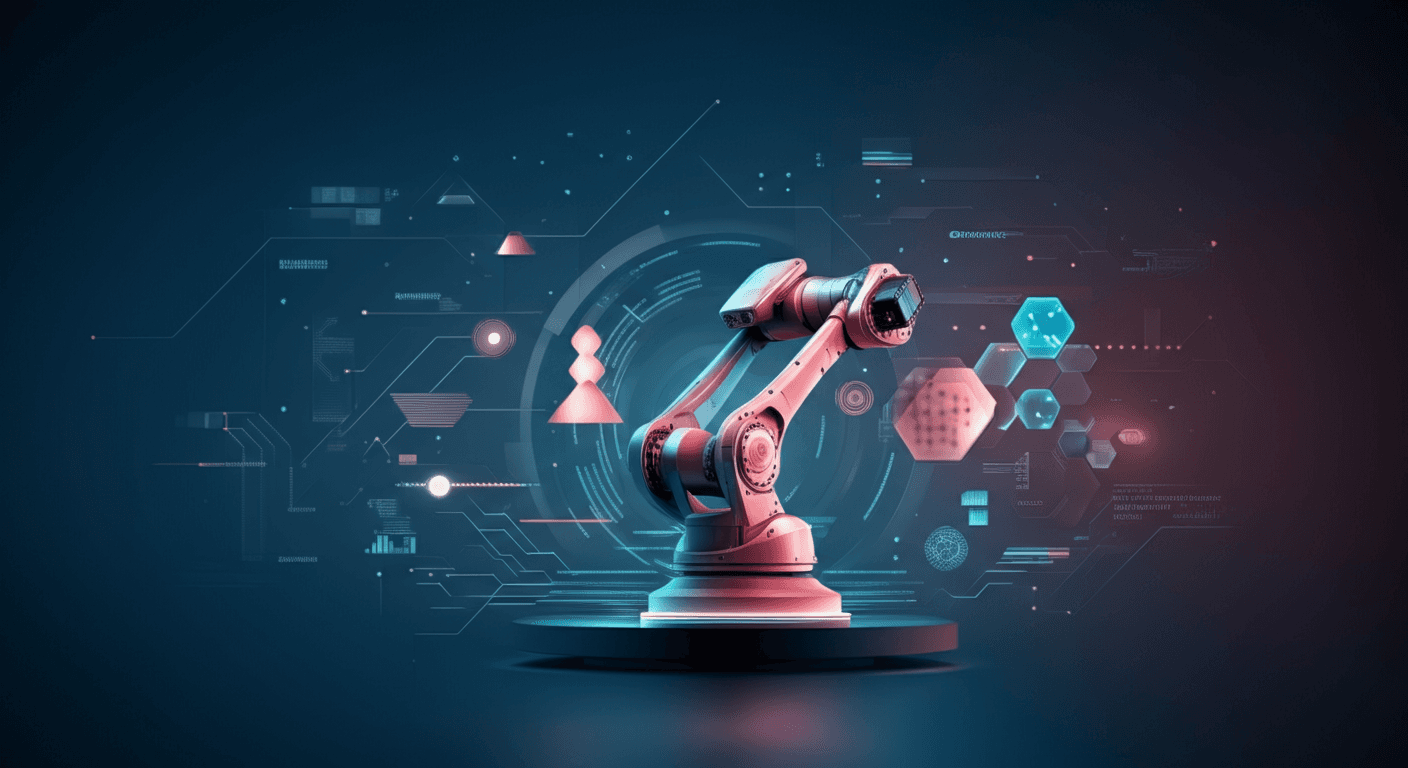
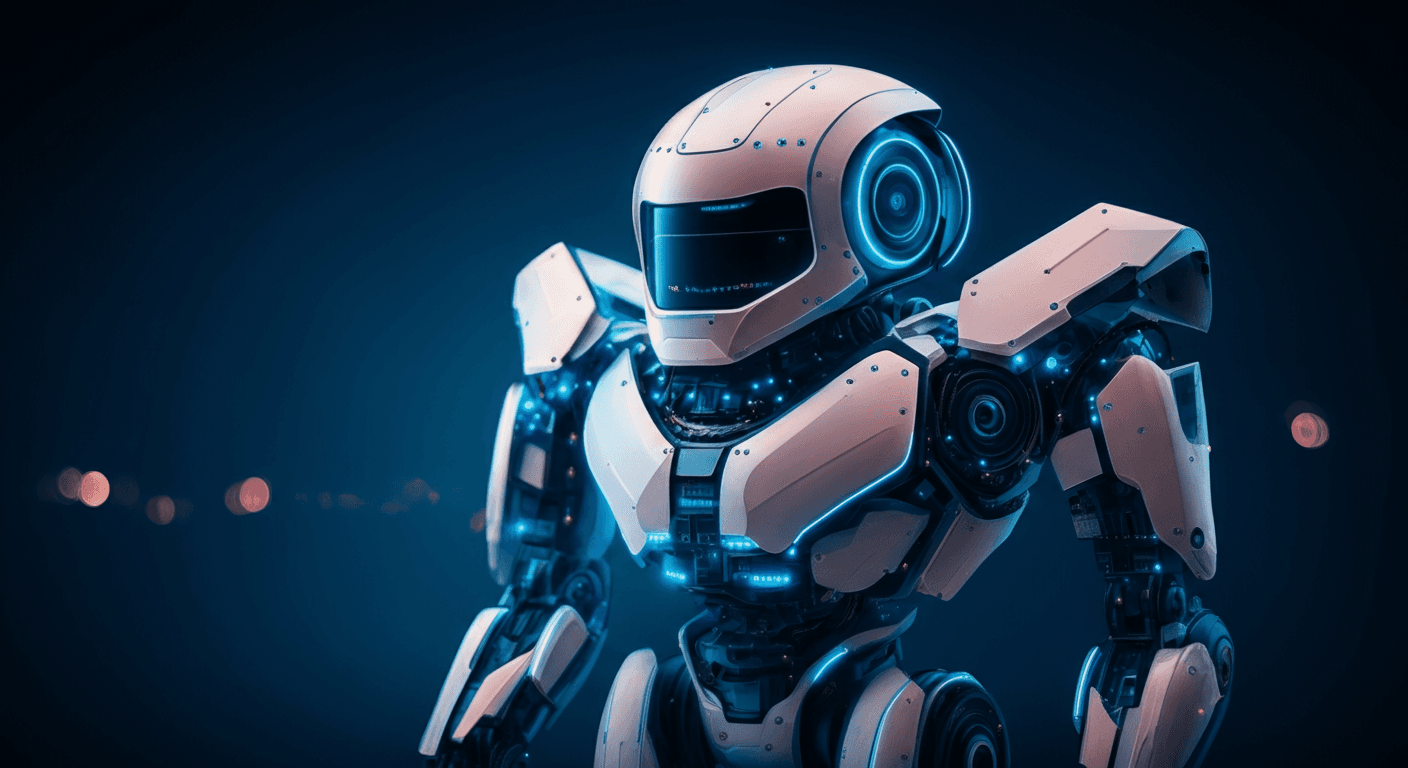
AI Robotics Platforms: Build, Simulate, and Deploy Intelligent Robots

Introduction: The Rise of Intelligent Robotics
AI robotics is the exciting fusion of artificial intelligence, machine learning, and robotics, leading to the creation of AI-powered robots capable of performing complex tasks with minimal human intervention. Its influence is rapidly expanding across diverse industries, including manufacturing, healthcare, and logistics, where intelligent automation is revolutionizing operations.
The Convergence of AI and Robotics
This field leverages the power of AI algorithms for robots to perceive their environment, learn from experience, and make autonomous decisions.For example, in manufacturing, AI-driven robots can optimize production lines, detect defects, and perform intricate assembly tasks with greater precision and speed than traditional systems.
Key Challenges in AI Robotics
Developing these intelligent machines isn't without its hurdles. Key challenges include:- Perception: Enabling robots to accurately interpret sensory data from cameras, lidar, and other sensors.
- Navigation: Developing algorithms for robots to move safely and efficiently in complex, dynamic environments.
- Manipulation: Creating robotic systems capable of dexterous manipulation of objects with varying shapes, sizes, and weights.
- Real-time Control: Ensuring robots can respond quickly and reliably to changes in their environment.
Increasing Accessibility
Fortunately, robotics software development is becoming increasingly accessible thanks to the emergence of user-friendly AI robotics platforms and development tools. Simulation environments are also crucial, allowing developers to test and refine their algorithms in a safe, virtual setting before deploying them on real-world robots. As AI robotics platforms become more accessible, innovation will likely accelerate.Unlocking the potential of AI robotics demands a robust operating system.
ROS and ROS2: What's the Deal?
ROS (Robot Operating System) and its successor, ROS2, provide a flexible framework for writing robot software. They aren't operating systems in the traditional sense, but rather a set of software libraries, tools, and conventions that simplify the process of building complex and robust robot applications. Think of it as the connective tissue that lets different parts of your robot "talk" to each other. The ROS framework uses a message-passing architecture.
ROS and ROS2 organize code into nodes, which communicate using topics (for asynchronous data streams), services (for request/response interactions), and messages (the data format for communication).
Benefits of ROS
- Open Source: Freely available and customizable. This encourages innovation and community contributions.
- Large Community: Access to a vast network of developers and users, creating a collaborative environment.
- Extensive Libraries: Pre-built packages for common robotics tasks such as perception (integrating with libraries like OpenCV), navigation (path planning), and manipulation.
- Robot Platforms: Supports a wide variety of robot platforms like the TurtleBot and Pepper.
ROS in Action
ROS finds application in various fields:
- Autonomous Vehicles: For perception, planning, and control systems.
- Industrial Automation: In manufacturing, logistics, and quality control.
- Research and Education: As a standard platform for robotics research and teaching.
ROS: Advantages and Disadvantages
| Feature | Advantage | Disadvantage |
|---|---|---|
| Open Source | Customizable, community-driven | Can lack dedicated enterprise support |
| Community | Extensive support and shared knowledge | Code quality can vary across packages |
| Real-time Perf. | Improvements in ROS2 | ROS1 had limitations for real-time critical systems |
Transitioning to a new era of robotics, consider how AI-Powered Manufacturing will impact deployment.
NVIDIA Jetson: AI at the Edge for Robotics
The NVIDIA Jetson family brings powerful AI capabilities directly to the edge, revolutionizing the way robots perceive and interact with their environment. These embedded computing boards allow for real-time processing and decision-making, making them a key component in modern robotics.
Jetson's AI Powerhouse
The NVIDIA Jetson family includes boards like the Jetson Nano, Jetson Xavier NX, and Jetson AGX Orin. These boards are designed for AI inference at the edge, boasting:- GPU acceleration: Enables rapid parallel processing, essential for complex AI tasks.
- CUDA & TensorRT: NVIDIA's software platforms optimize AI models for Jetson, boosting performance. CUDA is a parallel computing platform and programming model developed by NVIDIA, while TensorRT is an SDK for high-performance deep learning inference.
Robotics Applications Unleashed
Jetson's capabilities drive a range of robotics applications:- Computer vision: Processes visual data for object recognition and scene understanding.
- Object detection: Identifies and classifies objects in real-time, vital for autonomous navigation.
Simulation and Deployment
NVIDIA's Isaac SDK integrates with ROS (Robot Operating System), providing tools for robot simulation and deployment. NVIDIA Isaac Sim is a robot simulation tool that allows developers to test and train AI models in realistic environments before deploying them on real robots. This allows developers to iterate quickly and reduces the cost and risk associated with real-world testing.Ready to build your intelligent robot? The NVIDIA Jetson ecosystem offers extensive resources to get you started, opening new frontiers in AI-powered robotics.
Simulation is crucial in AI robotics, offering cost-effective, safe, and rapid prototyping environments.
The Power of Simulation
Simulation allows roboticists to test and refine designs without real-world constraints.- Cost Reduction: Minimize expenses associated with physical prototypes and potential damage.
- Enhanced Safety: Experiment with risky scenarios without endangering hardware or personnel.
- Accelerated Iteration: Rapidly test and iterate on algorithms and designs.
Gazebo: A Robust Simulator
Gazebo is a popular open-source robotics simulator used extensively in AI development. It enables developers to simulate robots in complex 3D environments, test algorithms, and train AI models before deploying to physical systems.- Realistic Environments: Supports accurate modeling of physics, sensors, and actuators.
- ROS Integration: Seamlessly integrates with the Robot Operating System (ROS), a standard framework for robotics development.
- Extensive Library: Offers a rich library of robot models and environmental elements.
Comparison with Other Simulators
While Gazebo is dominant, other simulation tools exist.| Simulator | Features | Use Cases |
|---|---|---|
| CoppeliaSim | Cross-platform, supports various scripting languages, focuses on modularity. | Industrial automation, robotics research. |
| Webots | Commercial simulator, emphasizes mobile robotics and autonomous vehicle simulation. | Autonomous driving, swarm robotics. |
Creating Realistic Simulations
Realistic simulations require detailed modeling.- Robot Models: Import or create robot models with accurate physical properties.
- Environment Design: Design environments that reflect real-world conditions, including lighting, textures, and obstacles.
- Sensor Simulation: Accurately model sensor behavior (cameras, LiDAR, IMUs) to provide realistic data.
Use Cases in AI Robotics
Simulation plays a vital role in various AI robotics applications.- Reinforcement Learning: Training AI agents to perform complex tasks in simulated environments.
- Control Algorithm Testing: Validating control algorithms for stability and performance before deployment.
Overcoming Simulation Challenges
Achieving realism requires careful attention to detail.- Computational Cost: Balancing simulation complexity with computational resources is crucial.
- Sensor Noise: Adding realistic noise to sensor data to mimic real-world imperfections.
- Domain Adaptation: Bridging the gap between simulated and real-world performance is an ongoing challenge.
AI frameworks are essential for robotics, providing the tools to build intelligent, adaptable machines. These platforms enable developers to create robots that can perceive their environment, navigate complex spaces, and manipulate objects with precision.
AI Frameworks for Robotics: TensorFlow, PyTorch, and More
Several AI frameworks are vital in robotics development. TensorFlow, with its robust ecosystem, is a popular choice for building complex machine learning models. PyTorch offers dynamic computation graphs, making it suitable for research and rapid prototyping in robotics.- Perception: Frameworks facilitate image and sensor data processing, enabling robots to "see" and understand their surroundings.
- Navigation: AI algorithms help robots plan paths and avoid obstacles.
- Manipulation: Frameworks assist in controlling robot arms and grippers for precise tasks.
Pre-trained Models and Transfer Learning
Robotics benefits significantly from pre-trained models. Transfer learning allows developers to adapt existing models to new robotic tasks, reducing training time and improving performance. For instance, a model trained on image recognition can be fine-tuned for object detection in a warehouse.Using pre-trained models accelerates development and enhances the capabilities of AI-powered robots.
Specialized Robotics Libraries
Within these frameworks, specialized libraries enhance robotics development. TensorFlow Robotics and PyTorch Robotics provide tools for robot control, simulation, and planning. These tools help bridge the gap between AI algorithms and physical robot systems.Examples of AI Frameworks in Action
Consider a warehouse robot tasked with picking items from shelves. Using these frameworks, the robot can:- Use computer vision to identify items.
- Plan an optimal path to the item.
- Grasp the item using learned manipulation skills.
From perception to action, AI frameworks form the backbone of intelligent robotics, driving innovation and automation across industries. Explore our Learn section for more resources on AI and its practical applications.
Here's how essential hardware components empower AI robots.
Hardware Integration: Sensors, Actuators, and Control Systems
AI robotics hinges on seamlessly blending intelligent algorithms with real-world hardware. Critical to this integration are sensors, actuators, and control systems – the building blocks enabling robots to perceive, interact with, and respond to their environment.
Key Hardware Components
- Sensors: These are the robot's "eyes" and "ears." Robot sensors capture environmental data. This includes cameras (visual input), LiDAR (distance mapping), and IMUs (inertial measurement units for orientation and acceleration).
- Actuators: These translate AI decisions into physical actions. Motors drive movement, while servos control precise positioning. Explore design AI tools to design robotic parts.
- Control Systems: Acting as the robot's "brain," these interpret sensor data and command actuators based on AI algorithms. Software Developer Tools can help design these systems.
Challenges and Communication
Integrating AI algorithms with hardware poses unique challenges.
Overcoming sensor noise, actuator limitations, and ensuring real-time responsiveness are paramount.
Communication protocols like serial communication and Ethernet provide essential interfaces for robot hardware.
Best Practices and Safety
Effective hardware selection and integration require careful consideration of factors like:
- Precision
- Durability
- Power Consumption
By thoughtfully selecting and integrating these hardware components, we can unlock the full potential of AI robotics.
Future Trends in AI Robotics Platforms
The convergence of artificial intelligence and robotics is rapidly transforming industries, and the platforms enabling this revolution are constantly evolving.
Explainable AI (XAI) in Robotics
Traditional AI models can be black boxes, making it difficult to understand how they make decisions. Explainable AI (XAI) aims to provide transparency, allowing users to understand the reasoning behind a robot's actions. This is crucial for safety-critical applications.For example, in autonomous driving, XAI can help explain why a vehicle made a particular maneuver, increasing trust and accountability.
Reinforcement Learning and Adaptability
Reinforcement Learning allows robots to learn through trial and error, optimizing their behavior based on rewards and penalties. This enables robots to adapt to new environments and tasks without explicit programming.- Enhanced Adaptability: Robots can learn to navigate complex terrains or perform intricate manipulations.
- Autonomous Decision-Making: Reinforcement learning empowers robots to make decisions in real-time based on their learned experiences.
Edge Computing for Real-Time Response
Edge computing brings processing power closer to the robot, reducing latency and enabling faster response times. This is critical for applications requiring real-time decision-making, such as manufacturing and autonomous navigation.- Reduced Latency: Processing data locally minimizes delays, crucial for time-sensitive tasks.
- Increased Reliability: Edge computing ensures robots can operate even without a constant connection to the cloud.
Collaborative Robots (Cobots)
Collaborative robots (cobots) are designed to work alongside humans in shared workspaces, enhancing productivity and safety. These robots are equipped with sensors and safety mechanisms to prevent collisions and injuries.AI Ethics and Safety
As AI robotics becomes more prevalent, ethical considerations and safety protocols are paramount.- Addressing Bias: Ensuring fairness and avoiding discriminatory outcomes in robotic systems.
- Safety Measures: Implementing robust safety mechanisms to prevent accidents and misuse.
Unlocking the power of AI robotics starts with the right resources and learning pathways, empowering you to build, simulate, and deploy intelligent robots.
Getting Started: Resources and Learning Paths

Diving into AI robotics can seem daunting, but with the right resources, you can quickly get up to speed. Here's a curated list to kickstart your journey:
- Online Courses: Platforms like Coursera, edX, and Udacity offer comprehensive AI robotics courses. Look for courses covering ROS (Robot Operating System), SLAM (Simultaneous Localization and Mapping), and reinforcement learning.
- Tutorials: YouTube is your friend! Search for "robotics tutorials" or "AI robotics courses" to find practical demonstrations and step-by-step guides.
- Books: "Probabilistic Robotics" by Sebastian Thrun, Wolfram Burgard, and Dieter Fox is a classic. Also consider "Robot Dynamics and Control" by Mark W. Spong and Seth Hutchinson for a deeper dive.
- Communities: Join online forums like the ROS Discourse, Reddit's r/robotics, and robotics-focused Discord servers to connect with fellow learners and experts.
- Learning Paths: Tailor your learning to your skill level.
- Beginner: Start with introductory programming courses (Python is popular) and basic robotics concepts.
- Intermediate: Focus on ROS, sensor integration, and basic AI algorithms.
- Advanced: Explore advanced control techniques, multi-robot systems, and specialized AI applications.
- Open-Source Projects: Explore GitHub for open source robotics projects. Look for repositories related to autonomous navigation, computer vision, and robot manipulation for inspiration and collaboration.
Tools and Platforms
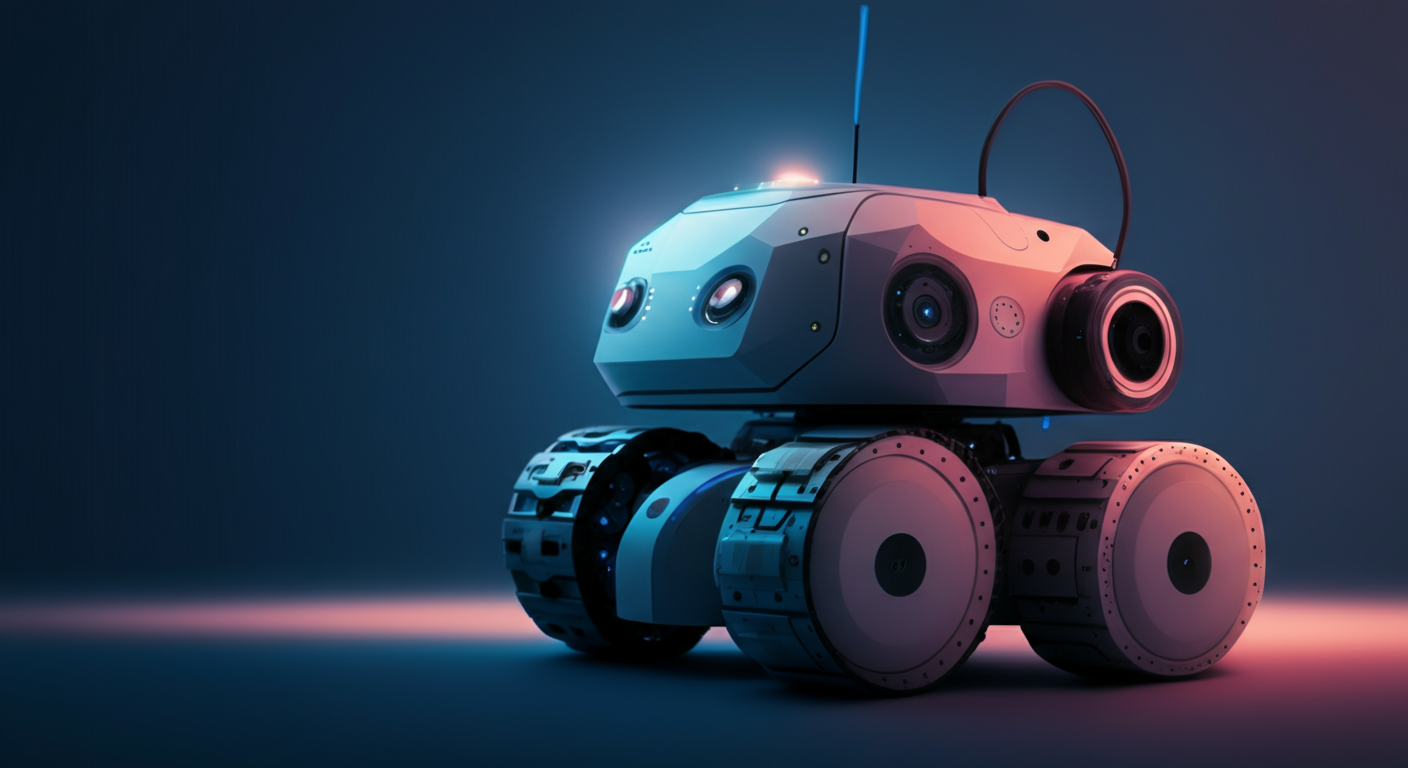
Leverage these tools to bring your robotic visions to life:
- Simulation: Gazebo and Webots are popular simulators for testing your robots in virtual environments before deploying them in the real world.
- Development: Use Software Developer Tools such as VS Code, integrated with ROS, to create and debug your robotic applications, making the coding process efficient and streamlined.
- Deployment: Platforms like AWS RoboMaker (though now discontinued, explore alternatives) and cloud-based robotics platforms can help you deploy and manage your AI robotics applications at scale.
AI robotics platforms are pivotal in shaping our future, offering solutions to challenges across various industries.
Why AI Robotics Platforms Matter
AI robotics platforms aren't just about building robots; they're about creating intelligent systems capable of learning, adapting, and problem-solving. They enable:- Innovation: Developing novel solutions for real-world problems. For example, using AI-powered robots in agriculture to optimize crop yields.
- Efficiency: Automating tasks and increasing productivity. Think of robots in warehouses streamlining logistics and reducing human error.
- Real-World Impact: Tackling challenges in healthcare, manufacturing, and exploration.
Embrace the Revolution
Explore the potential of these platforms in your own field. The future of AI robotics is in the hands of those who build, experiment, and contribute. Consider using tools that can help you build these systems. One of the most important ones would be a Software Developer Tools to design these complex systems..Your Call to Action
Ready to shape the AI robotics future? Start today by:- Building: Begin creating your own robotic solutions using available platforms.
- Experimenting: Test new ideas and push the boundaries of what's possible.
- Contributing: Share your knowledge and collaborate with others in the AI robotics community.
Keywords
AI robotics platforms, robotics software, ROS (Robot Operating System), NVIDIA Jetson, robot simulation, AI robotics, robotics development, Gazebo simulator, AI frameworks for robotics, robot hardware, AI powered robots, intelligent automation, robot operating system, machine learning for robotics, deep learning for robotics
Hashtags
#AIrobotics #robotics #AI #ROS #NVIDIAJetson
Recommended AI tools

ChatGPT
Conversational AI
AI research, productivity, and conversation—smarter thinking, deeper insights.

Sora
Video Generation
Create stunning, realistic videos & audio from text, images, or video—remix and collaborate with Sora 2, OpenAI’s advanced generative app.

Google Gemini
Conversational AI
Your everyday Google AI assistant for creativity, research, and productivity

Perplexity
Search & Discovery
Clear answers from reliable sources, powered by AI.

Cursor
Code Assistance
The AI code editor that understands your entire codebase

DeepSeek
Conversational AI
Efficient open-weight AI models for advanced reasoning and research
About the Author

Written by
Regina Lee
Regina Lee is a business economics expert and passionate AI enthusiast who bridges the gap between cutting-edge AI technology and practical business applications. With a background in economics and strategic consulting, she analyzes how AI tools transform industries, drive efficiency, and create competitive advantages. At Best AI Tools, Regina delivers in-depth analyses of AI's economic impact, ROI considerations, and strategic implementation insights for business leaders and decision-makers.
More from ReginaWas this article helpful?
Found outdated info or have suggestions? Let us know!