AI-Powered Retinal Scans: Revolutionizing Early Alzheimer's Detection
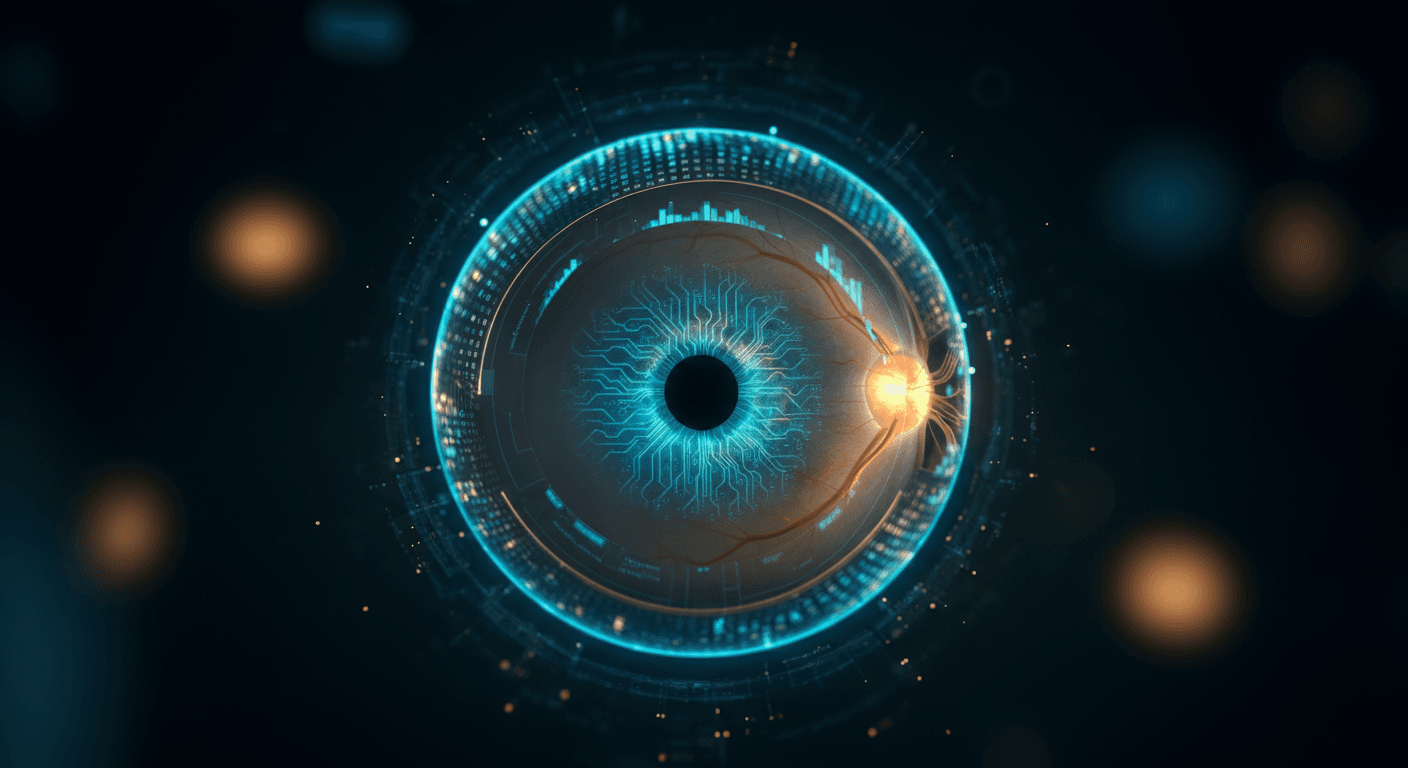
The Promise of AI in Alzheimer's Diagnosis: A New Frontier
Can artificial intelligence detect Alzheimer's early using just a retinal scan?
The Alzheimer's Challenge
Alzheimer's disease presents a significant global health challenge. Early and accurate diagnosis is crucial for effective intervention. Current methods like PET scans and spinal taps are invasive. They are also expensive and not easily scalable for widespread screening. There is an urgent need for new, accessible diagnostic tools.
AI and Retinal Scans
AI offers a promising avenue for improving Alzheimer's diagnosis. Researchers are exploring the use of AI to analyze retinal scans. The goal is to identify biomarkers indicative of Alzheimer's disease. This approach could offer several advantages:
- Non-invasive procedure, eliminating the need for surgery or injections.
- Cost-effective screening compared to current methods.
- Scalable solution for large populations.
A New Approach to AI Alzheimer's Detection
Using AI algorithms on retinal scans could detect subtle changes
Retinal scans are relatively simple to perform and widely available. The potential to use AI to analyze these scans for early Alzheimer's diagnosis is a game-changer. It could dramatically improve the speed and accessibility of diagnosis. This is a critical step toward better management and treatment of this devastating disease. Explore AI-powered healthcare tools.
Limitations of Current Methods
Traditional Alzheimer's diagnoses rely heavily on:
- PET Scans
- Spinal Taps
AI-powered retinal scans represent a new frontier in early Alzheimer's detection, offering a non-invasive, cost-effective, and scalable screening method. Let’s explore other AI applications to improve daily living.
Early Alzheimer's detection is becoming increasingly crucial as the population ages, and what if a simple eye exam could hold the key?
The Eye as a Window
The retina, often called "the eye's film," is not just a sensory organ. It's directly connected to the brain via the optic nerve. Think of it as an extension of the central nervous system. This retina brain connection makes the eye a unique access point for observing neurological changes.
Alzheimer's in the Retina
Alzheimer's disease causes progressive brain damage. But these changes aren't confined to the brain. Research suggests that the same pathological hallmarks, such as amyloid plaques and tau tangles, can also appear in the retina. Because the retina is so easily accessible, doctors are exploring the idea of using it to detect Alzheimer's earlier.
Retinal Biomarkers: A New Frontier
Scientists are identifying retinal biomarkers Alzheimer's which are indicators of the disease present in the retina.
- Changes in retinal nerve fiber layer thickness.
- Alterations in retinal blood vessel density.
- Presence of amyloid deposits.
optical coherence tomography Alzheimer's."The possibility of detecting Alzheimer's through a simple eye exam is a game-changer."
Scientific Evidence

Several studies demonstrate the connection between retinal changes and neurodegenerative diseases. Individuals with Alzheimer's often show a thinning of the retinal nerve fiber layer compared to healthy controls. Furthermore, researchers are exploring how Design AI Tools can help analyze complex retinal scans. Such tools expedite analysis, and can highlight subtle anomalies traditional methods might miss.
The convergence of ophthalmology and neurology promises a new era in early Alzheimer's detection. Exploring Guide to Finding the Best AI Tool Directory will assist you in discovering more about innovative tools used in medical research.
Will AI retinal scans soon replace the need for invasive Alzheimer's tests?
How AI Algorithms Analyze Retinal Images: The Technology Behind the Breakthrough
Thanks to advancements in AI, what was once science fiction is quickly becoming a clinical reality. Let's explore how these algorithms work.
- AI algorithms excel at identifying patterns.
- Deep learning and convolutional neural networks are key players here.
- Optical Coherence Tomography (OCT) is a critical imaging technique.
Deep Learning and Convolutional Neural Networks
Deep learning algorithms, especially convolutional neural networks, are trained on vast datasets of retinal images. These images are labeled, indicating the presence or absence of early Alzheimer's indicators. Through this process, the AI learns to recognize subtle features undetectable to the human eye.
Optical Coherence Tomography (OCT)
Optical Coherence Tomography (OCT) is pivotal. OCT retinal scans AI generates high-resolution, cross-sectional images of the retina. This allows AI to analyze:
- Retinal blood vessel changes.
- Nerve fiber layer thinning.
- Other structural anomalies.
Advantages of AI in Alzheimer's Detection
"The primary advantage lies in AI's ability to detect subtle changes."
These tiny changes might be missed by even the most experienced human observer. AI can quantify these changes with remarkable precision. This offers opportunities for earlier diagnoses and interventions. Deep learning retinal analysis is poised to revolutionize healthcare.
Early detection of Alzheimer's could be revolutionized thanks to AI-powered retinal scans.
Eric Topol: AI Advocate
Eric Topol, a leading voice in digital medicine, champions AI's transformative potential within healthcare. He highlights its capacity to analyze complex data, leading to earlier and more accurate diagnoses. Topol's work at Scripps Research focuses on innovative technologies, including using AI to analyze retinal scans for signs of Alzheimer's disease. This approach offers a non-invasive, cost-effective alternative to traditional diagnostic methods.Retinal Scan Research
Several research projects and clinical trials are underway exploring AI's role in detecting Alzheimer's via retinal scans. Topol and his colleagues have presented compelling evidence suggesting that subtle changes in retinal blood vessels, detectable through AI analysis, correlate with early-stage Alzheimer's. These retinal scan clinical trials represent a significant step forward.Collaboration is Key
"The convergence of AI researchers, ophthalmologists, and neurologists is crucial."
Collaboration between these experts is vital for refining AI algorithms and ensuring their accurate application. Eric Topol AI healthcare initiatives emphasize this multidisciplinary approach to maximize the impact of AI in ophthalmology. These collaborations aim to bridge the gap between technological advancements and clinical practice, bringing AI-driven diagnostics to patients sooner. Early AI Alzheimer's research is showing real promise.
This pioneering work highlights how AI can contribute to early Alzheimer's detection. Explore our AI Alzheimer's research to discover more innovative uses for AI.
The promise of detecting Alzheimer's early with a simple retinal scan is generating significant excitement.
The Accuracy and Reliability of AI Retinal Scans: What the Data Shows
Recent research explores the capabilities of AI-powered retinal scans in Alzheimer's detection. Studies analyze sensitivity and specificity, crucial metrics for diagnostic accuracy.
Sensitivity measures the ability to correctly identify individuals with the disease. Specificity measures the ability to correctly identify individuals without the disease.
How do these scans compare to established methods?
- AI retinal scans vs. PET scans: PET scans are highly accurate but expensive and invasive. AI retinal scans offer a potentially more accessible alternative.
- AI retinal scans vs. cognitive tests: Cognitive tests are less invasive but can be subjective and less precise than imaging techniques.
- AI retinal scan accuracy: While promising, AI retinal scan accuracy is an ongoing area of research. Validation across diverse populations is vital.
Challenges and Biases

Validating AI algorithms presents unique hurdles. Ensuring reliability across different demographics remains a challenge. Potential biases in AI algorithms can affect results, especially in healthcare settings.
- AI bias healthcare: Mitigation strategies must actively address potential biases to ensure fairness and accuracy.
- Validating AI algorithms: Rigorous testing and diverse datasets are essential for robust validation.
- Retinal scan sensitivity specificity: Ongoing research aims to optimize these crucial metrics for reliable Alzheimer's detection.
Will AI-powered retinal scans soon become a routine part of early Alzheimer's detection?
Integrating AI into Routine Eye Exams
Integrating AI retinal scans into routine eye exams could revolutionize early Alzheimer's detection. Instead of specialized, expensive testing, AI in routine eye exams could provide a preliminary screening tool. This widespread availability could catch the disease earlier, allowing for timely intervention.The ease of access would drastically increase testing coverage.
Ethical and Regulatory Landscape
The use of AI in medical diagnosis raises significant ethical questions. Algorithmic bias, data privacy, and accountability are just some of the AI regulatory challenges. Additionally, there's the question of how to handle false positives and negatives. The ethical AI healthcare requires robust regulations and ethical guidelines.- Ensuring patient data is secure.
- Mitigating potential biases in algorithms.
- Establishing clear lines of responsibility for AI-driven diagnoses.
Future Research and Development
Further research is crucial to enhance the accuracy and accessibility of AI retinal scans. Continued advancements in machine learning and imaging technology are needed. This includes diversifying training datasets to ensure equitable performance across different populations.Long-Term Impact on Alzheimer's
The long-term vision is for AI to significantly impact Alzheimer's prevention and treatment. Earlier detection, coupled with advancements in therapeutic interventions, could slow disease progression. This ultimately could improve the quality of life for millions. The future of Alzheimer's diagnosis holds great promise. Beginners Guide: What is Artificial Intelligence (AI)? How Does it Work offers a foundational understanding of the technology behind this.The road ahead involves overcoming ethical hurdles and improving scan technology. Integrating AI into routine checkups could redefine AI-driven healthcare, leading to proactive management of Alzheimer's. Explore our AI in Healthcare tools.
Real-World Applications and Patient Impact: Transforming Alzheimer's Care
Could AI retinal scans revolutionize early Alzheimer's detection?
Identifying High-Risk Individuals
AI can analyze retinal images to detect subtle changes. These changes may indicate Alzheimer's risk assessment AI, even before symptoms appear.Imagine AI as an early warning system for your brain health.
This technology could significantly improve the lives of countless individuals. Early identification allows for proactive steps.
Earlier Intervention and Improved Outcomes
With AI retinal scans, earlier intervention becomes possible. This means implementing lifestyle changes, medications, or clinical trials sooner. Such early intervention can slow disease progression, improving quality of life. This is early intervention Alzheimer's care at its finest.- Lifestyle changes: Diet, exercise, and cognitive training.
- Medications: To manage symptoms and potentially slow progression.
- Clinical trials: Access to cutting-edge research and therapies.
Cost-Effectiveness and Scalability
Traditional Alzheimer's diagnosis methods are often expensive and invasive. AI retinal scans offer a cost-effective Alzheimer's screening solution. Furthermore, this is easily scalable across large populations. AI drastically reduces the burden on healthcare systems.Impact on Alzheimer's Care
The impact of AI is huge. While direct patient stories are unavailable here, consider the potential:- Reduced anxiety for at-risk individuals through early insights.
- Improved family planning with better knowledge of genetic risks.
- Greater participation in Alzheimer's research, accelerating progress.
- AI patient impact will revolutionize how we think about transforming Alzheimer's care.
Keywords
AI Alzheimer's detection, retinal scan Alzheimer's, early Alzheimer's diagnosis, AI retinal scan, Alzheimer's biomarkers, retina brain connection, Eric Topol, AI healthcare, OCT retinal scan, deep learning Alzheimer's, non-invasive Alzheimer's test, Alzheimer's risk assessment, AI in ophthalmology, AI ethics healthcare, AI driven diagnostics
Hashtags
#AIinHealthcare #Alzheimers #RetinalScan #EarlyDiagnosis #DigitalHealth
Recommended AI tools

ChatGPT
Conversational AI
AI research, productivity, and conversation—smarter thinking, deeper insights.

Sora
Video Generation
Create stunning, realistic videos & audio from text, images, or video—remix and collaborate with Sora 2, OpenAI’s advanced generative app.

Google Gemini
Conversational AI
Your everyday Google AI assistant for creativity, research, and productivity

Perplexity
Search & Discovery
Clear answers from reliable sources, powered by AI.

Cursor
Code Assistance
The AI code editor that understands your entire codebase

DeepSeek
Conversational AI
Efficient open-weight AI models for advanced reasoning and research
About the Author

Written by
Dr. William Bobos
Dr. William Bobos (known as 'Dr. Bob') is a long-time AI expert focused on practical evaluations of AI tools and frameworks. He frequently tests new releases, reads academic papers, and tracks industry news to translate breakthroughs into real-world use. At Best AI Tools, he curates clear, actionable insights for builders, researchers, and decision-makers.
More from Dr.Was this article helpful?
Found outdated info or have suggestions? Let us know!