
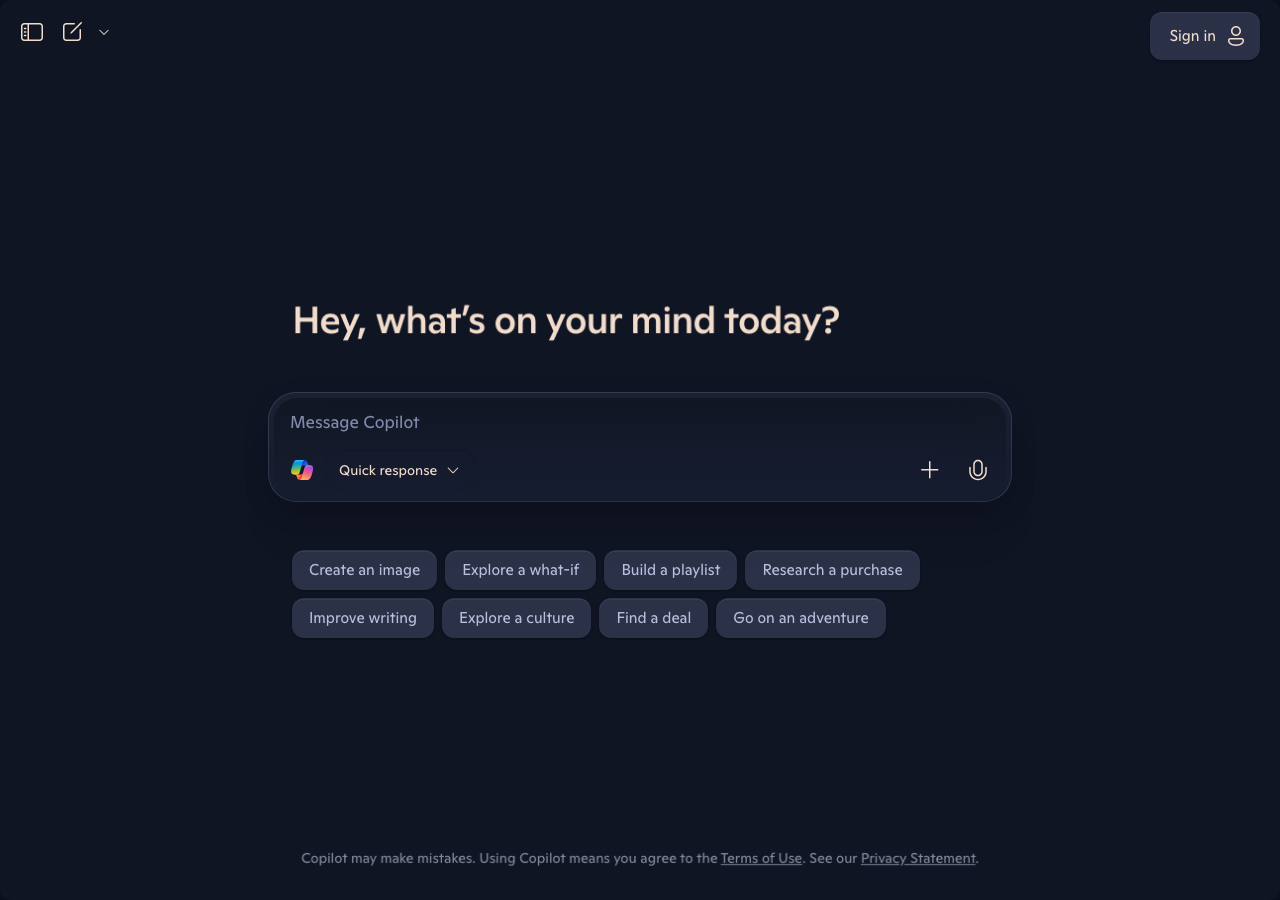


Microsoft Copilot: Navigating the Evolving Landscape of AI-Powered Productivity
Microsoft Copilot has emerged as a significant player in the burgeoning field of AI-powered productivity tools. With nearly 100 million monthly visits, it underscores Microsoft's strategic focus on integrating AI deeply into its existing ecosystem. This positions Copilot not just as a standalone application but as a core component of how users interact with Microsoft 365, Windows, and the broader web.
Industry Context and Strategic Positioning
The market for AI assistants is fiercely competitive, with key players like ChatGPT, Google Gemini, and Claude vying for dominance. Each tool offers a unique value proposition, and Microsoft Copilot differentiates itself through its tight integration with the Microsoft ecosystem. Unlike competitors that may operate as separate entities, Copilot leverages the existing user base and data within Microsoft's suite of applications.
The tool's existence is driven by several converging trends:
- The increasing demand for productivity enhancement:Knowledge workers are constantly seeking tools to streamline workflows, automate repetitive tasks, and improve overall efficiency.
- Advancements in Natural Language Processing (NLP):The development of sophisticated NLP models, like the GPT series, enables AI assistants to understand and respond to human language with increasing accuracy.
- The democratization of AI:Cloud-based platforms and pre-trained models have made AI technologies more accessible to a wider range of users, including those without specialized technical skills.
Microsoft's strategic positioning centers around making AI accessible to everyone, particularly within the enterprise. By embedding Copilot within its existing suite of products, Microsoft aims to reduce the friction associated with adopting new AI tools and ensure that users can seamlessly integrate AI into their daily routines. This approach is bolstered by Microsoft's robust security and compliance infrastructure, which is a crucial consideration for enterprise customers.
Deep Dive: How Copilot Works Under the Hood
While the user interface of Copilot appears simple and intuitive, the underlying technology is complex. At its core, Copilot relies on large language models (LLMs) like GPT-4o to understand user queries, generate text, and perform various tasks. However, the true power of Copilot lies in its ability to connect these LLMs with Microsoft's proprietary "Work IQ" layer.
The Work IQ layer acts as an intelligent bridge between the LLM and the user's data within the Microsoft ecosystem. It provides Copilot with contextual information about the user's projects, meetings, emails, and documents. This context enables Copilot to provide more relevant and personalized assistance.
Technically, this involves several key processes:
- Data Ingestion:Copilot ingests data from various Microsoft 365 applications, including Outlook, Teams, SharePoint, and OneDrive.
- Semantic Indexing:The ingested data is semantically indexed, meaning that the relationships between different pieces of information are identified and stored.
- Contextualization:When a user issues a query, Copilot uses the semantic index to retrieve relevant contextual information.
- LLM Processing:The LLM processes the user's query along with the contextual information to generate a response.
- Output Generation:Copilot generates a response that is tailored to the user's specific needs and context.
This sophisticated architecture allows Copilot to perform tasks such as summarizing meetings, drafting emails, creating presentations, and answering questions based on internal company data. The integration with Microsoft Azure also enables Copilot to leverage cloud-based resources for scalability and performance.
Real-World Applications and Best Practices
Microsoft Copilot finds applications across various industries and use cases.
- Meeting Summarization:Copilot can automatically generate summaries of meetings, highlighting key decisions, action items, and discussion points. This can save employees significant time and effort, particularly for those who are unable to attend meetings in person.
- Email Drafting:Copilot can assist with drafting emails, suggesting relevant content and automatically filling in details such as recipient names and subject lines. This can improve email efficiency and reduce the risk of errors.
- Content Creation:Copilot can help users create presentations, reports, and other documents by suggesting relevant content, formatting text, and generating visuals. This can significantly accelerate the content creation process.
- [Data Analysis](/tools/category/data-analysis):Through its integration with Power BI, Copilot enables users to perform data analysis and generate insights from large datasets. This can help businesses make more informed decisions.
Best Practices:
- Data Governance:Organizations should establish clear data governance policies to ensure that Copilot has access to accurate and up-to-date information.
- User Training:Users should receive adequate training on how to effectively use Copilot and leverage its various features.
- Security and Compliance:Organizations should ensure that Copilot is configured to comply with relevant security and compliance regulations.
Common Pitfalls:
- Over-reliance on AI:Users should avoid becoming overly reliant on Copilot and should always critically evaluate the information it provides.
- Data Quality Issues:If the data that Copilot relies on is inaccurate or incomplete, the quality of its output will suffer.
- Security Risks:Organizations should be aware of the potential security risks associated with using AI assistants and should take steps to mitigate these risks.
Competitive Landscape Analysis
The AI assistant market is characterized by intense competition. Here's how Microsoft Copilot stacks up against its key rivals:
- ChatGPT:While ChatGPT excels in general-purpose conversation and creative writing, Copilot offers deeper integration with business productivity tools.
- Google Gemini:Gemini, like Copilot, integrates with a broad ecosystem. Google has strength in search data and Copilot with business data.
- Claude:Claude is known for its strong focus on enterprise collaboration and security, making it a direct competitor to Copilot.
- GitHub Copilot:GitHub Copilot targets software developers with specialized code assistance features, while Microsoft Copilot serves a broader audience.
- DeepL:DeepL specializes in AI-powered translation, a niche that Copilot addresses through its broader set of capabilities.
Expert Perspectives and ROI Considerations
Microsoft Copilot presents a compelling value proposition for organizations seeking to enhance productivity, streamline workflows, and improve decision-making. However, it's crucial to carefully consider the potential costs and benefits before implementing the tool.
Strengths:
- Seamless Integration:The tool's tight integration with Microsoft 365, Windows, and the web is a significant advantage, enabling users to seamlessly incorporate AI into their existing workflows.
- Work IQ:The Work IQ layer provides Copilot with contextual information, resulting in more relevant and personalized assistance.
- Security and Compliance:Microsoft's robust security and compliance infrastructure ensures that Copilot is a safe and reliable solution for enterprise customers.
Weaknesses:
- Data Dependency:The quality of Copilot's output is heavily dependent on the accuracy and completeness of the data it relies on.
- [Learning](/learn) Curve:While Copilot is designed to be user-friendly, some users may require training to fully leverage its capabilities.
- Potential for Bias:Like all AI systems, Copilot is susceptible to bias, which could lead to unfair or discriminatory outcomes.
ROI Considerations:
- Time Savings:Copilot can save employees significant time and effort by automating repetitive tasks and streamlining workflows.
- Improved Decision-Making:Copilot can help businesses make more informed decisions by providing access to data-driven insights.
- Increased Productivity:By freeing up employees to focus on higher-value activities, Copilot can boost overall productivity.
The freemium pricing model provides a low barrier to entry, allowing users to explore the basic functionalities of Copilot without a financial commitment. The Enterprise plan provides access to advanced features and capabilities, along with enterprise-grade security and support.
Future Outlook and Predictions
The future of AI-powered productivity tools is bright, and Microsoft Copilot is well-positioned to play a leading role in this space. Several key trends are expected to shape the evolution of Copilot in the years to come:
- Enhanced Personalization:Future versions of Copilot are likely to offer even greater personalization, tailoring the user experience to individual needs and preferences.
- Expanded Integration:Copilot will likely integrate with an even wider range of applications and services, both within and outside the Microsoft ecosystem.
- Advanced AI Capabilities:Copilot will continue to benefit from advancements in AI technology, such as improved NLP models and machine learning algorithms.
- Agent-Based Automation:The "agent builder" capabilities will evolve, enabling users to create custom AI agents to automate complex tasks and workflows.
Given the high monthly visits and Microsoft's commitment to AI, Copilot is likely to remain a relevant tool. The stable trend in site traffic suggests sustained interest in the platform.
Conclusion
Microsoft Copilot represents a significant step forward in the evolution of AI-powered productivity tools. Its seamless integration with the Microsoft ecosystem, coupled with its advanced AI capabilities and robust security features, make it a compelling solution for organizations seeking to enhance productivity, streamline workflows, and improve decision-making. While potential limitations exist, the tool's strengths and the broader industry trends suggest a promising future. By carefully considering the potential costs and benefits, organizations can determine whether Microsoft Copilot is the right solution for their specific needs and unlock the full potential of AI to transform the way they work.