
"AI search that simplifies complex software decisions."
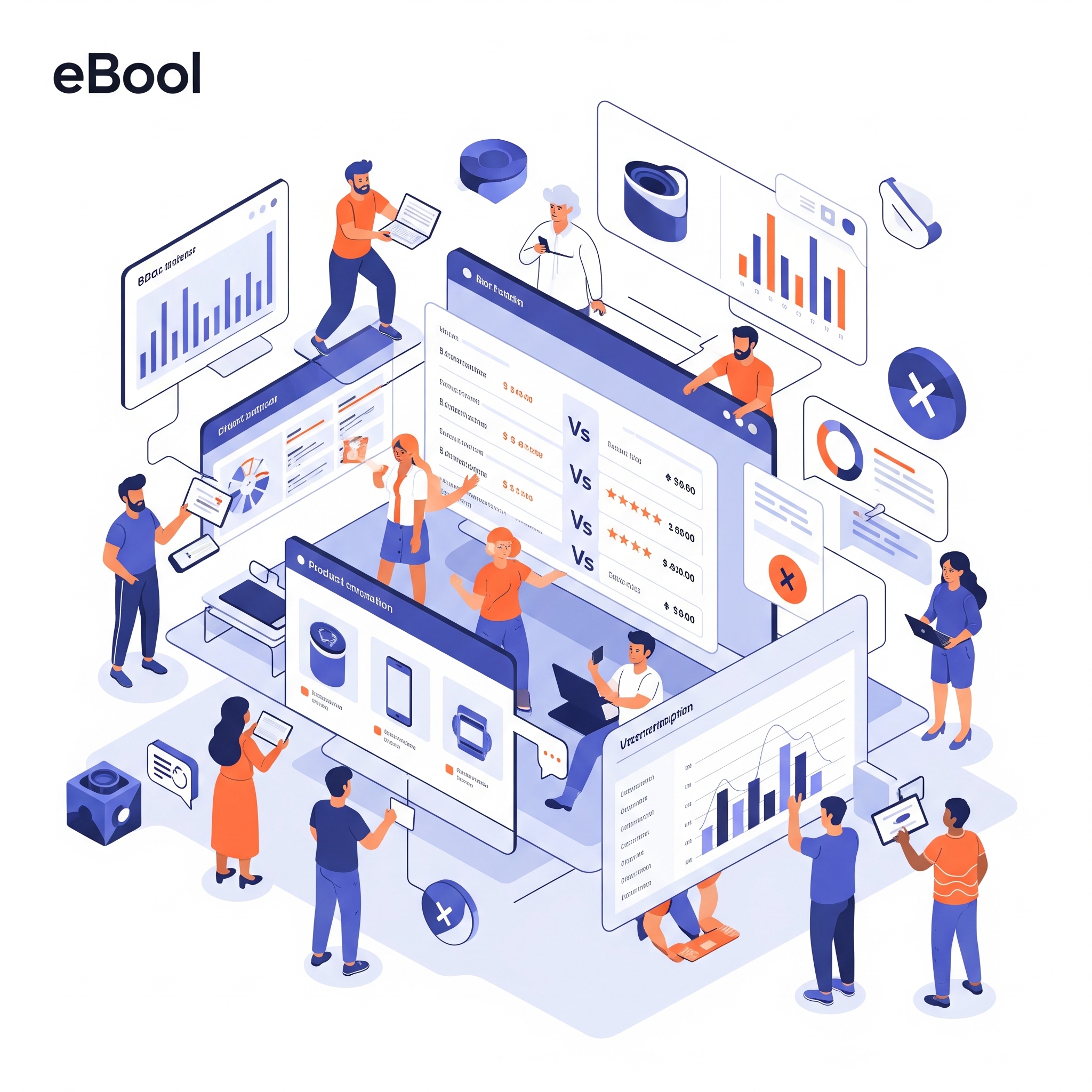
AI search that simplifies complex software decisions.
Based on user reviews
Rating Distribution
by Best AI Tools
We evaluated eBool and appreciated its AI-driven product indexing across extensive categories like HR software and AI tools, where it pulls data from official sources to enable feature-based filtering and side-by-side comparisons. The custom infographic generator stands out, letting users quickly create co-branded visuals from any product list via a 4-step wizard for easy sharing on social media or sites. From a technical standpoint, integrating more API endpoints for programmatic access could further enhance its utility for developers building recommendation workflows.
Elena_Kovacs87
20 days ago
Finally found a tool that actually streamlines picking business software. I've been using eBool for about six weeks now, mainly to scout CRM options for my marketing team. Compared to scrolling through G2 or Capterra lists full of sponsored junk, this AI search nails it with unbiased rankings based on real data. The filtering is spot on - I narrowed down tools by industry, pricing under $50/month, and integration with HubSpot in under two minutes. Transparent scores on features like automation and support helped me shortlist three winners fast. Honestly, it saved me hours that I'd waste on biased blogs. One nitpick: the comparison charts could use more export options, like direct CSV for my spreadsheets. Still, for free, it's a no-brainer for busy execs. If you're drowning in tool overload, give eBool a shot - it delivers strategic picks without the fluff.
Regina Lee
Regina Lee, an expert in AI tools, has evaluated eBool for Search & Discovery and rates it 4.0/5 based on 1 user review. The tool demonstrates particular strength for business executives who need AI tools capabilities.
Discover business software the smart way with eBool. Its AI-powered search engine finds, filters, and compares tools across industries—offering transparent rankings and accurate insights. No bias, no fluff—just strategic, data-backed results to help you make informed software decisions without wasting hours navigating biased blogs or generic lists.
Understanding the core functionality and approach of eBool.
eBool surfaces analytics and insights so teams can act with confidence. Dashboards and metrics keep performance trends in view. Analytics and reporting surface the metrics needed to act quickly.
Explore the powerful features that make eBool stand out.
Demo and trial environments let teams experience eBool before committing.
Decision-makers get real-time context without waiting on manual reporting. Analytics and reporting surface the metrics needed to act quickly.
Discover how different audiences leverage eBool for their specific needs.
Product teams lean on eBool to test features, gather feedback, and prioritize roadmaps using real data. Analytics and reporting surface the metrics needed to act quickly.
Self-service analytics reduces the backlog on central BI teams. Analytics and reporting surface the metrics needed to act quickly.
Discover more AI tools in related categories, platforms, and use cases.
Deepen your understanding of the concepts behind tools like eBool with our expert guides.
Understand core concepts like LLMs and Machine Learning.
Master search, filtering, and comparison to find the perfect tool.
Learn to craft effective prompts to command AI models.
Integrate AI into your daily workflows ethically and effectively.
See how eBool stacks up against similar alternatives in the market.
Explore these popular alternatives to eBool for your specific needs.
Take your tool to the next level with Featured placements, Academy mentions with high-authority backlinks, 48h Fast‑Track listing, Newsletter features to thousands of AI practitioners, and exclusive Data/API access for growth insights.
Use this page as a starting point to evaluate eBool alongside similar options. Our directory focuses on practical details that matter for adoption—capabilities, pricing signals, integrations, and real audiences—so you can shortlist with confidence and move from exploration to evaluation faster.
For a structured head‑to‑head, try the comparison view: Compare AI tools. To stay current with launches, model updates, and research breakthroughs, visit AI News. New to the space? Sharpen your understanding with AI Fundamentals.
Before adopting any tool, model your total cost at expected usage, verify integration coverage and API quality, and review privacy, security, and compliance. A short pilot on a real workflow will reveal reliability and fit quickly. Bookmark this site to track updates to eBool and the broader ecosystem over time.
Found incorrect information or have concerns about eBool? Let us know.
Looking for alternatives to eBool or similar tools? Use our AI-powered chatbot to discover the perfect solution for your needs.


