
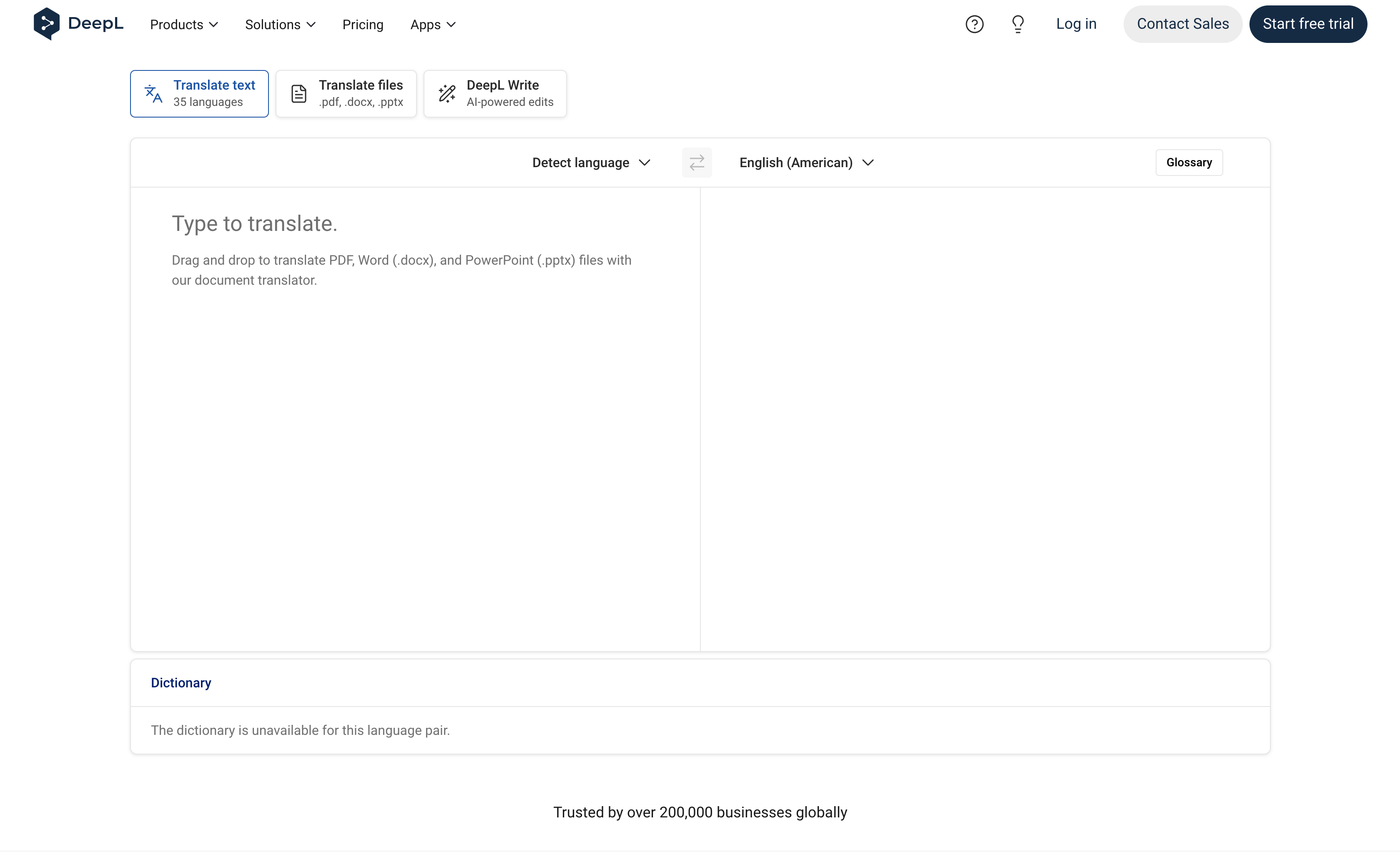


DeepL: A Case Study in Real-World Translation Applications
DeepL's high accuracy and context-aware translation capabilities position it as a powerful tool across various industries. Its success, evidenced by substantial web traffic (119+ million monthly visits) and a high average rating (4.6 stars), underscores the demand for reliable translation solutions. This case study analyzes its application in specific scenarios, highlighting potential benefits and limitations.
Problem Statement: The Need for Accurate and Efficient Multilingual Communication
Organizations face increasing pressure to communicate effectively with global audiences. This requires translating various types of content, including marketing materials, technical documentation, customer support resources, and internal communications. Inaccurate or poorly translated content can lead to misunderstandings, damage brand reputation, and hinder international expansion. Traditional translation methods, such as manual translation or less sophisticated machine translation tools, can be time-consuming, expensive, and prone to errors.
Solution Approach: Leveraging DeepL's AI-Powered Translation Engine
DeepL offers a multifaceted solution by leveraging neural machine translation (NMT) to provide high-quality translations. Its context-aware algorithms analyze the nuances of the source text to generate more accurate and natural-sounding translations than many competing platforms. Key features that contribute to its effectiveness include:
- Document Translation:Businesses can translate entire documents (e.g., contracts, reports, manuals) while preserving formatting, saving significant time and effort compared to manual methods.
- Real-Time Voice Translation:Facilitates seamless communication in multilingual meetings and presentations, removing language barriers and fostering collaboration.
- Custom Glossaries:Allows users to define specific terms and their translations, ensuring consistency and accuracy in specialized fields such as law, medicine, and engineering.
- API Integration:Enables developers to integrate DeepL's translation capabilities into their own applications and workflows, automating translation processes.
- Writing Assistance (DeepL Write Pro):Extends beyond simple translation and assists in the composition of well-written text. Users can improve their writing quality using features like tone adjustment and grammar correction.
Case Study 1: Streamlining Global Marketing Campaigns
Problem: A marketing team needs to adapt its campaigns for multiple international markets efficiently. Traditional methods of relying on external translation agencies are slow and costly, hindering their ability to launch campaigns quickly and maintain consistent messaging across all regions.
Solution Approach: The team utilizes DeepL to translate marketing materials, including website content, social media posts, and advertising copy. They create custom glossaries to ensure consistent use of brand-specific terminology. The API integration allows them to automatically translate new content as it is created, streamlining the localization process.
Expected Outcomes:
- Increased Speed to Market:The marketing team can launch campaigns in new markets faster, giving them a competitive edge.
- Reduced Translation Costs:Automating translation with DeepL significantly reduces the need for expensive human translators.
- Improved Brand Consistency:Custom glossaries ensure consistent messaging across all languages.
Lessons Learned:
- While DeepL provides highly accurate translations, it's crucial to have a human reviewer proofread the translated content, especially for highly sensitive or creative materials.
- Regularly updating custom glossaries is essential to maintain accuracy and consistency.
- Testing different translation styles and tones can help optimize campaign performance in each target market.
Case Study 2: Enhancing Customer Support in a Multilingual Environment
Problem: A customer support team struggles to provide timely and effective assistance to customers who speak different languages. The language barrier leads to longer response times, increased customer frustration, and lower customer satisfaction.
Solution Approach: The support team integrates DeepL's translation capabilities into their CRM system. This allows them to quickly translate customer inquiries and provide responses in the customer's preferred language. Real-time voice translation enables them to communicate directly with customers who speak different languages over the phone.
Expected Outcomes:
- Improved Customer Satisfaction:Customers receive faster and more accurate support, leading to increased satisfaction.
- Reduced Response Times:Translation automation significantly reduces the time it takes to respond to customer inquiries.
- Increased Efficiency:Support agents can handle a larger volume of inquiries, improving overall team efficiency.
Lessons Learned:
- Provide training to support agents on how to effectively use DeepL's translation features.
- Encourage customers to provide feedback on the quality of the translations to help improve accuracy.
- Develop a process for handling complex or sensitive issues that may require human translation expertise.
Case Study 3: Facilitating Internal Communication in a Global Organization
Problem: A multinational corporation experiences communication challenges due to language barriers among its employees. Misunderstandings and delays in information sharing hinder collaboration and productivity.
Solution Approach: The organization implements DeepL as its standard translation tool for internal communications. Employees are encouraged to use DeepL to translate emails, documents, and meeting transcripts. The offline mode (available in the Pro version) allows employees to access translation services even when they are not connected to the internet. The enterprise API integration allows for secure data handling, addressing data security concerns.
Expected Outcomes:
- Improved Collaboration:Employees can communicate more effectively with colleagues who speak different languages, fostering collaboration and teamwork.
- Increased Productivity:Reduced communication barriers lead to faster decision-making and improved overall productivity.
- Enhanced Employee Engagement:Employees feel more connected to the organization and valued for their contributions, regardless of their language skills.
Lessons Learned:
- Ensure that all employees have access to DeepL and are trained on how to use it effectively.
- Promote a culture of inclusivity and respect for linguistic diversity.
- Establish clear guidelines for when human translation is required for sensitive or critical communications.
Competitive Landscape and Strategic Positioning
DeepL operates in a competitive market with several other AI-powered translation tools, including ChatGPT, Grammarly, QuillBot and others. Its strategic advantage lies in its focus on accuracy and context-awareness. While other tools may offer a broader range of features (e.g., Grammarly's comprehensive writing assistance or Notion AI's workspace integration), DeepL excels at providing highly reliable translations, making it a preferred choice for businesses and individuals who prioritize precision. Compared to ZeroGPT, DeepL's purpose is translation and writing enhancement, not AI detection.
Industry Trends and Future Outlook
The AI translation market is expected to continue to grow rapidly in the coming years, driven by increasing globalization and the growing need for efficient multilingual communication. Key trends shaping the market include:
- Advancements in Neural Machine Translation:NMT technology is constantly evolving, leading to further improvements in translation accuracy and fluency.
- Increased Demand for Real-Time Translation:The need for instant translation solutions is growing, particularly in areas such as customer support, international conferences, and online collaboration.
- Integration with Other Applications:AI translation tools are increasingly being integrated into other business applications, such as CRM systems, content management systems, and email clients.
DeepL is well-positioned to capitalize on these trends. Its commitment to research and development, combined with its strong focus on accuracy, should enable it to maintain its competitive edge and continue to expand its market share. The integration of features like DeepL Write Pro enhances its value proposition and caters to the evolving needs of users.
Expert Perspectives: Strengths, Weaknesses, and ROI Considerations
Strengths:
- Exceptional Accuracy:DeepL consistently outperforms other machine translation tools in terms of accuracy and fluency.
- Context-Aware Translation:Its ability to understand the nuances of the source text leads to more natural-sounding translations.
- User-Friendly Interface:DeepL is easy to use, even for individuals with limited technical expertise.
- Versatile Applications:It can be used for a wide range of translation tasks, from document translation to real-time voice translation.
Weaknesses:
- Limited Language Support:While DeepL supports a growing number of languages, it still lags behind some competitors in terms of overall language coverage.
- Reliance on Internet Connectivity:While the Pro version offers offline mode, the web app and some features require a stable internet connection.
- Potential for Errors:While DeepL is highly accurate, it is not perfect, and errors can still occur, particularly with complex or ambiguous text.
ROI Considerations:
Organizations can expect to see a significant return on investment (ROI) from using DeepL. Benefits include:
- Reduced Translation Costs:Automating translation with DeepL can significantly reduce the need for expensive human translators.
- Increased Efficiency:Faster translation speeds can improve productivity and reduce time-to-market.
- Improved Communication:More accurate translations can lead to better understanding and collaboration, both internally and externally.
However, it's important to consider the cost of DeepL's subscription plans and the potential need for human review and editing when calculating ROI. The freemium model allows initial assessment before committing to a paid plan.
Actionable Guidance: Implementation and Optimization Tips
- Start with a Pilot Project:Before deploying DeepL across the entire organization, start with a small pilot project to test its effectiveness and identify any potential challenges.
- Develop a Translation Style [Guide](/learn):Create a style guide that outlines the organization's preferred translation style and terminology. This will help ensure consistency across all translated content.
- Provide Training and Support:Train employees on how to effectively use DeepL and provide ongoing support to address any questions or issues.
- Monitor Translation Quality:Regularly monitor the quality of DeepL's translations and provide feedback to the development team.
- Leverage Custom Glossaries:Create and maintain custom glossaries to ensure accurate translation of industry-specific terminology.
- Integrate with Existing Workflows:Integrate DeepL with existing business applications and workflows to automate translation processes.
Conclusion
DeepL offers a compelling solution for organizations seeking to improve the accuracy and efficiency of their multilingual communication. Its advanced AI-powered translation engine, combined with its user-friendly interface and versatile applications, makes it a valuable asset for businesses of all sizes. By following the implementation and optimization tips outlined in this case study, organizations can maximize the benefits of DeepL and achieve a significant return on investment. As the AI translation market continues to evolve, DeepL is well-positioned to remain a leading player in the industry, driving innovation and empowering organizations to communicate more effectively across language barriers.