
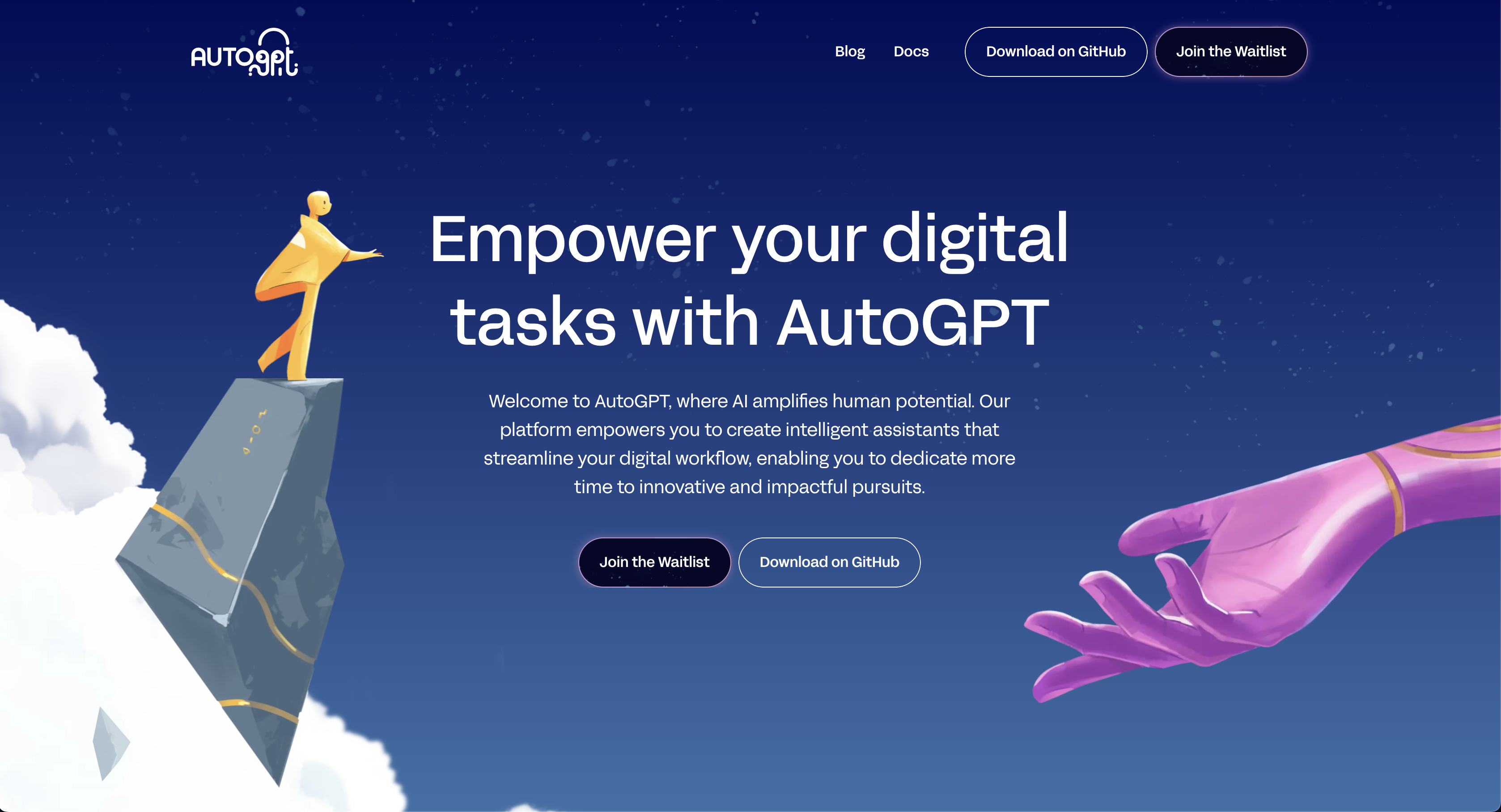


AutoGPT: Real-World Applications and Strategic Insights
AutoGPT is positioned as a platform for automating complex workflows using autonomous AI agents. Given its capabilities, the tool caters to a growing market need for intelligent automation, particularly in areas requiring continuous operation and adaptability. This analysis will explore AutoGPT's real-world applications, its strategic position within the competitive landscape, and key considerations for potential users.
Industry Context and Market Trends
The rise of AutoGPT aligns with several key industry trends:
- Increasing Demand for Automation:Businesses are continuously seeking ways to streamline operations, reduce costs, and improve efficiency. AI-powered automation tools like AutoGPT are designed to address this demand by automating tasks that traditionally require human intervention.
- Low-Code/No-Code Adoption:The accessibility of low-code/no-code platforms is expanding, allowing individuals with limited programming experience to create and deploy sophisticated AI-driven workflows. AutoGPT’s low-code workflow builder fits into this trend, lowering the barrier to entry for AI automation.
- AI Agent Orchestration:The complexity of modern business processes often requires the coordination of multiple AI agents. AutoGPT addresses this by providing a platform for AI agent orchestration, allowing users to connect different agents and tools to create complex workflows.
- Cloud-Based Solutions:The shift towards cloud-based solutions ensures that AI agents can operate 24/7 without requiring on-premises infrastructure. AutoGPT leverages cloud-based execution to provide continuous and reliable operation.
Real-World Application Scenarios
While specific case study data is not available, we can examine common generic scenarios where AutoGPT can be effectively applied.
- Marketing Automation:
- Problem:Marketing teams often struggle with the time-consuming task of creating and distributing content across multiple channels.
- Solution:AutoGPT can automate content generation, scheduling, and distribution based on predefined parameters and real-time analytics. By integrating with sentiment analysis tools, it can also adjust content based on audience feedback.
- Expected Outcomes:Increased content output, improved audience engagement, and enhanced marketing ROI. The tool's ability to make decisions driven by sentiment analysis ensures that marketing efforts are aligned with current audience preferences.
- Lessons Learned:Proper configuration of parameters and continuous monitoring of performance are critical for optimal results. Clear definitions of success metrics are essential to refine automation workflows.
- [Data Analysis](/tools/category/data-analysis) and Reporting:
- Problem:Data analysts spend significant time collecting, cleaning, and analyzing data from various sources to generate reports.
- Solution:AutoGPT can automate the data processing pipeline by connecting to different data sources, cleaning and transforming the data, and generating reports based on predefined templates. The AI agents can perform data quality checks and anomaly detection, ensuring the accuracy of the reports.
- Expected Outcomes:Faster report generation, improved data accuracy, and reduced manual effort. By automating these tasks, data analysts can focus on higher-level strategic analysis and decision-making.
- Lessons Learned:Secure data connections and proper access controls are essential to protect sensitive information. Regular reviews of data transformation rules ensure the integrity of the analysis.
- Business Process Automation:
- Problem:Many businesses have repetitive and time-consuming processes that could be automated to improve efficiency.
- Solution:AutoGPT allows businesses to create custom workflows that automate tasks such as invoice processing, customer onboarding, and supply chain management. Its ability to integrate with various tools and APIs enables seamless automation across different departments.
- Expected Outcomes:Reduced operational costs, improved process efficiency, and increased employee productivity. By automating routine tasks, employees can focus on more strategic and creative activities.
- Lessons Learned:Identifying the right processes for automation and carefully designing the workflows are crucial for success. Continuous monitoring and optimization of the automated processes are necessary to maintain efficiency and adapt to changing business needs.
- Customer Service:
- Problem:Providing timely and effective customer service requires significant resources and effort.
- Solution:AutoGPT can automate responses to common customer inquiries, resolve basic issues, and escalate complex problems to human agents. Sentiment analysis can be used to prioritize urgent or dissatisfied customers, improving overall service quality.
- Expected Outcomes:Reduced response times, improved customer satisfaction, and decreased customer service costs. The 24/7 availability of AI agents ensures that customers receive assistance whenever they need it.
- Lessons Learned:Regularly updating the knowledge base and training the AI agents on new issues are essential to maintain the accuracy and effectiveness of the automated customer service system. Human oversight is still needed to handle complex or sensitive situations.
Competitive Landscape
AutoGPT operates in a competitive market with several notable players. Understanding its strengths and weaknesses compared to these competitors is essential for potential users.
- n8n:As an open-source workflow automation platform, n8n offers a high degree of flexibility and customization. Its freemium model and native AI integrations make it a strong competitor. AutoGPT distinguishes itself through its focus on autonomous AI agents and its ability to manage continuous operations with specific constraints. N8n’s 482 upvotes suggest a strong community and robust feature set.
- Google AI Studio:This platform offers a fast way to build AI-first applications using Google Gemini. Its strengths lie in Google's advanced AI models and extensive resources. AutoGPT provides a more comprehensive platform for creating, deploying, and managing autonomous AI agents, potentially offering greater flexibility for complex workflows. Google AI Studio’s 242 upvotes indicate its popularity within the AI developer community.
- GitHub Copilot:While primarily a code assistance tool, GitHub Copilot also functions as an autonomous coding agent. Its integration with GitHub makes it a natural choice for developers. AutoGPT expands beyond coding assistance by offering a broader range of workflow automation capabilities, catering to both technical and non-technical users. GitHub Copilot has amassed 391 upvotes reflecting its widespread adoption among developers.
- Salesforce and Salesforce Platform:Salesforce offers a comprehensive CRM platform with AI capabilities, while the Salesforce Platform allows users to build, automate, and scale with AI agents. These platforms are strong choices for organizations heavily invested in the Salesforce ecosystem. AutoGPT offers a more specialized and potentially more flexible solution for AI agent orchestration, particularly for businesses that require a platform-agnostic approach. The Salesforce Platform has 332 upvotes. Salesforce has 234 upvotes.
Strengths and Weaknesses
Strengths:
- Autonomous AI Agents:AutoGPT excels in creating and managing autonomous AI agents that can operate continuously with specific constraints.
- Low-Code Workflow Builder:The low-code interface makes it accessible to users with limited programming experience.
- Tool Integrations:Seamless integration with various tools and APIs enables the creation of complex and versatile workflows.
- Cloud-Based Execution:Ensures 24/7 availability and reliable performance.
Weaknesses:
- Complexity:Creating and managing autonomous AI agents can be complex, requiring a deep understanding of AI principles and workflow design.
- Limited Case Study Data:The absence of specific case study data makes it challenging to quantify the benefits in specific scenarios.
- Reliance on Integrations:The effectiveness of AutoGPT depends heavily on the quality and reliability of its integrations with other tools and services.
ROI Considerations
Assessing the ROI of AutoGPT involves considering several factors:
- Cost Savings:Automating repetitive tasks can lead to significant cost savings by reducing manual effort and improving efficiency.
- Increased Productivity:By automating routine tasks, employees can focus on higher-value activities, leading to increased productivity.
- Improved Accuracy:AI agents can perform tasks with greater accuracy than humans, reducing errors and improving data quality.
- Scalability:AutoGPT allows businesses to scale their operations without proportionally increasing their workforce.
However, it's important to consider the initial investment in setting up the platform, training the AI agents, and integrating with other tools. Continuous monitoring and optimization are also necessary to ensure that the platform delivers the expected ROI.
Actionable Guidance and Best Practices
- Start with Clear Objectives:Define the specific goals you want to achieve with AI automation.
- Choose the Right Use Cases:Identify processes that are well-suited for automation and offer the greatest potential for ROI.
- Design Workflows Carefully:Plan the workflows meticulously, considering all the steps involved and potential exceptions.
- Monitor Performance Continuously:Track key metrics to assess the effectiveness of the automation and make necessary adjustments.
- Provide Adequate Training:Ensure that users have the knowledge and skills they need to effectively use and manage the platform.
- Security:Ensure secure data connections and access controls, as this is critical to protect sensitive information.
Long-Term Viability Assessment
The long-term viability of AutoGPT depends on its ability to adapt to evolving market trends and technological advancements. As AI technology continues to advance, AutoGPT will need to incorporate new features and capabilities to remain competitive. The company's commitment to innovation and its ability to build a strong ecosystem of integrations will be critical for its long-term success.
Given the stable trend indicated by the analytics data, it's crucial to monitor the upvotes, monthly visits, and review count to evaluate the growth and user engagement with the platform. As of now, the 4.3 average rating and 4 review counts provide a basic view of user satisfaction, however, a more substantial review base would give a better overall understanding of the user sentiment.
Conclusion
AutoGPT offers a powerful platform for automating complex workflows using autonomous AI agents. Its low-code interface, seamless tool integrations, and cloud-based execution make it an attractive solution for businesses looking to improve efficiency and reduce costs. However, potential users should carefully consider the complexity of the platform, the absence of detailed case study data, and the importance of continuous monitoring and optimization. By following best practices and carefully planning their automation strategies, organizations can leverage AutoGPT to achieve significant ROI and gain a competitive advantage.