Is AI Citation the New SEO? Why Getting Recommended by ChatGPT and Perplexity is Your Brand's Next Big Win

For decades, digital marketing has been a battleground for keywords and links. Search Engine Optimization (SEO) was the gold standard—the complex art of convincing algorithms that your content deserved that coveted top spot on a search engine results page. But a seismic shift is underway, and it's rendering traditional SEO strategies insufficient. The future of brand visibility isn't about appearing in a list of blue links; it's about being the definitive answer provided by conversational AI.
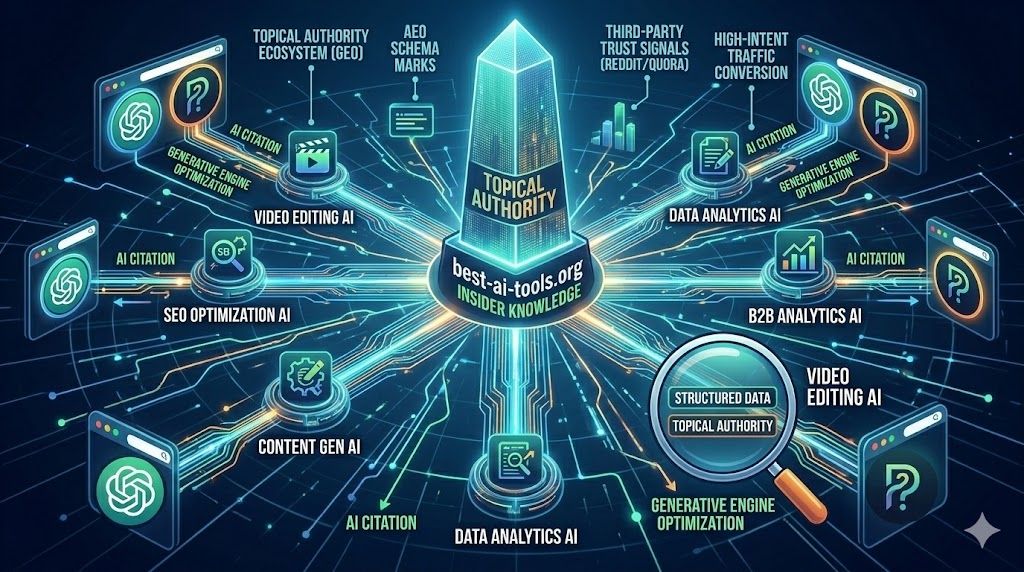
We are witnessing the rise of a new paradigm: Generative Engine Optimization (GEO). This isn't just a fancy acronym; it represents a fundamental change in how users discover information, products, and services. As platforms like ChatGPT, Perplexity, and others become the primary interface for search, the goal for brands is no longer just visibility—it's citation and recommendation.
"Traditional SEO is about getting found. GEO is about being used," says [Name], AI and Digital Strategy Expert. "When an LLM [Large Language Model] incorporates your brand's information or tool into its answer, it's a direct recommendation, a high-trust endorsement that carries immense weight with the user."
This shift has profound implications for businesses of all sizes, but it’s particularly critical in the B2B and software space, like the one we track at best-ai-tools.org. Our directory, which catalogs thousands of AI solutions, is designed precisely for this new landscape: to help human researchers and, increasingly, AI agents find and evaluate the best tools.
Here’s why your brand needs to prioritize getting recommended by LLMs and how to start making it happen.
The Conversion Paradox: Fewer Clicks, Higher Value
The panic among digital marketers regarding "Zero-Click Searches" is palpable. As AI models provide complete answers directly in the chat interface, the traditional click-through rate (CTR) to websites is decreasing. If users can get a comparison of the "best AI-powered project management software" without leaving ChatGPT, they might not visit the individual tool sites or even an aggregator like ours.
But here is the twist, the "Conversion Paradox": While raw traffic may decline, the quality of the traffic that does click through is exponentially higher. When an AI model synthesizes information, compares options, and then points a user toward your specific solution as a top recommendation, that user is already deep in the consideration funnel. They are pre-qualified. They aren't just browsing; they are looking to validate a recommendation.
Early data suggests that traffic referred directly from AI summaries converts at significantly higher rates than traditional organic search traffic.
Why "Citation" is the New Authority Metric
In the world of Generative AI, visibility is determined by your Share of Citations. When a user asks an LLM for a recommendation, the model draws upon its training data and, increasingly, real-time web searches. The brands it "knows" and trusts enough to cite are the ones that exist in that user's journey. If you aren't cited, you effectively do not exist in that conversation.
In the B2B sector, where purchasing decisions are complex and information-heavy, this is a game-changer. A high-value vendor shortlisted by an AI chatbot is already halfway to a sale.
How to Get Recommended: The 3 Pillars of GEO
Winning in the era of ChatGPT and Perplexity requires a strategic pivot. You are no longer optimizing just for keywords; you are optimizing for answers and authority. At best-ai-tools.org, we see this as a three-pillar strategy:
1. Optimization for "Answer-Ready" Content (AEO)
AI models excel at extracting structured information. To make your content easy for an LLM to find, understand, and use in an answer, you need Answer Engine Optimization (AEO):
- Structure is King: Use clear headings (H2, H3) that mimic user questions (e.g., "What is the best AI tool for video editing?"). Follow these questions immediately with concise, direct answers of under 50 words.
- Deep Schema Markup: Implement granular Structured Data (Schema.org markup), specifically for Products, Offers, and Reviews. This provides clear factual data points that AI agents can parse efficiently.
- Clarity Over Jargon: AI summaries favor simplicity. Avoid overly technical language or marketing fluff. Write clearly and concisely.
2. Build Unshakable Topical Authority via Ecosystems
Isolated blog posts are no longer enough. AI models are looking for "Ecosystems" of knowledge that demonstrate genuine expertise. The Hub-and-Spoke Model is essential:
- The Hub (Pillar Guide): Create an expansive, definitive guide on a broad topic (e.g., "The Ultimate Guide to AI for Marketing").
- The Spokes (Cluster Posts): Surround that hub with hyper-specific, in-depth articles on related sub-topics (e.g., "AI for Email Personalization," "AI-Powered Social Media Analytics," "The Best AI for Content Generation"). This signals to AI crawlers that you are a comprehensive expert in that niche.
At best-ai-tools.org, our own infrastructure, categorizing over 4,000 tools across hundreds of niches, provides the raw data structure for these authoritative clusters.
3. Master the "Third-Party Trust" Loop
LLMs do not just rely on your website; they aggregate sentiment from across the digital landscape. To be recommended, you need a strong presence and positive sentiment in "Human-Heavy" environments:
- Reddit and Quora: AI models weigh community-driven platforms heavily. They provide the authentic, nuanced, human perspectives that corporate websites often lack. Being mentioned and positively discussed in relevant subreddits is a massive trust signal for an LLM.
- Review Aggregators and Directories: Consistency is key. Having your tool listed, accurately described, and positively reviewed across multiple high-authority directories—like best-ai-tools.org, G2, or Capterra—creates a powerful "fast trust" signal that AI models recognize and cite.
Conclusion: Writing for Clicks vs. Writing to Train the AI
The rules of visibility have been rewritten. The secret to dominating digital discovery in the next five years is not just writing for clicks—it's writing to train the AI. By providing the most reliable, scannable, structured, and cited answers in your niche, you ensure that when a user asks ChatGPT or Perplexity, "What is the best tool for my need?", the answer is your brand.
GEO is not a trend; it's the inevitable destination. Is your brand ready to be cited?
Recommended AI tools

ChatGPT
Conversational AI
AI research, productivity, and conversation—smarter thinking, deeper insights.

ZeroGPT
Writing & Translation
Detect AI. Verify Authenticity. Protect Content.

Meta AI
Conversational AI
Bring your imagination to life with Meta AI

Monica – ChatGPT AI Assistant
Conversational AI
All-in-one AI assistant. Personalized, fast and free.

DataCamp
Data Analytics
Master Data & AI Skills. Learn by Doing.

Perfect Corp.
Image Generation
Beautiful AI for Beauty, Fashion, and Digital Innovation
Was this article helpful?
Found outdated info or have suggestions? Let us know!