
Microsoft Commits $23 Billion to AI in India and Canada: Largest Asian Infrastructure Investment
Microsoft announced a commitment of approximately $23 billion in artificial intelligence infrastructure investment across India and Canada, marking the company's largest-ever capital deployment in Asia and signaling strategic geographic expansion of AI compute beyond traditional U.S. centers.
The investment prioritizes India as a primary deployment hub, reflecting both market opportunity and geopolitical strategy. India represents 1.4+ billion potential users—a massive TAM for AI services—while hosting cost-competitive talent pools for training data, model fine-tuning, and localization. Critically, India's regulatory stance on AI remains flexible compared to EU restrictions, enabling Microsoft to iterate rapidly on products before EU deployment. Canada's strategic importance centers on energy abundance (hydroelectric power) and proximity to U.S. regulatory structures without full U.S. labor cost constraints.
The announcement follows similar infrastructure pivots from Amazon, Google, and Meta, collectively signaling that frontier AI infrastructure is decentralizing from Silicon Valley toward energy-rich, talent-abundant, regulation-flexible regions. Microsoft's bet validates India's emergence as a secondary AI superpower hub alongside China and Europe.morningstar
Why this matters: Microsoft's $23 billion India investment signals confidence that regional AI ecosystems will compete directly with U.S. systems on cost, localization, and cultural adaptation. Enterprises will increasingly deploy region-specific models optimized for local languages, regulatory requirements, and data privacy frameworks. This reshapes competitive dynamics: global AI providers must now master regional deployment strategies, not just central product development. Organizations building AI products should prepare for market fragmentation: India-optimized models (Bhasha AI, indigenous LLMs) will compete with Western generalists. By 2026-2027, expect regional "champion" models emerging across APJ regions, trained on local data, optimized for regional regulatory compliance, competing on cost and cultural fit against U.S. incumbents. Microsoft's infrastructure play enables such regional customization at scale.
X1 Launches "AI In-Place" Enterprise Architecture: Data Never Leaves Company Firewall
Enterprise data management company X1 unveiled a watershed innovation: deploying large language models directly within enterprise data infrastructure without requiring data export or cloud transmission—fundamentally solving enterprise AI's critical bottleneck of data movement.
Traditional enterprise AI workflows force painful tradeoffs: either (1) export sensitive data to cloud platforms (unacceptable for regulated industries), or (2) limit AI capabilities to disconnected sandbox environments. X1's "AI in-place" architecture inverts this: the AI comes to the data, not data to the cloud.

Technical implementation leverages X1's distributed index architecture: text extraction and indexing occurs where data resides (on-premises or private cloud), then AI models (proprietary or open-source) are deployed to that same environment. The result: organizations unlock full LLM analytical power (eDiscovery, compliance monitoring, risk analysis, GRC audits) while maintaining complete data sovereignty. Use cases include legal teams analyzing contracts using proprietary models tuned to firm-specific precedents, compliance teams monitoring global supply chains without centralized data aggregation, and healthcare systems conducting genomic analysis without exporting patient records.
The architecture eliminates the "data movement tax"—time, cost, security risk from shifting multi-terabyte datasets to external systems. For organizations with compliance obligations (healthcare, finance, government, legal), this removes the primary barrier to AI adoption.x1
Why this matters: X1's "AI in-place" validates that the next generation of enterprise AI advantage accrues to companies mastering data-localization architectures. Rather than centralizing data, forward-looking enterprises will push AI computation to distributed data sources, maintaining security while unlocking analytical power. This favors modular, microservices-based AI platforms (like X1) over centralized cloud platforms (Microsoft Azure AI, Google Cloud AI). By 2026, expect acceleration toward "data residency-aware AI" across regulated industries. Organizations should evaluate which use cases can remain data-local and which require centralization; this becomes a strategic decision point for AI deployment architecture. X1's model also creates competitive pressure on cloud providers: Microsoft, Google, AWS will accelerate "bring your own data" offerings to preserve enterprise relationships.
Kosmos AI: Autonomous Scientific Discovery System Automates Data-Driven Hypothesis Generation
Edison Scientific, University of Oxford, and FutureHouse introduced Kosmos, an AI scientist designed to autonomously execute iterative cycles of data analysis, literature search, and hypothesis generation for up to 12 hours.
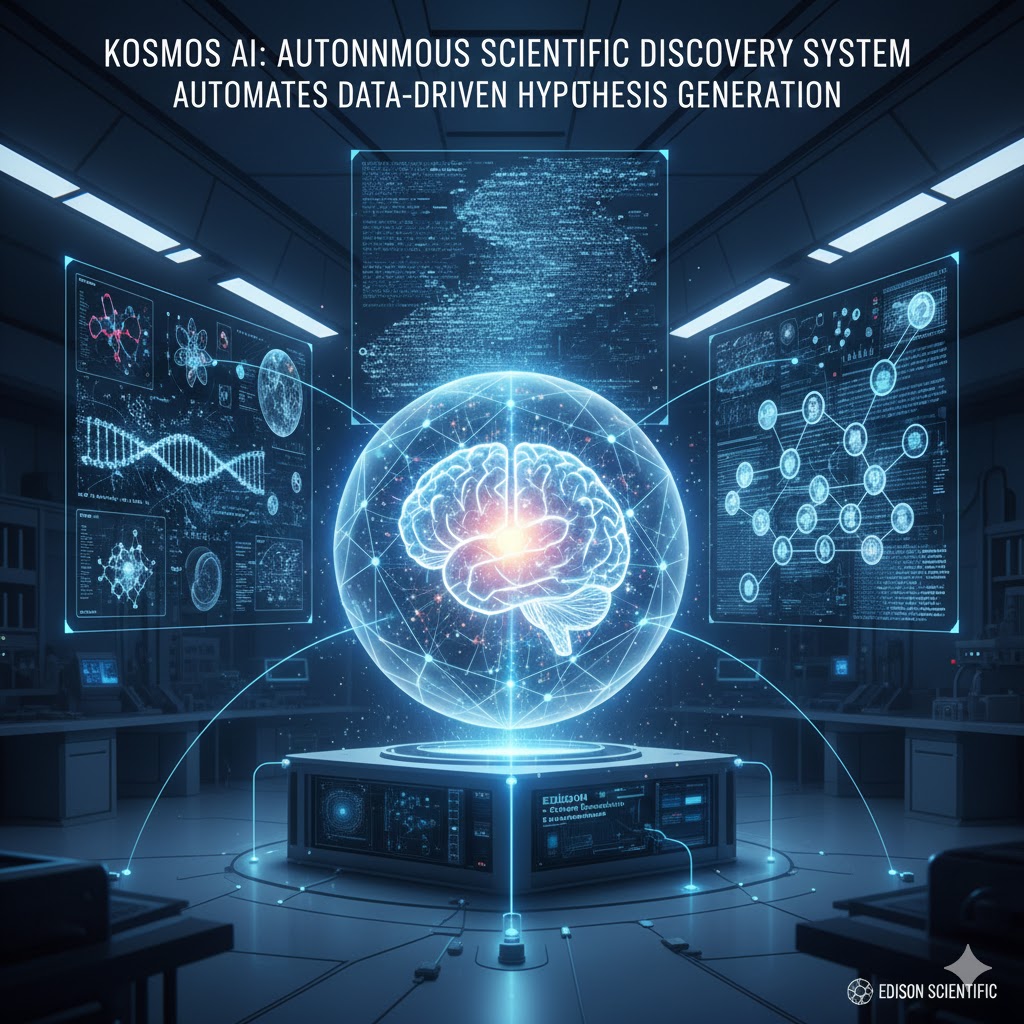
Kosmos represents a step-change in automating the creative-analytical synthesis required for scientific breakthroughs. Given an open-ended research objective and raw dataset, the system independently:
(1) performs exploratory data analysis identifying patterns,
(2) searches relevant literature contexualizing findings,
(3) generates and ranks hypotheses based on fit with data and prior work, and
(4) iterates, refining hypotheses as evidence accumulates.
Pilot studies demonstrate Kosmos generating publication-quality insights autonomously—a capability that previously required human PhD-level researchers spending weeks or months on exploratory phases. The system excels at "low-hanging fruit" discovery: identifying unexpected correlations in datasets, uncovering confounding variables, and generating testable hypotheses researchers might have overlooked through standard manual analysis.
Why this matters: Kosmos validates the thesis that scientific productivity will undergo Moore's Law-style acceleration through AI augmentation. Rather than replacing human scientists, Kosmos accelerates the "boring but essential" analytical phases, freeing researchers for hypothesis refinement, experimental design, and interpretation. By 2026, expect institutional adoption of Kosmos-like systems across biotech, materials science, and academic research. This creates competitive advantage for organizations with large datasets: those unable to efficiently analyze data will fall behind. It also reshapes PhD training: future scientists will need fluency in AI-augmented research tools, not just bench skills. Organizations conducting data-driven research should evaluate autonomous hypothesis generation tools as infrastructure investments equivalent to sequencing machines or computational clusters.aiwebbiz
BostonGene Presents Seven AI Breast Cancer Studies: Omnimodal Analysis Reveals Multi-Marker Insights
At the San Antonio Breast Cancer Symposium, BostonGene presented seven studies demonstrating how its foundation AI platform integrates genomic, transcriptomic, and immune data to uncover complex tumor biology previously hidden by single-marker approaches.

Key findings: traditional single-marker approaches (e.g., TROP2 RNA expression) fail to predict therapeutic response; complex multi-marker omnimodal analysis reveals synthetic lethality opportunities and therapeutic targets invisible to conventional approaches. BostonGene's AI-integrated analysis of 617 breast cancer samples identified AURKA amplification in inflammatory breast cancers alongside synthetic lethality mechanisms—actionable insights enabling precision trial design and patient stratification.
The research validates that AI's highest-value application in precision oncology is integrating multimodal data at scale—something human researchers cannot accomplish manually. Biotech companies leveraging such AI-driven insights to optimize trial design will significantly outpace competitors using traditional approaches.
Why this matters: BostonGene's studies demonstrate that precision medicine's future requires AI-augmented analysis of multimodal datasets. Single biomarkers are obsolete; future therapeutics will be designed around AI-discovered multi-marker signatures. This accelerates drug development timelines and improves trial success rates. Organizations in biotech and healthcare should evaluate foundation AI platforms for internal R&D. By 2027, expect regulatory agencies requiring AI-augmented analysis for trial submissions—making such capabilities table stakes for competitive drug development.biospace
Mitsubishi Electric Introduces Physics-Embedded AI for Equipment Maintenance: Reliability Without Big Data
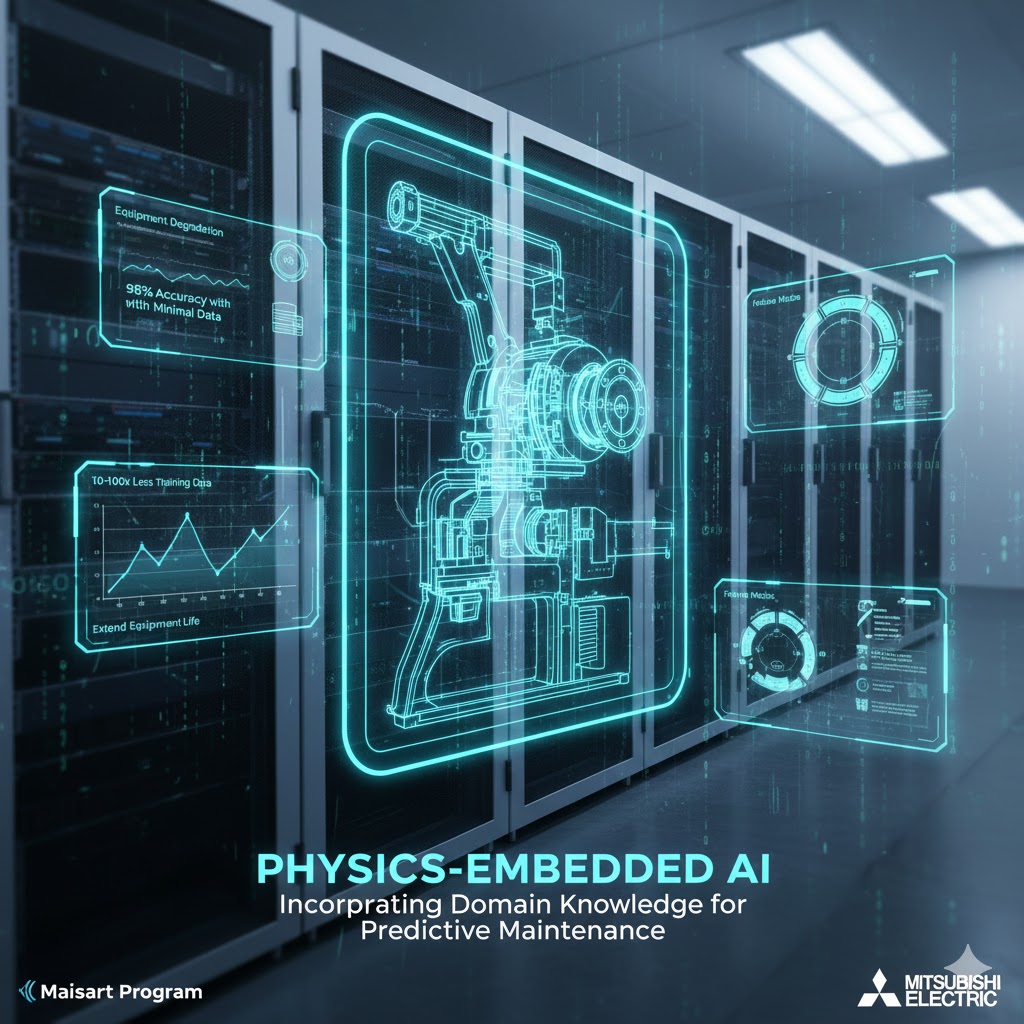
Mitsubishi Electric announced a breakthrough in "physics-embedded AI" capable of accurately predicting equipment degradation using minimal training data by incorporating domain knowledge about physical systems directly into AI models.
Traditional predictive maintenance requires massive historical datasets (tens of thousands of equipment failure records); Mitsubishi's physics-embedded approach integrates fundamental knowledge about equipment behavior, thermal dynamics, mechanical wear, and failure modes directly into model architectures. Result: accurate degradation estimates with 10-100x less training data, enabling deployment at facilities lacking historical failure records.
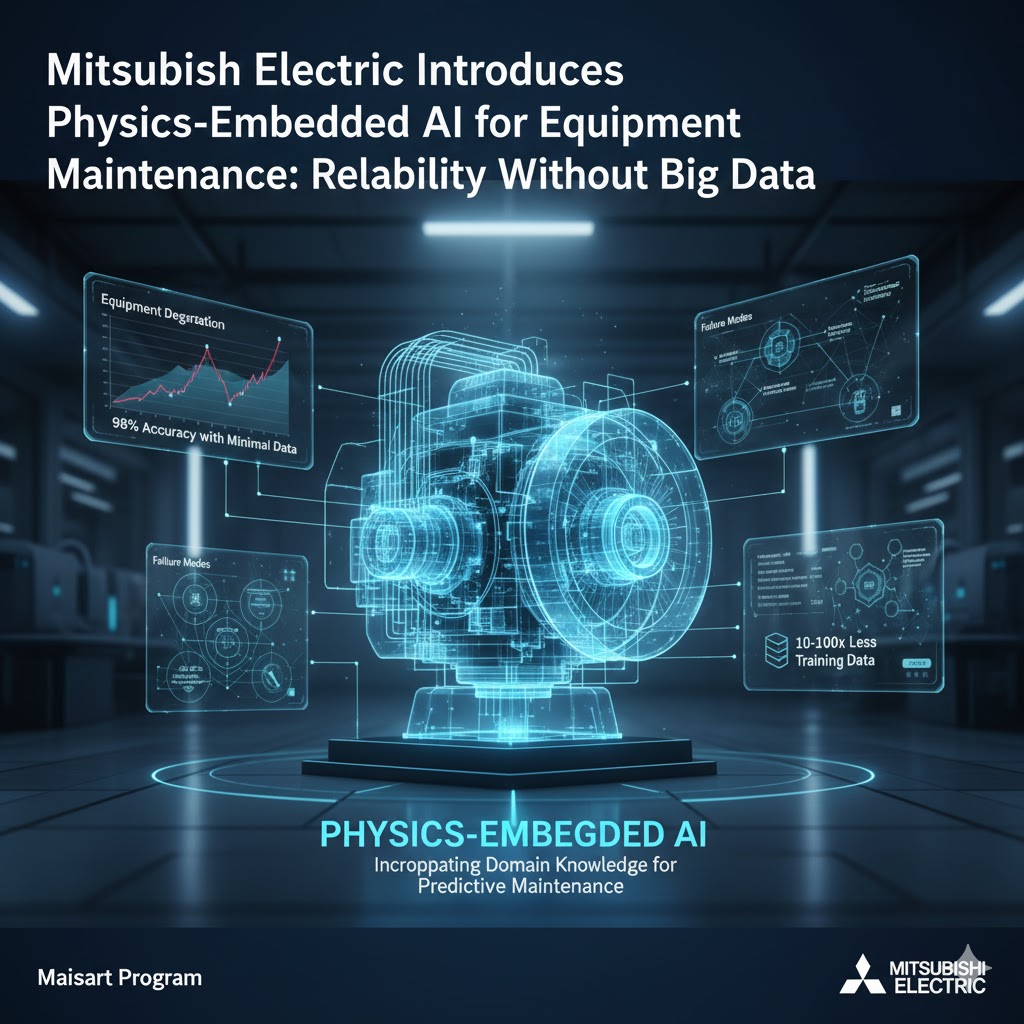
The innovation stems from Mitsubishi's Neuro-Physical AI initiative under the Maisart program, which prioritizes reliability and safety in real-world manufacturing environments. Applications include optimizing production schedules to avoid failures, extending equipment life cycles, and preventing unplanned downtime.
Why this matters: Physics-embedded AI validates that AI's industrial applications succeed when combining deep domain expertise with machine learning. Rather than pure data-driven approaches requiring massive datasets, future industrial AI will integrate physics, domain knowledge, and constrained learning—enabling deployment at SMEs and developing markets lacking big historical data. By 2026, expect adoption across manufacturing, utilities, and critical infrastructure. Organizations should hire "domain experts" (mechanical engineers, process specialists) alongside ML engineers to build physics-aware AI systems. This approach also improves model interpretability and safety—critical for mission-critical applications.nasdaq
OpenAI Delays AI Agents and Health Shopping Features: Prioritizing Personalization and Reliability
OpenAI announced delays to planned AI agent launches and consumer features (Pulse personal assistant, Shopping agents, Health tools) as the company prioritizes speed, personalization, and reliability of core ChatGPT functionality amid intensifying competition.
Sam Altman's internal memo acknowledged that OpenAI's first-mover advantage in consumer AI is eroding as competitors (Google Gemini 3, Anthropic Claude, Chinese DeepSeek) launch competitive models. OpenAI's strategy pivots toward consolidating market position through:
(1) faster response times (product latency becoming competitive differentiator),
(2) personalization (adapting to individual user preferences and behavior), and
(3) reliability (reducing hallucination, improving accuracy).
Delayed initiatives include advertising integration, multi-agent orchestration, and specialized AI assistants—features that would require significant new infrastructure. The memo signals OpenAI's recognition that speed-to-market and core product excellence matter more than feature breadth in competitive conditions.
Why this matters: OpenAI's strategic pivot validates a critical market shift: frontier AI competition is hardening around core capabilities and UX, not new features. As all major labs achieve similar model capabilities (GPT-5-class, Gemini 3-class, Claude Opus-class), competitive advantage consolidates around: speed (inference latency), personalization (user adaptation), reliability (accuracy, reduced hallucination), and ecosystem integration. Organizations betting on feature breadth will underperform specialists optimizing for core use cases. For enterprise AI, this suggests focus on domain-specific personalization and integration rather than multi-purpose agents. Expect 2026 to see "AI customization platforms" gaining prominence over generic chatbots.aiwebbiz
Bank Executives Report 9% Productivity Gains from AI: Finance Industry Embraces Agentic DeploymentMhm.
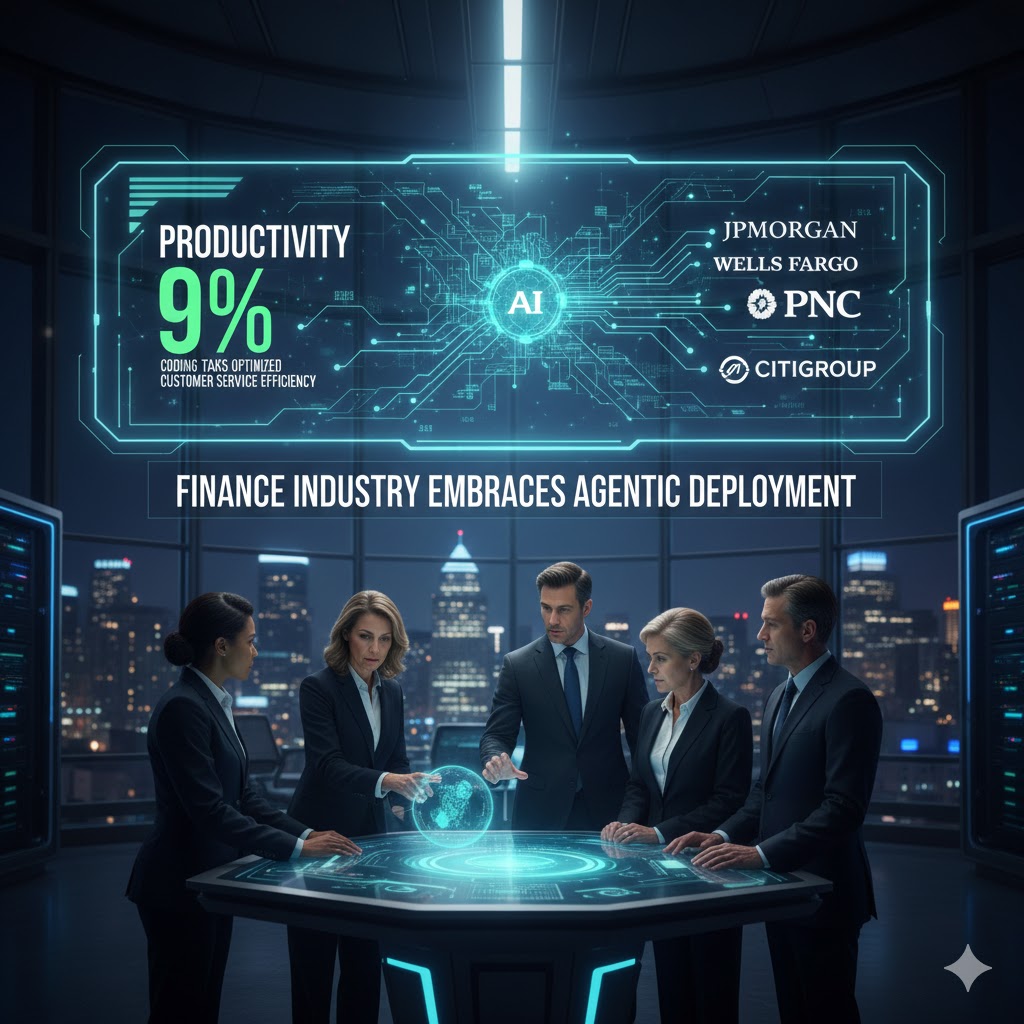
U.S. bank executives from JPMorgan, Wells Fargo, PNC, and Citigroup reported measurable productivity improvements from AI deployment, with Citigroup's incoming CFO noting a 9% productivity increase in coding tasks and enhanced customer service efficiency through real-time AI assistance.
Banks are deploying AI across customer service (real-time call assistance), coding and software development (30%+ productivity gains reported), risk analysis, and operational efficiency. The shift is moving from pilot projects to production integrations, with banks viewing AI as transformative infrastructure investment comparable to cloud computing adoption.
Why this matters: Finance industry AI adoption validates the transition from experimental pilots to production ROI. Banks with mature AI deployment achieve measurable competitive advantages: faster development cycles, reduced operational costs, improved customer satisfaction. This accelerates financial sector AI spending and attracts top AI talent to finance. By 2026, expect banks without production AI systems to face competitive disadvantage. Organizations should prepare for AI productivity expectations to become baseline competitive requirements—firms achieving 10%+ productivity gains from AI will set new performance standards.reuters
Why December 10, 2025 Matters: Enterprise AI Matures, Infrastructure Globalizes, Physics Meets ML
Today's announcements crystallize several structural shifts reshaping 2026 AI strategy:
Geographic Decentralization: Microsoft's $23 billion India investment and X1's data-localization architecture both signal that AI infrastructure is becoming regional and data-local, not centralized. Expect competing regional AI ecosystems optimized for local compliance, language, and cost structures.
Enterprise Adoption Acceleration: Banks achieving 9% productivity gains, OpenAI transitioning customers from pilots to deep integration, and X1 solving data sovereignty prove that AI ROI is now demonstrable and defensible. This accelerates capital deployment from experimental to operational budgets.
Domain-Specific Excellence: Kosmos, BostonGene, Mitsubishi Electric, and X1 collectively validate that AI's highest value accrues to domain specialists, not generalists. Vertical AI applications with proprietary data, regulatory expertise, and physical/domain integration will outpace horizontal LLMs by 2026.
Data Becomes Strategic Moat: X1's "AI in-place" and Kosmos highlight that organizations with data + AI integration capability form competitive barriers competitors cannot easily replicate. Data becomes a defensible strategic asset—not through hoarding, but through localized, embedded AI analysis.
The synthesis: 2026 will see enterprise AI transition from buzzword to infrastructure, geographic fragmentation of AI stacks across regions, and victory by organizations mastering domain-specific integration. Generalist platforms will commoditize; specialist applications with proprietary data will command disproportionate value. Organizations should prepare for AI investment to triple, infrastructure to become regional-first, and talent competition to intensify around domain expertise + AI hybrid skills.
Compiled: December 10, 2025 | Sourcing: Reuters, NASDAQ, Morningstar, BioSpace, Microsoft announcements, X1 Enterprise, Edison Scientific, Mitsubishi Electric, and financial services sector reports covering enterprise AI adoption, infrastructure investment, and scientific discovery automation.
Podcast: https://open.spotify.com/episode/4zEDhSh350Dgz9gWYIVZoq?si=cBJkM85-TZak8e5DqH2s-w